

This article covers general seating features, not medical treatment. Dynamic lumbar support can help a chair stay comfortable as you shift position through the day, but it is not a medical device. If back pain is severe, persistent, or radiating into the legs, talk to a doctor or physical therapist rather than relying on a chair alone to manage it.
A manually adjustable lumbar pad works well as long as you sit exactly the way you set it up, but most people do not stay in one posture all day. Dynamic lumbar support is built to move with you instead, whether that means a wing-shaped pad that flexes with lateral shifts, a system that automatically slides forward and backward as you lean, or a full-back design that tracks posture changes across the entire backrest. This list of office chairs for back pain is limited to chairs with a genuinely dynamic, movement-responsive lumbar mechanism, not just an adjustable one you set once and leave alone. For background on why lumbar position matters at all, and how dynamic systems fit into that picture compared to the more common fixed-curve designs, see our guide on what lumbar support actually does.
We pulled seven chairs currently sold on Amazon, ranging from a mid-priced full-mesh design to a premium automatic-tracking chair. Prices in this category run higher on average than the fixed or manually adjustable lumbar picks elsewhere in this site, which reflects the added mechanical engineering behind a system that moves on its own rather than staying wherever it was last set.
Disclosure: Ergonook is a participant in the Amazon Associates program. Links below are affiliate links, and we may earn a commission from qualifying purchases. This does not affect which chairs we recommend or how we rank them.
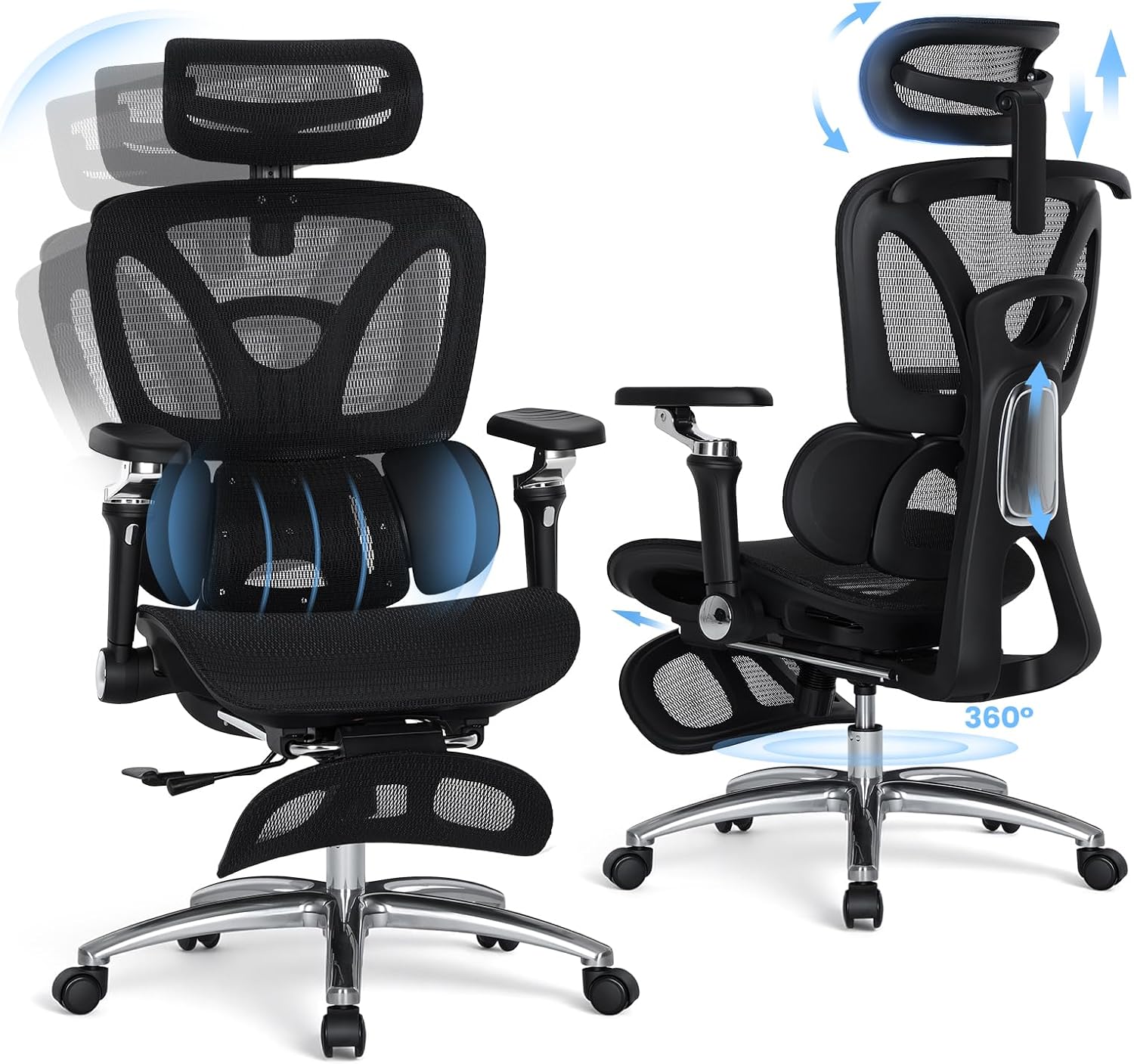
Pros
- Dual-wing design responds to lateral shifts, not just forward and backward lean
- Elastic adaptive movement keeps contact with the spine through small posture changes
- High weight capacity relative to price
Cons
- More complex mechanism than a simple fixed or manually adjustable lumbar pad
- Six-direction armrests take longer to learn than simpler flip-up arms
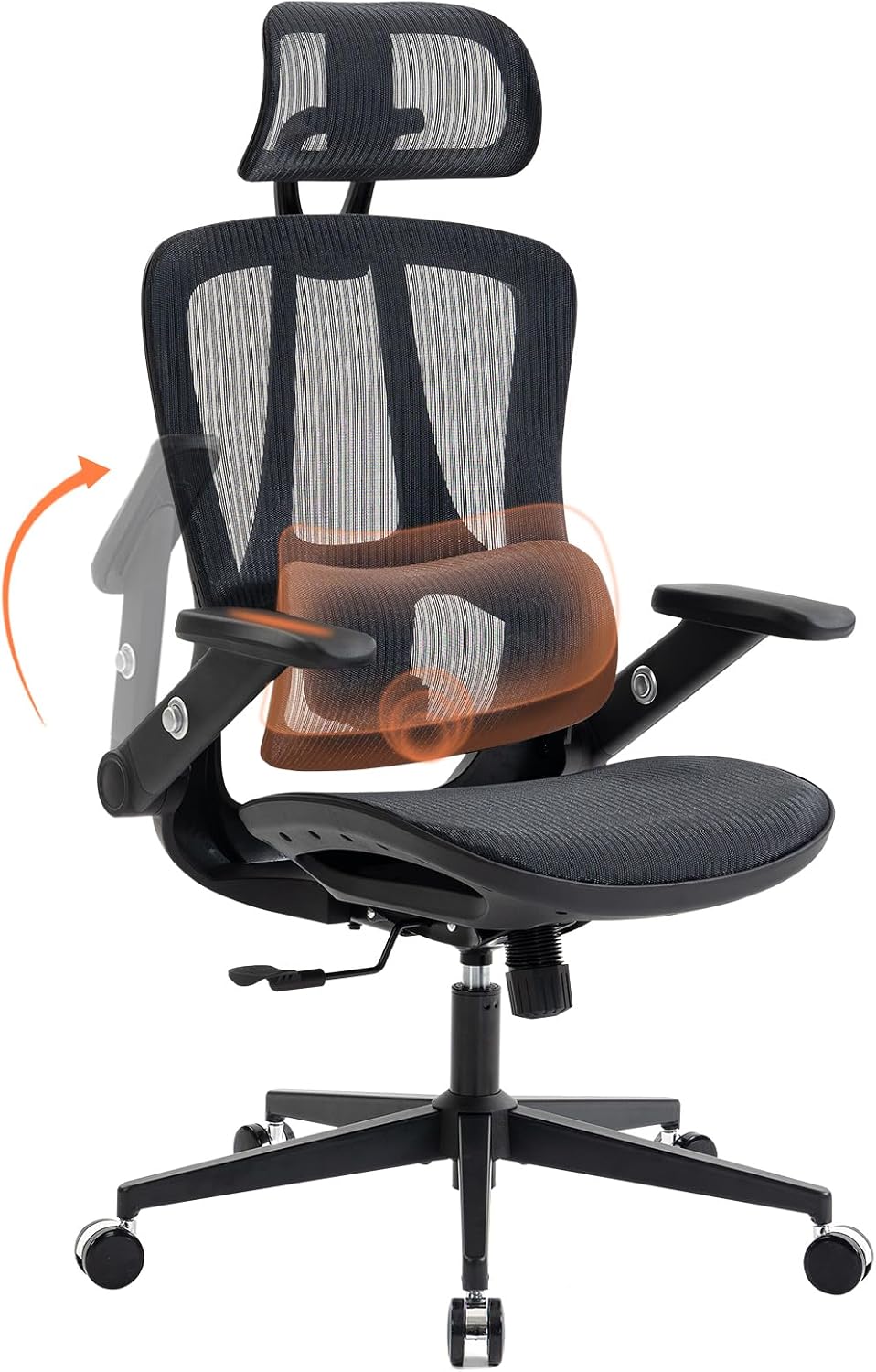
Pros
- Full-mesh construction breathes better than the partial-mesh designs on some other picks
- 135 degree recline covers a wider range than several other dynamic lumbar picks here
- Mid-range price relative to the premium options in this roundup
Cons
- Full mesh offers less cushioning at the seat than a foam-padded design
- Fewer stated fit-range specifications than the FLEXISPOT pick on this list
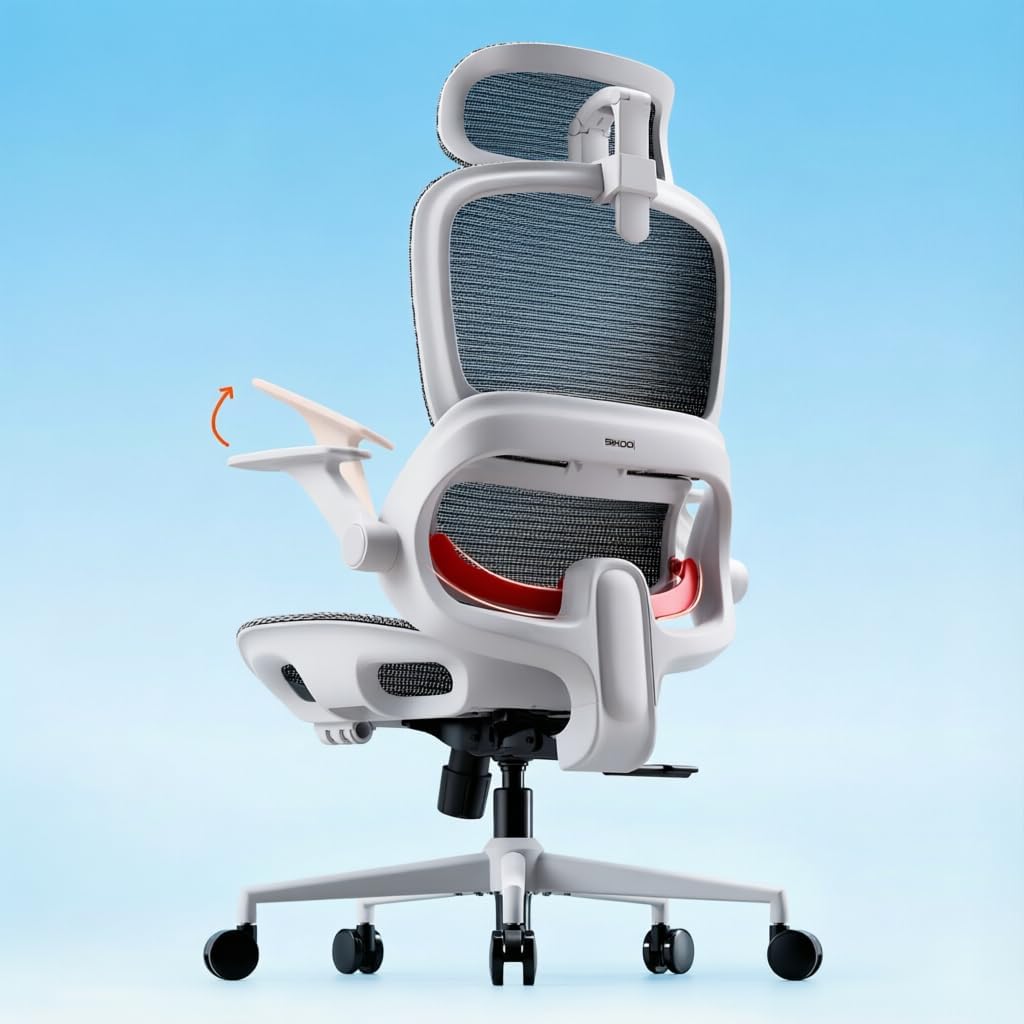
Pros
- Adapts across a wide range of postures rather than one preset lean angle
- Wide headrest accommodates a broader range of head positions
- Established brand with a track record specifically in ergonomic office seating
Cons
- Fewer stated numeric adjustment ranges than some competitors, making it harder to compare specs directly
- Mid-range price sits above the simpler adjustable-lumbar picks in the adjacent category

Pros
- From an established ergonomic furniture brand with a track record in standing desks and seating
- Stated fit range removes guesswork for shorter or taller users
- Nap footrest adds a genuine rest option beyond lumbar tracking alone
Cons
- Rating trails some of the other dynamic lumbar picks on this list
- High number of adjustment points takes more time to configure initially

Pros
- Dynamic lumbar tracks the lower back automatically rather than needing manual repositioning
- Deep, lockable recline range adds a genuine break option beyond lumbar tracking alone
- Highest rating among the picks on this list
Cons
- Highest starting price in this roundup
- More mechanical complexity than a simple fixed-lumbar chair, which could mean more to maintain over time

Pros
- Continuous automatic tracking rather than a manually set position that stays fixed until adjusted again
- Adjustable seat depth accommodates a wider range of leg lengths
- 4D armrests add posture flexibility beyond the lumbar system
Cons
- Highest price in this roundup by a meaningful margin
- The tracking mechanism is more mechanically complex than simpler fixed or dial-adjustable lumbar designs

Pros
- Support system responds across the full backrest, not just an isolated lumbar zone
- 8D armrests offer more positioning flexibility than the 3D or 4D arms on other picks
- Established brand with a track record in ergonomic seating design
Cons
- Premium price close to the highest-priced pick in this roundup
- Full-body adaptive systems can feel like more chair than necessary for someone who only needs lumbar-specific support
How Dynamic Lumbar Systems Actually Differ
Lumbar-Zone Tracking Versus Full-Backrest Response
Most dynamic lumbar systems on the market focus their movement on the lower back specifically, using wings, sliders, or flexible panels that respond to how you lean. A smaller number of chairs extend that responsiveness across the entire backrest rather than isolating it to the lumbar zone. Full-backrest systems tend to cost more and suit someone who wants comprehensive postural support, while lumbar-zone tracking is usually enough for someone whose main concern is the lower back specifically rather than the shoulders and upper spine as well.
Automatic Tracking Versus Elastic Flex
Some chairs use a mechanically driven system that actively tracks spine position as you move, while others rely on elastic or wing-shaped panels that flex passively in response to pressure and movement. Actively tracking systems tend to sit at a higher price point and add more mechanical complexity, while passive flex systems are usually simpler and less expensive, though the practical difference in daily comfort is often smaller than the specification sheets suggest. Neither approach is inherently more durable, since both rely on moving parts that see repeated use, but a passive flex system generally has fewer components that could eventually wear out.
Recline Range as a Complementary Feature
A dynamic lumbar system and a deep recline solve related but different problems. The lumbar system keeps the lower back supported while you are actively sitting and shifting position, while a deep recline gives you an entirely different posture for a scheduled break. Several chairs on this list pair dynamic lumbar tracking with a genuine recline range, which is a useful combination since the lumbar system handles posture support during active work while the recline covers scheduled breaks. Readers whose main priority is a higher weight capacity alongside back support should also compare our big and tall office chair picks for back pain, which cover higher-capacity frames.
Established Brand Track Record
Dynamic lumbar mechanisms are more mechanically complex than a fixed backrest curve, which makes a brand’s track record in ergonomic seating specifically, rather than office furniture generally, a more meaningful signal here than in simpler chair categories, since a moving mechanism has more that can go wrong over years of use than a fixed one. Several picks on this list come from brands with multiple ergonomic chair models and a longer history in the category, which is worth weighing against a lower-priced option from a less established seller. For a broader look at what to check on any ergonomic chair beyond the lumbar mechanism, see our ergonomic office chair buying guide.
Final Thoughts
For a mid-priced option that pairs dynamic lumbar tracking with a genuinely wide 135 degree recline, the LAIAN Dynamic Lumbar Mesh Chair uses full-mesh construction for both the seat and backrest, favoring breathability over plush cushioning. For a shopper who wants lumbar support that follows the natural curve of the spine across a wide range of postures from an established ergonomic seating brand, the SIHOO B100 Adaptive Lumbar Chair is a reasonable mid-range starting point before comparing the premium automatic-tracking picks further down the list.
FAQ
Is dynamic lumbar support worth the extra cost over an adjustable pad?
It depends on how much your posture actually shifts through the day. If you tend to stay in roughly the same position for hours, a well-adjusted mechanical lumbar pad may serve you just as well at a lower price. If you shift position frequently between focused work, meetings, and reading, a dynamic system that follows those changes automatically can be worth the premium, particularly if you have found that manually adjusted lumbar pads tend to drift out of position over the course of a day.
Does full-body adaptive support work better than lumbar-only tracking?
Not necessarily better, just broader in scope. Full-body systems respond across the entire backrest rather than isolating movement to the lower back, which suits someone who wants comprehensive postural support, but it also comes at a higher price than lumbar-specific tracking for a benefit that may be more than most people need. If your discomfort is specifically in the lower back rather than the shoulders or upper spine, lumbar-zone tracking alone is likely to deliver most of the practical benefit at a lower cost, and the money saved could go toward a better seat cushion or footrest instead.
Can a dynamic lumbar chair replace a standalone lumbar cushion?
In most cases, yes, since the chair’s built-in system is designed to serve the same purpose as an add-on cushion, just with a more advanced mechanism that moves on its own rather than staying fixed once positioned. If you already own a chair you like otherwise and are not ready to replace it, our lumbar support cushion picks are a lower-cost way to add adjustable support without buying a new chair.
When should I see a doctor instead of just changing chairs?
If back pain is severe, does not improve with a well-fitted chair and regular movement, or radiates into the legs, that is a signal to see a doctor or physical therapist rather than continuing to try different lumbar mechanisms. A dynamic lumbar chair is a comfort and posture-support tool, not a diagnosis or a treatment plan, and no mechanism, however advanced, substitutes for a professional evaluation when pain persists.


Write Your Review
No reviews yet. Be the first to share your experience!