

This article covers general seating features, not medical treatment. A headrest can reduce neck and upper-back strain during long stretches at a desk, but it is not a medical device. If back or neck pain is severe, persistent, or radiating into the arms, talk to a doctor or physical therapist rather than relying on a chair alone to manage it.
A headrest matters more than it seems for anyone whose discomfort extends into the neck and shoulders rather than staying isolated in the lower back. Plenty of office chairs for back pain stop supporting the spine at shoulder height, leaving the neck to hold itself up unsupported through hours of screen time. This list is limited to chairs with a genuine headrest, adjustable or integrated, rather than a tall backrest alone.
We pulled seven chairs currently sold on Amazon, ranging from a budget mesh pick with a movable lumbar pillow to an established-brand chair with independently adjustable headrest and lumbar systems. Readers who need a higher weight capacity alongside a headrest should also compare our big and tall office chair picks with headrest, which are built around heavier-duty frames. For a broader comparison of what to look for in an ergonomic chair beyond the headrest specifically, see our ergonomic office chair buying guide.
Disclosure: Ergonook is a participant in the Amazon Associates program. Links below are affiliate links, and we may earn a commission from qualifying purchases. This does not affect which chairs we recommend or how we rank them.

Pros
- From an established brand with a specific track record in ergonomic office chairs
- Headrest and lumbar systems both adjust independently across two axes each
- Recline range adds a genuine break option beyond headrest and lumbar support alone
Cons
- Mid-to-high price relative to the budget picks on this list
- Recline range is more modest than the dedicated reclining chairs elsewhere in this category
Pros
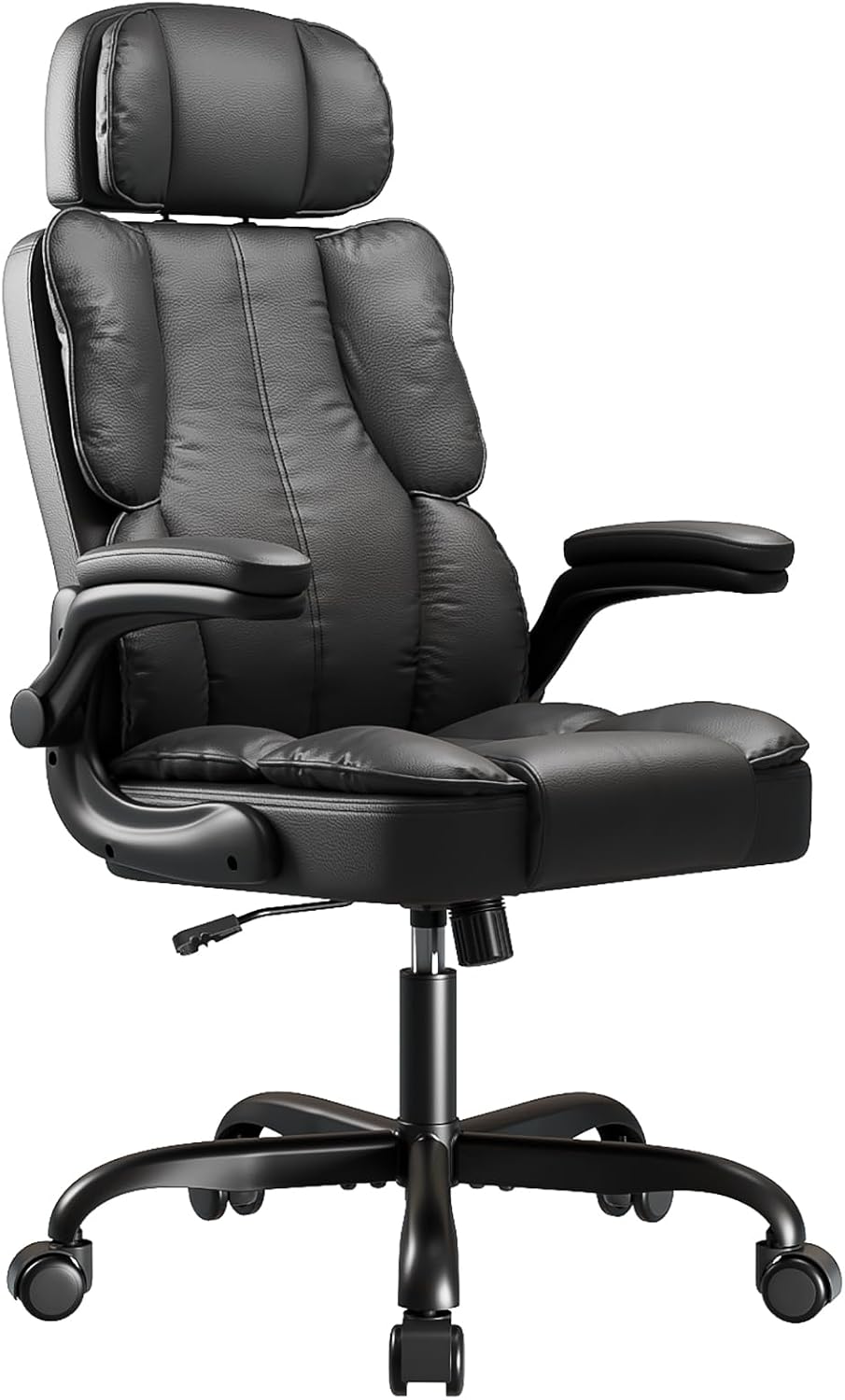
- Composite cushion construction resists thinning better than single-density foam alone
- Scratch-resistant PU leather is a practical plus for households with pets
- Thick 4.3 inch cushion adds real comfort over long sitting sessions
Cons
- Rocking range is modest compared to the dedicated reclining chairs elsewhere in this category
- PU leather runs warmer than mesh over a full workday

Pros
- Headrest tilt adjustment adds a genuine second axis beyond simple height
- Lumbar pad adjusts independently of the headrest
- Reclining function adds a break option beyond headrest and lumbar support alone
Cons
- Mid-range price without the executive styling of the leather picks on this list
- Fewer stated numeric specs for the recline range itself
Pros
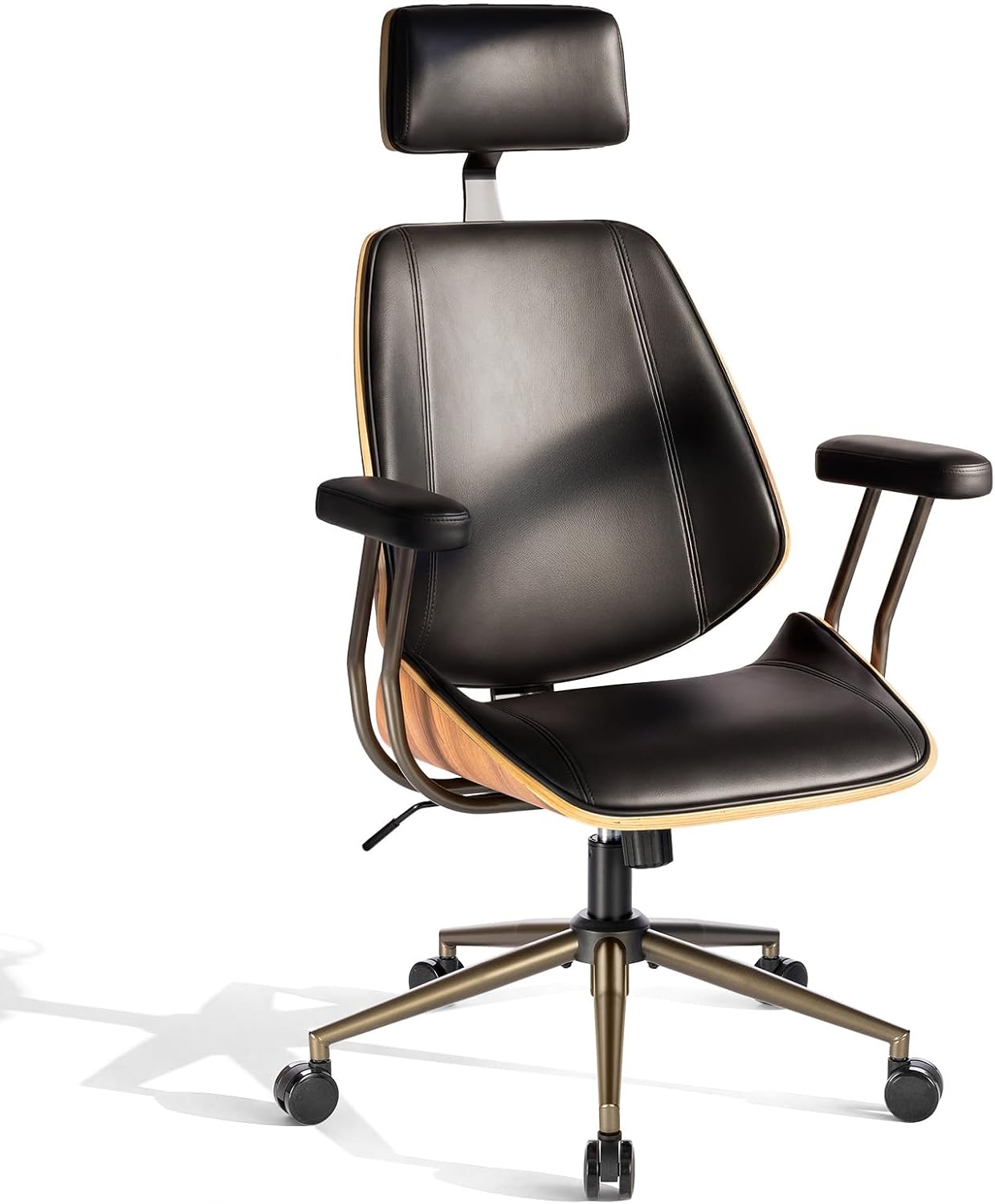
- Integrated headrest design avoids the wobble some clip-on headrests develop over time
- High rating for a straightforward, no-frills design
- Faux leather wipes clean easily
Cons
- Headrest position is less adjustable than the multi-directional designs on pricier picks
- Fewer additional features, such as recline or lumbar adjustment, than some competitors

Pros
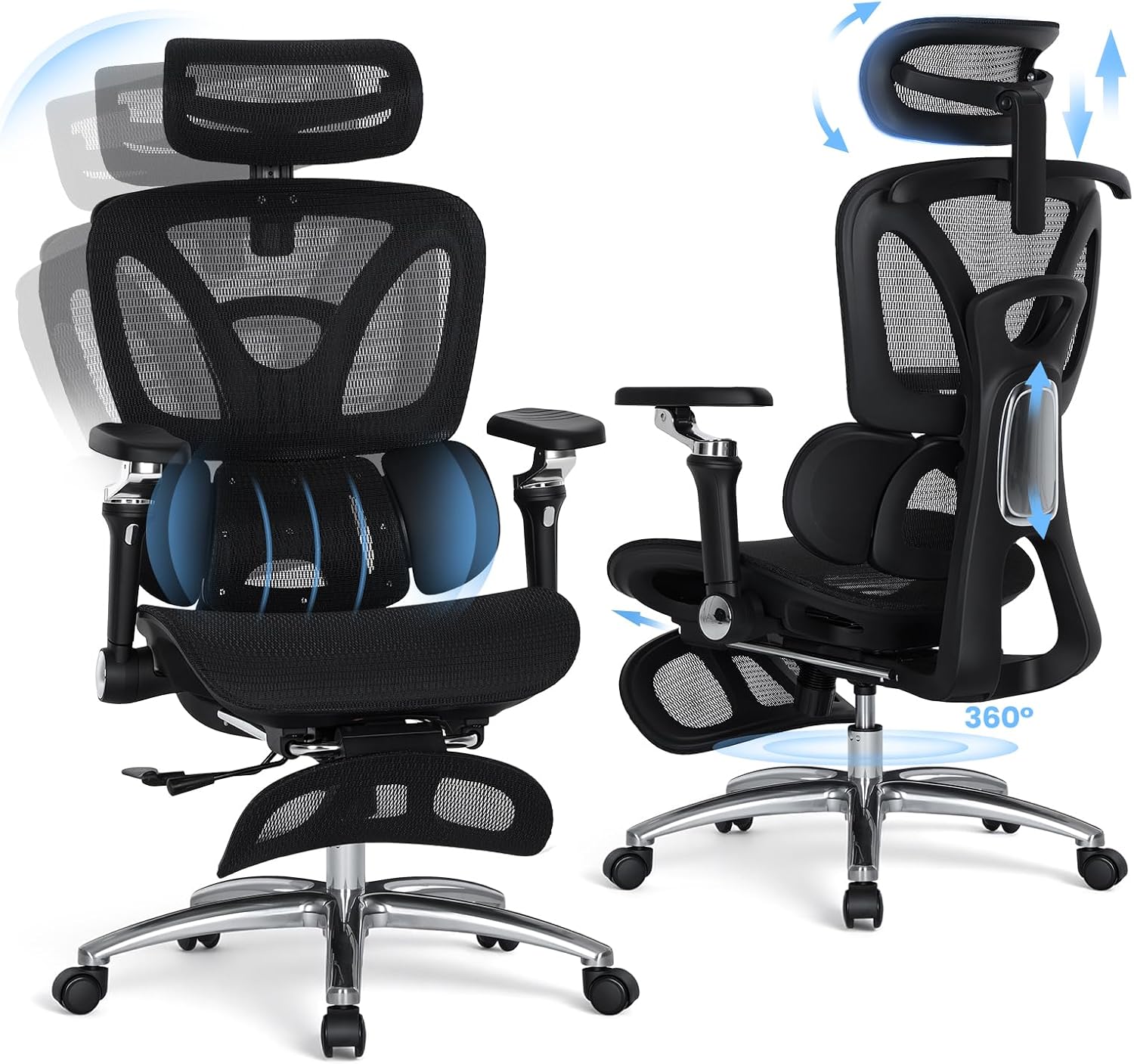
- Widest stated headrest vertical travel range among the picks on this list
- Rotation adjustment on the headrest is a less common feature at this price point
- Coordinated 4-zone design addresses head, back, hips, and arms together rather than as separate afterthoughts
Cons
- Rating is on the lower end for this category
- More adjustment points means more initial setup time

Pros
- Among the lowest prices in this roundup
- Contoured lumbar backrest provides support without needing a separate adjustment mechanism
- Elastic mesh back adds breathability at a budget price point
Cons
- Fewer adjustment points than the multi-zone picks on this list
- Aimed at lighter-duty settings like bedrooms and study spaces rather than an all-day executive setup

Pros
- Lowest price among the headrest-focused picks on this list
- Movable lumbar pillow can be repositioned rather than staying in one fixed spot
- Foldable armrests genuinely save space when the chair needs to tuck under a desk
Cons
- Rating trails the higher-priced picks in this roundup
- Fewer premium build details than the executive-style chairs elsewhere on this list
What Makes a Headrest Actually Useful
Integrated Versus Independently Adjustable
Some chairs build the headrest directly into an extended high backrest, which avoids the wobble that a separately mounted headrest can develop over time but offers less positional flexibility. Others mount the headrest on its own hinge or slider, adjustable in height and sometimes angle independently of the backrest. Neither is universally better, an integrated design suits someone whose neck position does not change much through the day, while an independently adjustable one rewards someone willing to fine-tune the position for different tasks. Try to picture how often you actually shift between screen work, reading, and phone calls, since that variation is what determines how much you would use the extra adjustability in practice.
Number of Adjustment Axes
The simplest adjustable headrests move up and down only. More configurable ones add tilt, and a smaller number add rotation as well. As with lumbar adjustment, more axes generally means a better potential fit but a longer initial setup process. If a chair states specific travel numbers, such as a stated number of inches of vertical range or a specific tilt angle, that is a more useful comparison point than a general “adjustable” claim, the same way a stated recline range is more useful than the word “reclining” alone.
Headrest and Lumbar Support Working Together
A headrest addresses the neck and upper back, while lumbar support addresses the lower back, and the two are independent systems even on chairs that adjust both. If your discomfort is specifically in the lower back, a chair’s headrest quality matters less than its lumbar mechanism, and our lumbar support guide covers that side of the equation in more depth. A chair that excels at one and neglects the other is still only solving half the problem for someone dealing with discomfort in both areas.
Price Does Not Always Track Headrest Quality
It is also worth checking whether the headrest can be removed or folded down entirely if you decide you do not need it, since a fixed headrest that does not suit your posture can end up being a permanent annoyance rather than a helpful feature. A removable or foldable design gives a fallback option if the headrest position turns out not to work for you after regular use, without requiring you to replace the whole chair.
Some of the more specific, multi-axis headrest designs in this roundup come from budget-priced chairs, while some pricier executive chairs use a simpler integrated headrest. Read the actual stated headrest specifications rather than assuming a higher price automatically means more headrest adjustability, since the two do not consistently track together in this category. Executive styling, cushion construction, and upholstery quality often drive price more than the headrest mechanism specifically.
Final Thoughts
For a well-rounded pick from an established ergonomic seating brand, the SIHOO M57 Chair with Tilt-and-Lift Headrest pairs a headrest that tilts and lifts independently with lumbar support that adjusts in both height and depth, plus a genuine recline range. For the lowest price in this roundup while still covering the core headrest and lumbar basics, the Yaheetech Budget Headrest Chair uses a large adjustable headrest and a movable lumbar pillow with foldable armrests for smaller spaces. Both are reasonable starting points before comparing the executive leather and multi-zone picks further down the list.
FAQ
Do I need a headrest if my chair already has a high backrest?
Not necessarily, but the two are different features. A high backrest supports the shoulders, while a headrest specifically supports the neck and the base of the skull. If neck strain is part of your discomfort, confirm the chair has a genuine headrest rather than assuming a tall backrest covers that need on its own.
Is an integrated headrest worse than an adjustable one?
Not worse, just less flexible. An integrated headrest avoids the wobble some separately mounted designs develop over time, but it cannot be repositioned the way an independently adjustable headrest can. Choose based on whether your neck position stays fairly consistent or varies across different tasks during the day.
How do I know if a headrest is positioned correctly?
Sit upright in your normal working posture and adjust the headrest so it contacts the base of your skull without pushing your head forward or leaving a gap. If the headrest only touches your neck rather than the back of your head, it usually needs to be raised or tilted differently, and it is worth rechecking the position after a few days of regular use rather than assuming the first adjustment was correct.
Can I add a headrest to a chair that does not have one?
Aftermarket clip-on headrests exist, but they tend to be less stable than a headrest built into the chair itself, and results vary widely by chair shape. If neck support is a real priority rather than an occasional convenience, choosing a chair with a genuine built-in headrest from the start is generally more reliable than adding one after the fact. Readers who want a headrest in a mesh-specific lineup should also compare our mesh office chairs with headrests picks.
When should I see a doctor instead of just changing chairs?
If neck or back pain is severe, does not improve with a better-supported posture and regular movement, or radiates into the arms, that is a signal to see a doctor or physical therapist rather than continuing to try different headrest positions on your own. A headrest is a comfort and posture-support feature, not a diagnosis or a treatment plan.




Write Your Review
No reviews yet. Be the first to share your experience!