

Several chairs in this roundup run on a rechargeable battery rather than a permanent power cord to the desk, typically rated for a few hundred recline cycles per charge. That setup avoids a cord trailing across the floor but means occasionally remembering to recharge, similar to any other rechargeable device. If your desk setup already has power nearby and you prefer not to think about charging, a corded model may suit you better, though most chairs in this specific price range have moved toward battery operation for the flexibility it offers.
Cushion Construction Changes How the Recline Actually Feels
Most chairs in this roundup use standard high-density foam, but a couple use a genuinely different construction, a pocket spring layer similar to a mattress. That distinction matters more in a deep-recline chair than a standard upright one, since the seat and backrest bear weight differently once you are reclined at 150 degrees or more compared to sitting upright. A spring-based cushion tends to feel more like lying down, while dense foam stays firmer and more supportive at any angle.
Footrest Design Changes How Complete the Recline Feels
Not every deep-recline chair extends its footrest the same way. Some synchronize the footrest with the backrest motor so both move together on a single control, while others let you extend the footrest independently before or without reclining the backrest fully. A synchronized system feels more like one continuous motion into a reclined position, while independent control lets you rest your legs during upright work without committing to a full recline at the same time.
Final Thoughts
For the deepest recline and highest documented weight capacity in this roundup, the Dual Motor Executive Chair with 170 Degree Recline pairs a 450 lb rating with a one-touch reset for quick transitions back to work. For a genuinely different, all-in-one setup, the Zero Gravity Office Chair with Dual Monitor Arm builds a full workstation, monitors and keyboard tray included, around its recline mechanism, though at a significant premium. Both are worth comparing against the mid-range independent-motor picks further down the list.
FAQ
Is a zero gravity office chair actually good for back pain?
A deep recline with an elevated footrest can reduce spinal compression during a break, which some people find genuinely relieving, but it is not a treatment for an existing back condition. Persistent or severe back pain should be evaluated by a doctor rather than managed through chair features alone. If your discomfort is more specifically in the lower back rather than needing a full recline solution, our lower back pain roundup covers upright-seating options in more depth.
Do all “zero gravity” office chairs actually reach the original zero gravity position?
No. The term is used loosely across office chair marketing, sometimes for a 135 degree recline and sometimes for one closer to 170 degrees. Check the specific published recline angle rather than assuming the label alone guarantees a particular position.
Can I use a deep-recline chair as my main all-day work chair?
Most of these chairs are designed to switch between an upright working position and a reclined break position, not to stay reclined all day. Treat the deep-recline feature as a periodic break tool alongside upright focused work, similar to standing up and stretching, and see our guide on reducing back pain from sitting all day for general habits worth pairing with any chair.
Is a massage function on these chairs a real treatment feature?
No. Built-in vibration massage on an office chair is a comfort feature similar to a standalone massage pad, not a therapeutic device. If back pain is persistent or severe, consult a doctor rather than relying on a chair’s massage function to manage it.
A quick note on terminology before the list: “zero gravity” started as a specific NASA-derived seating position, roughly a 128-degree recline with the legs elevated above heart level, distributing body weight evenly and taking direct load off the spine. In office chair marketing, the term now gets applied loosely to any deep-recline chair with a synchronized footrest, sometimes at 135 degrees, sometimes closer to 170. We have noted the actual recline range for each chair below rather than assuming every listing that uses the phrase reaches the original engineered position. This is a different mechanism than the standard reclining office chairs we cover elsewhere, which lean more toward general comfort recline than a specifically elevated-leg position. All picks here are drawn from our broader Chairs for Back Pain lineup.
Prices in this category also span a wider range than most other roundups on this site, from a few hundred dollars for a mid-range dual-motor chair up to well over a thousand for a chair built around a full workstation setup. That spread reflects genuinely different construction and feature sets rather than just brand markup, so the buying guide below focuses on the specific mechanical differences worth paying for rather than price alone.
Disclosure: Ergonook is a participant in the Amazon Associates program. Links below are affiliate links, and we may earn a commission from qualifying purchases. This does not affect which chairs we recommend or how we rank them.

Pros
- 170 degree recline range is the deepest documented figure in this roundup, and the listing specifically frames the top of that range as a zero gravity position
- One-touch reset returns the chair to upright instantly, useful for anyone who reclines during breaks and needs to snap back to work posture quickly
- Documented 450 lb weight capacity is the highest in this roundup, with a BIFMA-certified mechanism
Cons
- Highest price point among the fully-featured chairs in this roundup
- Iron frame adds weight compared to aluminum-based competitors, making repositioning around a room less convenient

Pros
- Only chair in this roundup with an integrated monitor arm and keyboard tray, turning the whole unit into a mobile workstation rather than just a seat
- Single-lever recline control is simpler to operate one-handed than some multi-button systems on other chairs here
- Locking casters let you move the entire workstation and then fix it in place, unusual for a chair in this price category
Cons
- Highest price by a significant margin in this roundup
- Below-average customer rating (3.8) relative to most other chairs in this list

Pros
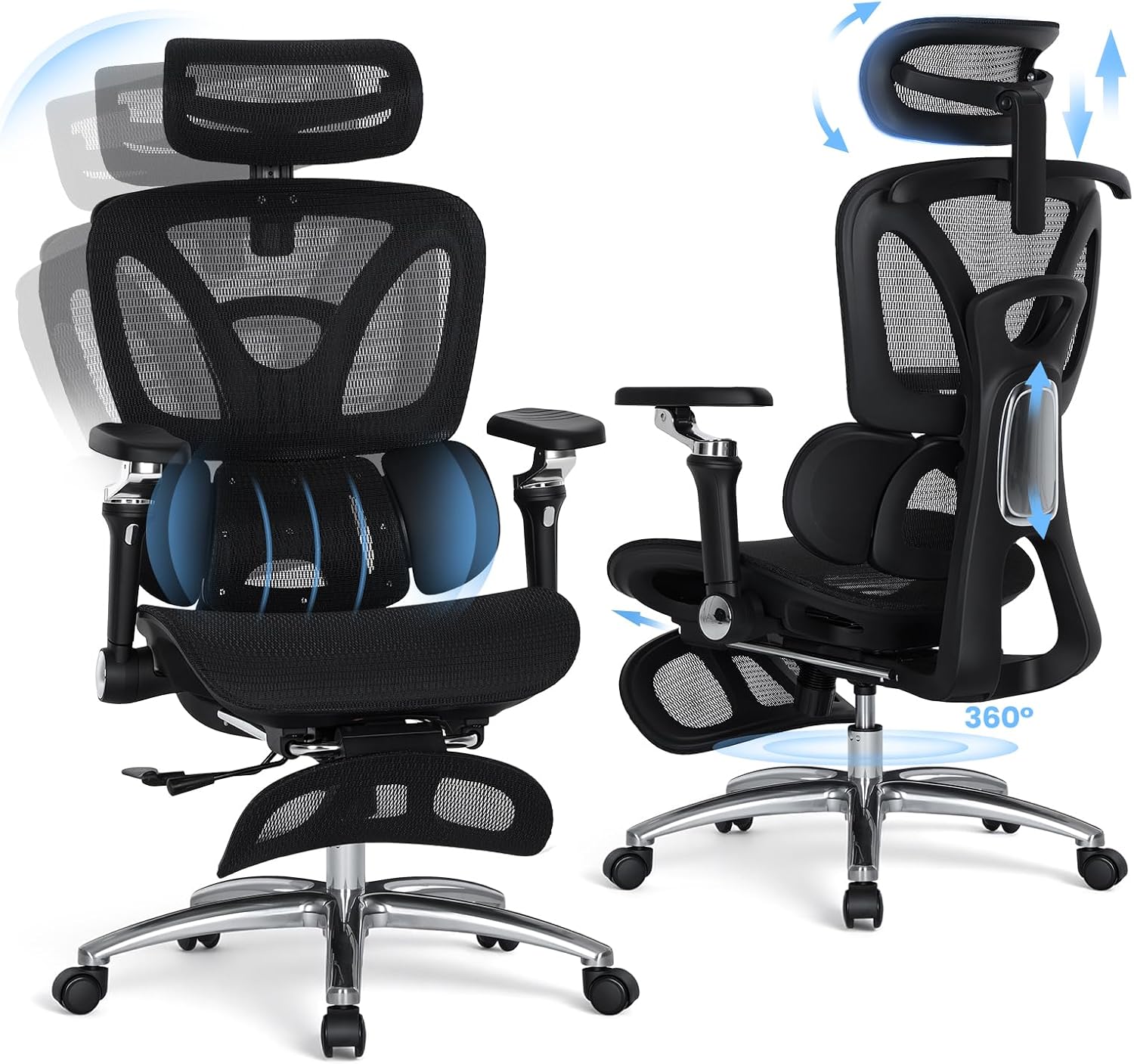
- Backrest and footrest motors operate independently, letting you extend the footrest without necessarily reclining the backrest fully, a more granular control than single-motion designs
- 6D armrest adjustment is more extensive than most chairs in this roundup
- Mesh construction breathes better than the leather options elsewhere on this list, relevant for a chair used in a reclined position for extended periods
Cons
- 135 degree maximum recline is more moderate than the deeper-reclining chairs in this roundup, so it does not reach a true elevated-leg zero gravity position the way some competitors do
- Lowest customer rating (4.0) among the chairs in this roundup

Pros
- 420 lb weight capacity is among the higher documented figures in this roundup
- Integrated seat cushion is built into the frame rather than a separate attachable pad, reducing the chance of shifting or sagging over time
- Cordless battery operation avoids a permanent power cord running to the desk
Cons
- 160 degree maximum recline is described by the maker as "nap mode" rather than a specifically engineered zero gravity position
- 1 year coverage on electronic components only, not the full frame

Pros
- Dynamic Support system synchronizes headrest, backrest, seat, and armrests together as you move, a more integrated approach than independently adjusted parts on other chairs in this roundup
- Flared base is specifically designed to release hip pressure and provide breathing room for broader backs, a detail not called out on other chairs here
- 5 lockable recline positions offer more precise stops than a stepless recline that can drift
Cons
- Highest price among the chairs with a standard (non-monitor-arm) configuration in this roundup
- Compatible footrest is sold separately in some bundles rather than always included, worth confirming before purchase

Pros
- Pocket spring cushion construction is a genuinely different seat build than the foam-only cushions on most other chairs in this roundup, similar in concept to a mattress
- 2-in-1 sliding pillow adjusts between head and lumbar positions on the same elastic strap, adapting to different recline angles without a separate accessory
- Breathable linen-style fabric resists the peeling and cracking that PU leather develops over time
Cons
- 155 degree recline is described as deep relaxation rather than a specifically engineered zero gravity position
- Lower price point may reflect fewer electronic features (no built-in USB charging mentioned) compared to pricier dual-motor competitors here

Pros
- Highest customer rating (5.0) among the chairs in this roundup, though worth checking the review count directly on the listing
- Low back vibration massage adds a genuine comfort feature not included on most other chairs in this roundup
- Independent backrest and footrest adjustment gives more granular control than a single-motion recline
Cons
- Listing does not publish a specific maximum recline angle, unlike most other chairs in this roundup
- Massage function is a comfort feature only, not a therapeutic device, and should not be relied on for pain treatment
What to Check on a Deep-Recline Office Chair
Recline Angle Is the Number That Actually Matters
Skip the marketing label and check the actual published recline range. Chairs in this roundup range from 135 to 170 degrees maximum. A wider range, especially one that pairs with a synchronized, extending footrest rather than a separate fixed footrest, gets closer to genuinely elevating your legs above heart level, the mechanical goal behind the original zero gravity concept. A chair stopping at 135 degrees is still a genuinely deep recline, just not the same mechanical position as one reaching 160 or 170.
Independent Versus Linked Backrest and Footrest Motors
Some chairs move the backrest and footrest together as one motion, while others use independent motors so you can extend the footrest without reclining fully, or recline without extending the footrest. Independent control gives more flexibility across different moments in a workday, useful if you want a partial recline for reading without committing to a full break position. Linked single-motor systems are simpler to operate but offer fewer intermediate configurations.
Weight Capacity and Frame Certification
A deep-recline chair puts more stress on the frame and lift mechanism than a chair that only tilts a few degrees. Look for BIFMA or SGS certification on the gas lift specifically, and confirm the published weight capacity, which ranges from 400 to 450 lbs in this roundup. A chair rated for continuous heavy daily reclining, not just occasional tilting, is worth the small premium over a generic gas lift with no stated cycle rating. For broader ergonomic seating fundamentals, see our guide to what to look for in an ergonomic office chair.
One-Touch Reset Matters More Than It Sounds
If you plan to recline during short breaks throughout a workday rather than once at the end, a one-touch reset that returns the backrest and footrest to upright in a single press is worth prioritizing over manually adjusting each one back. This is a small detail that becomes noticeable after the tenth time you get interrupted mid-recline by a call or a meeting.
Battery-Powered Versus Corded Recline Motors
Several chairs in this roundup run on a rechargeable battery rather than a permanent power cord to the desk, typically rated for a few hundred recline cycles per charge. That setup avoids a cord trailing across the floor but means occasionally remembering to recharge, similar to any other rechargeable device. If your desk setup already has power nearby and you prefer not to think about charging, a corded model may suit you better, though most chairs in this specific price range have moved toward battery operation for the flexibility it offers.
Cushion Construction Changes How the Recline Actually Feels
Most chairs in this roundup use standard high-density foam, but a couple use a genuinely different construction, a pocket spring layer similar to a mattress. That distinction matters more in a deep-recline chair than a standard upright one, since the seat and backrest bear weight differently once you are reclined at 150 degrees or more compared to sitting upright. A spring-based cushion tends to feel more like lying down, while dense foam stays firmer and more supportive at any angle.
Footrest Design Changes How Complete the Recline Feels
Not every deep-recline chair extends its footrest the same way. Some synchronize the footrest with the backrest motor so both move together on a single control, while others let you extend the footrest independently before or without reclining the backrest fully. A synchronized system feels more like one continuous motion into a reclined position, while independent control lets you rest your legs during upright work without committing to a full recline at the same time.
Final Thoughts
For the deepest recline and highest documented weight capacity in this roundup, the Dual Motor Executive Chair with 170 Degree Recline pairs a 450 lb rating with a one-touch reset for quick transitions back to work. For a genuinely different, all-in-one setup, the Zero Gravity Office Chair with Dual Monitor Arm builds a full workstation, monitors and keyboard tray included, around its recline mechanism, though at a significant premium. Both are worth comparing against the mid-range independent-motor picks further down the list.
FAQ
Is a zero gravity office chair actually good for back pain?
A deep recline with an elevated footrest can reduce spinal compression during a break, which some people find genuinely relieving, but it is not a treatment for an existing back condition. Persistent or severe back pain should be evaluated by a doctor rather than managed through chair features alone. If your discomfort is more specifically in the lower back rather than needing a full recline solution, our lower back pain roundup covers upright-seating options in more depth.
Do all “zero gravity” office chairs actually reach the original zero gravity position?
No. The term is used loosely across office chair marketing, sometimes for a 135 degree recline and sometimes for one closer to 170 degrees. Check the specific published recline angle rather than assuming the label alone guarantees a particular position.
Can I use a deep-recline chair as my main all-day work chair?
Most of these chairs are designed to switch between an upright working position and a reclined break position, not to stay reclined all day. Treat the deep-recline feature as a periodic break tool alongside upright focused work, similar to standing up and stretching, and see our guide on reducing back pain from sitting all day for general habits worth pairing with any chair.
Is a massage function on these chairs a real treatment feature?
No. Built-in vibration massage on an office chair is a comfort feature similar to a standalone massage pad, not a therapeutic device. If back pain is persistent or severe, consult a doctor rather than relying on a chair’s massage function to manage it.
This article covers general office seating, not medical treatment. A reclining office chair, however deep the recline, is not a certified medical device. Elevating the legs and reclining the spine can reduce pressure during a break, but it does not treat a diagnosed back condition. If pain is severe or persistent, see a doctor rather than relying on a chair.
A quick note on terminology before the list: “zero gravity” started as a specific NASA-derived seating position, roughly a 128-degree recline with the legs elevated above heart level, distributing body weight evenly and taking direct load off the spine. In office chair marketing, the term now gets applied loosely to any deep-recline chair with a synchronized footrest, sometimes at 135 degrees, sometimes closer to 170. We have noted the actual recline range for each chair below rather than assuming every listing that uses the phrase reaches the original engineered position. This is a different mechanism than the standard reclining office chairs we cover elsewhere, which lean more toward general comfort recline than a specifically elevated-leg position. All picks here are drawn from our broader Chairs for Back Pain lineup.
Prices in this category also span a wider range than most other roundups on this site, from a few hundred dollars for a mid-range dual-motor chair up to well over a thousand for a chair built around a full workstation setup. That spread reflects genuinely different construction and feature sets rather than just brand markup, so the buying guide below focuses on the specific mechanical differences worth paying for rather than price alone.
Disclosure: Ergonook is a participant in the Amazon Associates program. Links below are affiliate links, and we may earn a commission from qualifying purchases. This does not affect which chairs we recommend or how we rank them.
Pros
- 170 degree recline range is the deepest documented figure in this roundup, and the listing specifically frames the top of that range as a zero gravity position
- One-touch reset returns the chair to upright instantly, useful for anyone who reclines during breaks and needs to snap back to work posture quickly
- Documented 450 lb weight capacity is the highest in this roundup, with a BIFMA-certified mechanism
Cons
- Highest price point among the fully-featured chairs in this roundup
- Iron frame adds weight compared to aluminum-based competitors, making repositioning around a room less convenient
Pros
- Only chair in this roundup with an integrated monitor arm and keyboard tray, turning the whole unit into a mobile workstation rather than just a seat
- Single-lever recline control is simpler to operate one-handed than some multi-button systems on other chairs here
- Locking casters let you move the entire workstation and then fix it in place, unusual for a chair in this price category
Cons
- Highest price by a significant margin in this roundup
- Below-average customer rating (3.8) relative to most other chairs in this list
Pros
- Backrest and footrest motors operate independently, letting you extend the footrest without necessarily reclining the backrest fully, a more granular control than single-motion designs
- 6D armrest adjustment is more extensive than most chairs in this roundup
- Mesh construction breathes better than the leather options elsewhere on this list, relevant for a chair used in a reclined position for extended periods
Cons
- 135 degree maximum recline is more moderate than the deeper-reclining chairs in this roundup, so it does not reach a true elevated-leg zero gravity position the way some competitors do
- Lowest customer rating (4.0) among the chairs in this roundup
Pros
- 420 lb weight capacity is among the higher documented figures in this roundup
- Integrated seat cushion is built into the frame rather than a separate attachable pad, reducing the chance of shifting or sagging over time
- Cordless battery operation avoids a permanent power cord running to the desk
Cons
- 160 degree maximum recline is described by the maker as "nap mode" rather than a specifically engineered zero gravity position
- 1 year coverage on electronic components only, not the full frame
Pros
- Dynamic Support system synchronizes headrest, backrest, seat, and armrests together as you move, a more integrated approach than independently adjusted parts on other chairs in this roundup
- Flared base is specifically designed to release hip pressure and provide breathing room for broader backs, a detail not called out on other chairs here
- 5 lockable recline positions offer more precise stops than a stepless recline that can drift
Cons
- Highest price among the chairs with a standard (non-monitor-arm) configuration in this roundup
- Compatible footrest is sold separately in some bundles rather than always included, worth confirming before purchase
Pros
- Pocket spring cushion construction is a genuinely different seat build than the foam-only cushions on most other chairs in this roundup, similar in concept to a mattress
- 2-in-1 sliding pillow adjusts between head and lumbar positions on the same elastic strap, adapting to different recline angles without a separate accessory
- Breathable linen-style fabric resists the peeling and cracking that PU leather develops over time
Cons
- 155 degree recline is described as deep relaxation rather than a specifically engineered zero gravity position
- Lower price point may reflect fewer electronic features (no built-in USB charging mentioned) compared to pricier dual-motor competitors here
Pros
- Highest customer rating (5.0) among the chairs in this roundup, though worth checking the review count directly on the listing
- Low back vibration massage adds a genuine comfort feature not included on most other chairs in this roundup
- Independent backrest and footrest adjustment gives more granular control than a single-motion recline
Cons
- Listing does not publish a specific maximum recline angle, unlike most other chairs in this roundup
- Massage function is a comfort feature only, not a therapeutic device, and should not be relied on for pain treatment
What to Check on a Deep-Recline Office Chair
Recline Angle Is the Number That Actually Matters
Skip the marketing label and check the actual published recline range. Chairs in this roundup range from 135 to 170 degrees maximum. A wider range, especially one that pairs with a synchronized, extending footrest rather than a separate fixed footrest, gets closer to genuinely elevating your legs above heart level, the mechanical goal behind the original zero gravity concept. A chair stopping at 135 degrees is still a genuinely deep recline, just not the same mechanical position as one reaching 160 or 170.
Independent Versus Linked Backrest and Footrest Motors
Some chairs move the backrest and footrest together as one motion, while others use independent motors so you can extend the footrest without reclining fully, or recline without extending the footrest. Independent control gives more flexibility across different moments in a workday, useful if you want a partial recline for reading without committing to a full break position. Linked single-motor systems are simpler to operate but offer fewer intermediate configurations.
Weight Capacity and Frame Certification
A deep-recline chair puts more stress on the frame and lift mechanism than a chair that only tilts a few degrees. Look for BIFMA or SGS certification on the gas lift specifically, and confirm the published weight capacity, which ranges from 400 to 450 lbs in this roundup. A chair rated for continuous heavy daily reclining, not just occasional tilting, is worth the small premium over a generic gas lift with no stated cycle rating. For broader ergonomic seating fundamentals, see our guide to what to look for in an ergonomic office chair.
One-Touch Reset Matters More Than It Sounds
If you plan to recline during short breaks throughout a workday rather than once at the end, a one-touch reset that returns the backrest and footrest to upright in a single press is worth prioritizing over manually adjusting each one back. This is a small detail that becomes noticeable after the tenth time you get interrupted mid-recline by a call or a meeting.
Battery-Powered Versus Corded Recline Motors
Several chairs in this roundup run on a rechargeable battery rather than a permanent power cord to the desk, typically rated for a few hundred recline cycles per charge. That setup avoids a cord trailing across the floor but means occasionally remembering to recharge, similar to any other rechargeable device. If your desk setup already has power nearby and you prefer not to think about charging, a corded model may suit you better, though most chairs in this specific price range have moved toward battery operation for the flexibility it offers.
Cushion Construction Changes How the Recline Actually Feels
Most chairs in this roundup use standard high-density foam, but a couple use a genuinely different construction, a pocket spring layer similar to a mattress. That distinction matters more in a deep-recline chair than a standard upright one, since the seat and backrest bear weight differently once you are reclined at 150 degrees or more compared to sitting upright. A spring-based cushion tends to feel more like lying down, while dense foam stays firmer and more supportive at any angle.
Footrest Design Changes How Complete the Recline Feels
Not every deep-recline chair extends its footrest the same way. Some synchronize the footrest with the backrest motor so both move together on a single control, while others let you extend the footrest independently before or without reclining the backrest fully. A synchronized system feels more like one continuous motion into a reclined position, while independent control lets you rest your legs during upright work without committing to a full recline at the same time.
Final Thoughts
For the deepest recline and highest documented weight capacity in this roundup, the Dual Motor Executive Chair with 170 Degree Recline pairs a 450 lb rating with a one-touch reset for quick transitions back to work. For a genuinely different, all-in-one setup, the Zero Gravity Office Chair with Dual Monitor Arm builds a full workstation, monitors and keyboard tray included, around its recline mechanism, though at a significant premium. Both are worth comparing against the mid-range independent-motor picks further down the list.
FAQ
Is a zero gravity office chair actually good for back pain?
A deep recline with an elevated footrest can reduce spinal compression during a break, which some people find genuinely relieving, but it is not a treatment for an existing back condition. Persistent or severe back pain should be evaluated by a doctor rather than managed through chair features alone. If your discomfort is more specifically in the lower back rather than needing a full recline solution, our lower back pain roundup covers upright-seating options in more depth.
Do all “zero gravity” office chairs actually reach the original zero gravity position?
No. The term is used loosely across office chair marketing, sometimes for a 135 degree recline and sometimes for one closer to 170 degrees. Check the specific published recline angle rather than assuming the label alone guarantees a particular position.
Can I use a deep-recline chair as my main all-day work chair?
Most of these chairs are designed to switch between an upright working position and a reclined break position, not to stay reclined all day. Treat the deep-recline feature as a periodic break tool alongside upright focused work, similar to standing up and stretching, and see our guide on reducing back pain from sitting all day for general habits worth pairing with any chair.
Is a massage function on these chairs a real treatment feature?
No. Built-in vibration massage on an office chair is a comfort feature similar to a standalone massage pad, not a therapeutic device. If back pain is persistent or severe, consult a doctor rather than relying on a chair’s massage function to manage it.




Write Your Review
No reviews yet. Be the first to share your experience!