

A search for an office chair for a 300 lb person is really a search for one number: the manufacturer’s actual weight rating, not the word “ergonomic” printed on the listing. Most standard office chairs are rated to hold somewhere between 250 and 275 pounds, which means a person at or above 300 pounds is already past the safe margin on a large share of what shows up in a general chair search. Sitting on a chair rated below your own weight is not just a comfort issue: the gas lift, base, and welds all wear out faster than the manufacturer’s own rating assumed, which shows up over months as sinking, wobbling, or a mechanism that no longer locks reliably. The big and tall office chair category exists specifically to solve that gap.
We pulled eight chairs currently sold on Amazon with published weight ratings from 330 to 750 pounds, comparing the actual specification sheets rather than star ratings alone. Seat width, cushion thickness, lumbar adjustability, and base construction all shifted noticeably as the weight rating climbed, so this list is organized to help you match the chair to your own number instead of just picking the highest rating available. Someone whose weight sits right around 300 pounds has different priorities than someone closer to 500 or 600, and a chair that is well suited to one end of that range is often the wrong pick at the other end, whether because the seat feels too small or because the price climbs well past what the extra capacity is actually worth. If you want the broader lineup this list was drawn from, see our full big and tall office chair guide.
Disclosure: Ergonook is a participant in the Amazon Associates program. Links below are affiliate links, and we may earn a commission from qualifying purchases. This does not affect which chairs we recommend or how we rank them.

Pros
- Weight rating clears the 300-pound threshold with room to spare
- 4D lumbar adjustment is more precise than most chairs at this price
- Mesh back stays cool during long sessions compared to foam-backed chairs
- Recline and tilt tension adjust independently for a more personalized fit
Cons
- Seat pan is standard width, not an oversized XL seat, so very broad-framed users should check the dedicated big and tall picks below
- Assembly instructions are adequate but not as detailed as premium competitors
The Duramont sits in an interesting spot for this list. It is not marketed as a big and tall chair, but its manufacturer weight rating of 330 pounds clears the 300-pound threshold this roundup is built around, and it does so while keeping a more standard seat width and profile than the XL-specific chairs further down this page.
The main draw is adjustability. The 4D lumbar system moves in four directions rather than the simple up-down adjustment found on cheaper chairs, so users can dial in support for the exact curve of their lower back. Recline angle and tilt tension are also independently adjustable, which matters for anyone who alternates between focused typing and leaning back to think.
Build quality centers on a reinforced aluminum base and a breathable mesh backrest, with a memory foam seat cushion that holds its shape better than basic polyurethane foam over time. Reviewers consistently point to the lumbar support and mesh breathability as the strongest points of the design.
The tradeoff is proportions. Because this is a general ergonomic chair rather than a purpose-built big and tall model, the seat itself is not as wide as options like the HON Sadie or GABRYLLY below. It suits users near the lower end of this roundup's weight range who want strong adjustability more than extra-wide dimensions.
Weight Rating: 330 lbs per manufacturer specification. Frame: reinforced aluminum base with alloy steel frame. Backrest: 100 percent breathable mesh.
Seat: memory foam cushion with a boxed edge. Seat Height: approximately 20.8 inches. Seat Depth: approximately 20 inches.
Lumbar Support: 4D adjustable (up, down, in, out). Armrests: height-adjustable. Recline: 3 locking positions with adjustable tilt tension.
Item Weight: approximately 44.5 lbs. Warranty: 5 years. Color: black.
Consider the Duramont if your weight is close to the 300-pound mark and you value precise lumbar and recline adjustment over maximum seat width. Its 330-pound rating leaves a real margin, but it is not built with the reinforced, extra-wide frame of a true big and tall chair.
If you are closer to 400 pounds and above, or if you specifically need a wider seat pan for comfort rather than just weight capacity, look at the AnyGod, YFO, or KWKSV picks in this roundup instead, since they are engineered from the ground up for larger frames.
The independent recline and tilt tension controls make this a strong choice for anyone who shifts between upright typing and reclined reading or calls throughout the day.

Pros
- HON is an established commercial office furniture brand, a different tier of manufacturing than most Amazon-only big and tall sellers
- Fabric upholstery breathes better than PU leather during long coding sessions
- Height-adjustable arms help align wrist position with a keyboard and mouse
Cons
- 350 lb capacity is on the lower end of this roundup
- Arms adjust in height only, not the multi-directional range of 3D or 4D designs

Pros
- Armrest adjustability is unusually wide-ranging for the price point
- 3D headrest is a genuine differentiator most big and tall chairs skip
- Double lumbar design gives more contact area than a single lumbar pad
- Mesh construction breathes well for extended sitting
Cons
- Lower review count than some other picks, so long-term durability data is thinner
- Only available in a limited color selection
The GABRYLLY stands out in this roundup for its headrest and armrest adjustability. Where most big and tall chairs treat the headrest as a fixed pad, this one moves in three dimensions, letting users raise, lower, and angle it to actually support the neck rather than just brush against it.
The armrests rotate through 215 degrees and adjust up, down, forward, and back, which is a wider range of motion than most chairs at this price offer. Combined with a double-layer lumbar design that follows the natural curve of the lower back, the chair is built around a philosophy of matching the body rather than asking the body to adapt to the chair.
Weight capacity is rated at 350 pounds, and the mesh construction throughout the back and seat helps with airflow during long sessions. The 90 to 120 degree tilt-back range covers a useful working recline without tipping into a fully flat lounge position.
The main gap compared to the HON Sadie above is review volume and brand history. GABRYLLY is a newer direct-to-consumer brand, so there is less long-term ownership data to draw on, even though the feature set on paper is competitive.
Weight Rating: 350 lbs. Headrest: 3D adjustable. Armrests: 3D, 215-degree rotation.
Lumbar Support: double-layer, curve-following design. Recline: 90 to 120 degrees tilt-back. Backrest and Seat: breathable mesh.
Color: grey. Recommended Uses: office, computer, and gaming setups. Included Components: arm pads, cushion, and headrest.
Consider the GABRYLLY if neck support and armrest customization matter as much to you as the weight rating itself. The 3D headrest and wide-range armrests address two common complaints about big and tall chairs: a headrest that never quite lines up, and armrests that force an unnatural elbow position.
Because it is a newer brand with a smaller review base, buyers who prioritize long-term track record over feature count may lean toward the HON Sadie instead.

Pros
- Lowest price point among the big and tall picks in this roundup
- Reinforced steel base and certified gas lift add real stability for the price
- Flip-up armrests are a practical, space-saving detail rarely found this cheap
- Weight rating clears the 300-pound mark with a reasonable margin
Cons
- Smaller review base than the more established picks in this roundup
- Lumbar pillow is a single adjustable pad rather than a full double-lumbar system
- Not built for users near the top of the 300-pound range; consider a higher-rated chair instead
The Synorla is the budget entry in this roundup, and its 330-pound rating puts it right at the threshold this list is built around rather than well above it. For buyers whose weight sits closer to 300 pounds than 400, that is still a workable margin, and the price makes it an easy first chair to try.
Despite the lower price, the chair includes a reinforced steel base and an SGS-certified Grade 3 gas lift, both of which are meaningful stability features rather than cosmetic add-ons. The S-shaped mesh backrest with a 1.7-inch adjustable lumbar pillow gives basic but real lower-back support.
Flip-up armrests are a small but useful touch, letting the chair slide fully under a desk when not in active use. The 4.1-inch seat cushion is on the thicker side for a chair in this price bracket.
The tradeoff for the price is a smaller number of reviews and a slightly lower average rating than the more established brands in this roundup, so buyers should weigh the savings against a thinner ownership track record.
Weight Rating: 330 lbs. Base: reinforced steel with SGS-certified Grade 3 gas lift. Backrest: S-shaped breathable mesh.
Lumbar Support: 1.7-inch adjustable pillow. Seat Cushion: 4.1 inches thick. Armrests: flip-up.
Color: black. Recommended Uses: home office. Included Components: arm pads, casters, cushion, and ottoman.
Consider the Synorla if budget is the top priority and your weight is closer to the 300-pound mark than the higher end of this roundup's range. The reinforced base and certified gas lift add genuine stability that many budget chairs skip.
If you are heavier than roughly 300 pounds or want a longer ownership track record to lean on, the HON Sadie or AnyGod picks in this roundup carry higher weight ratings and larger review bases.

Pros
- Mesh back stays cooler than leather over long sessions
- Widened seat still fits a compact office footprint
- S-curve backrest tracks the spine's natural shape
Cons
- Seat height figures for this model run higher than the WAILOR and Chair Store options above
- Armrests are fixed rather than flip-up or 4D adjustable

Pros
- 500-pound rating is well above the 300-pound threshold, with substantial margin for larger frames
- Seat is noticeably wider and thicker than mid-tier picks in this roundup
- 2D armrests with full rotation add real flexibility for different desk heights
- Quiet casters are a small but appreciated detail for shared spaces
Cons
- Bulkier footprint that needs more floor space than compact chairs
- Moderate review count compared to the largest brands on this list
The YFO steps up meaningfully in capacity compared to the earlier picks in this roundup, with a 500-pound weight rating that gives a wide safety margin above the 300-pound mark. That extra headroom is paired with a seat that is genuinely wider and thicker rather than just a higher number on a spec sheet.
Adjustable lumbar support addresses lower back comfort, while the 2D armrests rotate a full 360 degrees, letting users find an arm position that works for typing, mousing, or simply resting their arms during a call. Quiet-rolling casters are a small detail that matters more than it sounds for anyone sharing a home office space.
Because the seat and frame are built to accommodate significantly more weight than a standard chair, the overall footprint is larger. Buyers with limited floor space should measure their desk area before choosing this over a more compact option.
Review volume is moderate rather than extensive, but feedback consistently highlights the seat width and stability as the strongest points of the design.
Weight Rating: 500 lbs. Seat: extra wide and thick cushion. Lumbar Support: adjustable.
Armrests: 2D, 360-degree rotation. Casters: quiet-rolling. Recommended Uses: office and reading.
Color: black. Room Type: bedroom, living room, or office. Included Components: cushion.
Consider the YFO if you want substantial capacity margin above the 300-pound mark or simply prefer a wider, more generously proportioned seat regardless of your exact weight. The 500-pound rating puts it a full tier above the entry and mid-range picks in this roundup.
Measure your desk clearance first, since the wider frame takes up more floor space than the standard-profile chairs earlier on this list.
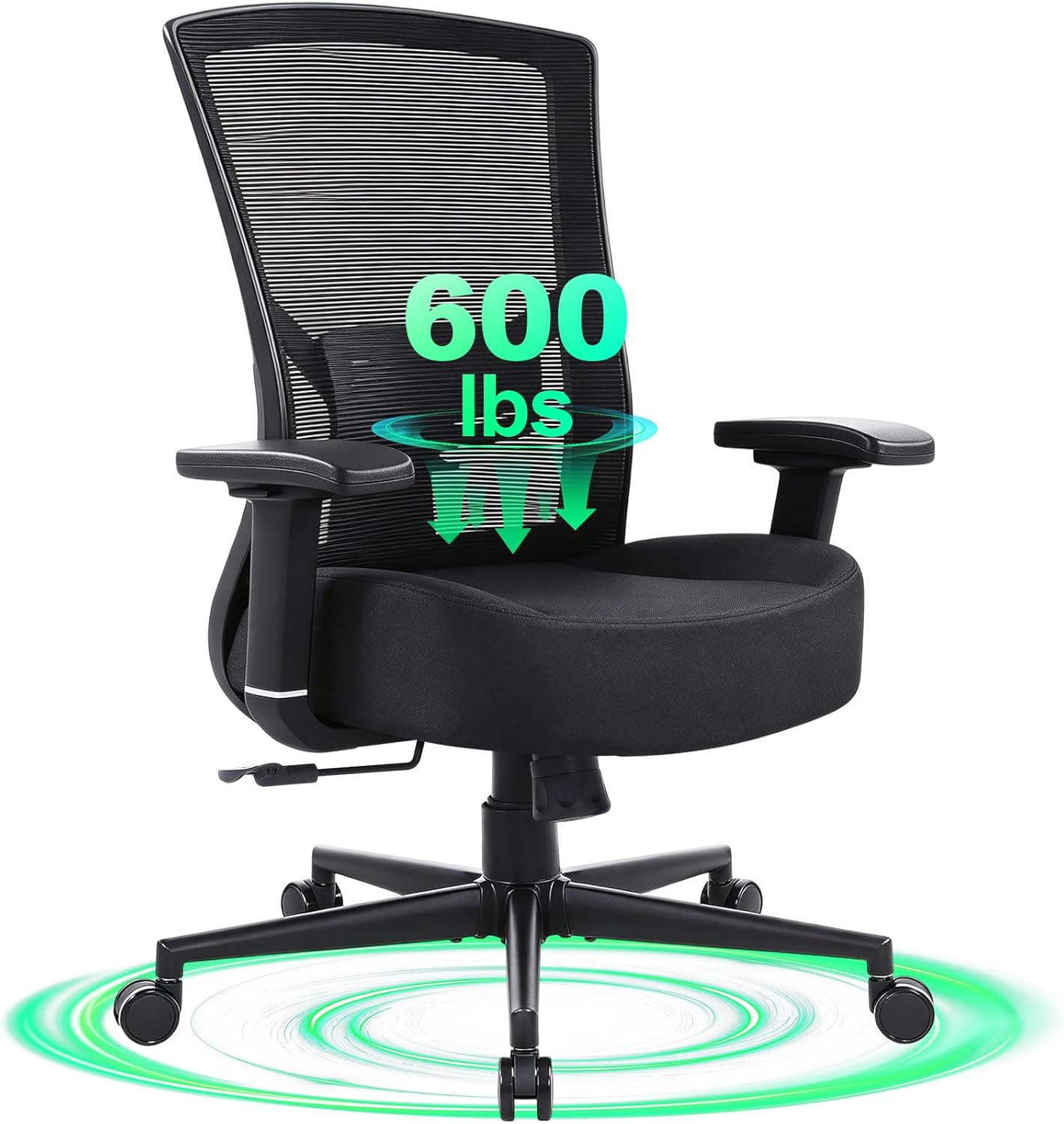
Pros
- 600-pound rating is among the highest in this roundup, suited to larger frames
- Seat dimensions and cushion thickness are genuinely oversized, not just labeled that way
- Waterfall seat edge reduces pressure behind the knees during long sitting
- Breathable mesh helps offset the bulk of the extra padding
Cons
- Large footprint requires more desk and floor clearance than standard chairs
- Smaller review base than the more established brands on this list
The KWKSV is built specifically for larger frames, with a 600-pound weight rating that stands among the highest in this roundup. Rather than simply raising the number on a spec sheet, the chair backs that rating with genuinely oversized dimensions: a seat measuring roughly 20.86 inches wide by 19.29 inches deep, cushioned with 5.1 inches of padding.
A waterfall seat edge curves downward at the front, which reduces pressure behind the knees during long sitting sessions, a detail that matters more as seat depth and cushion thickness increase. Adjustable lumbar support and a breathable mesh backrest round out the ergonomic features.
The tradeoff for this much capacity and cushioning is footprint. This is one of the larger chairs in the roundup, and it is best suited to a dedicated home office rather than a tight corner desk setup.
As a newer brand, the review base is smaller than HON or Amazon Basics, though the specification sheet is unusually detailed and specific for a chair at this price point.
Weight Rating: 600 lbs. Seat Dimensions: approximately 20.86 inches wide by 19.29 inches deep. Cushion Thickness: 5.1 inches.
Seat Design: waterfall front edge. Lumbar Support: adjustable. Backrest: adjustable, breathable mesh.
Recommended Uses: drafting, gaming, office, and reading. Surface Recommendation: carpet and hard floor. Included Components: chair cover and cushion.
Consider the KWKSV if you need one of the higher weight ratings in this roundup or simply want the most generously sized seat regardless of your exact weight. The oversized cushion and waterfall edge are built for comfort over multi-hour sessions.
Confirm your desk clearance before buying, since this is a physically large chair. If floor space is limited, the YFO offers a similar capacity tier in a somewhat smaller footprint.
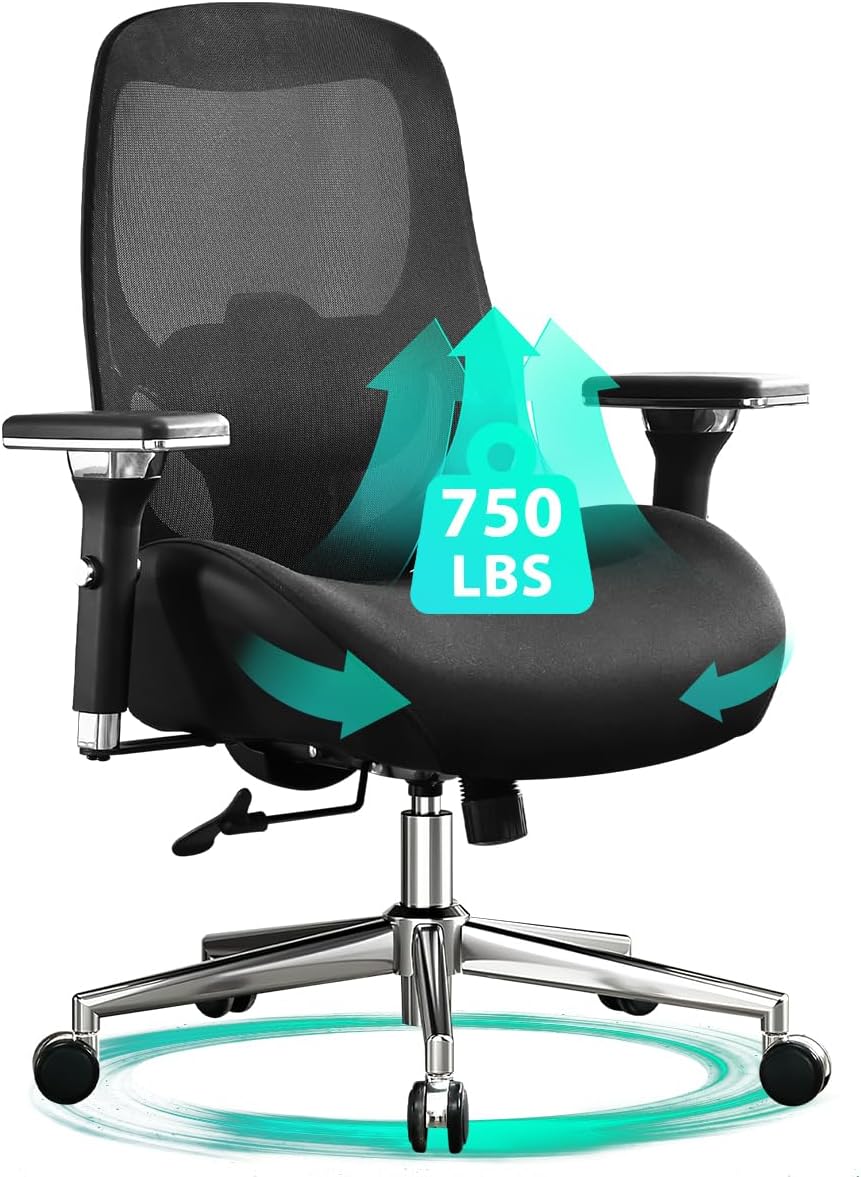
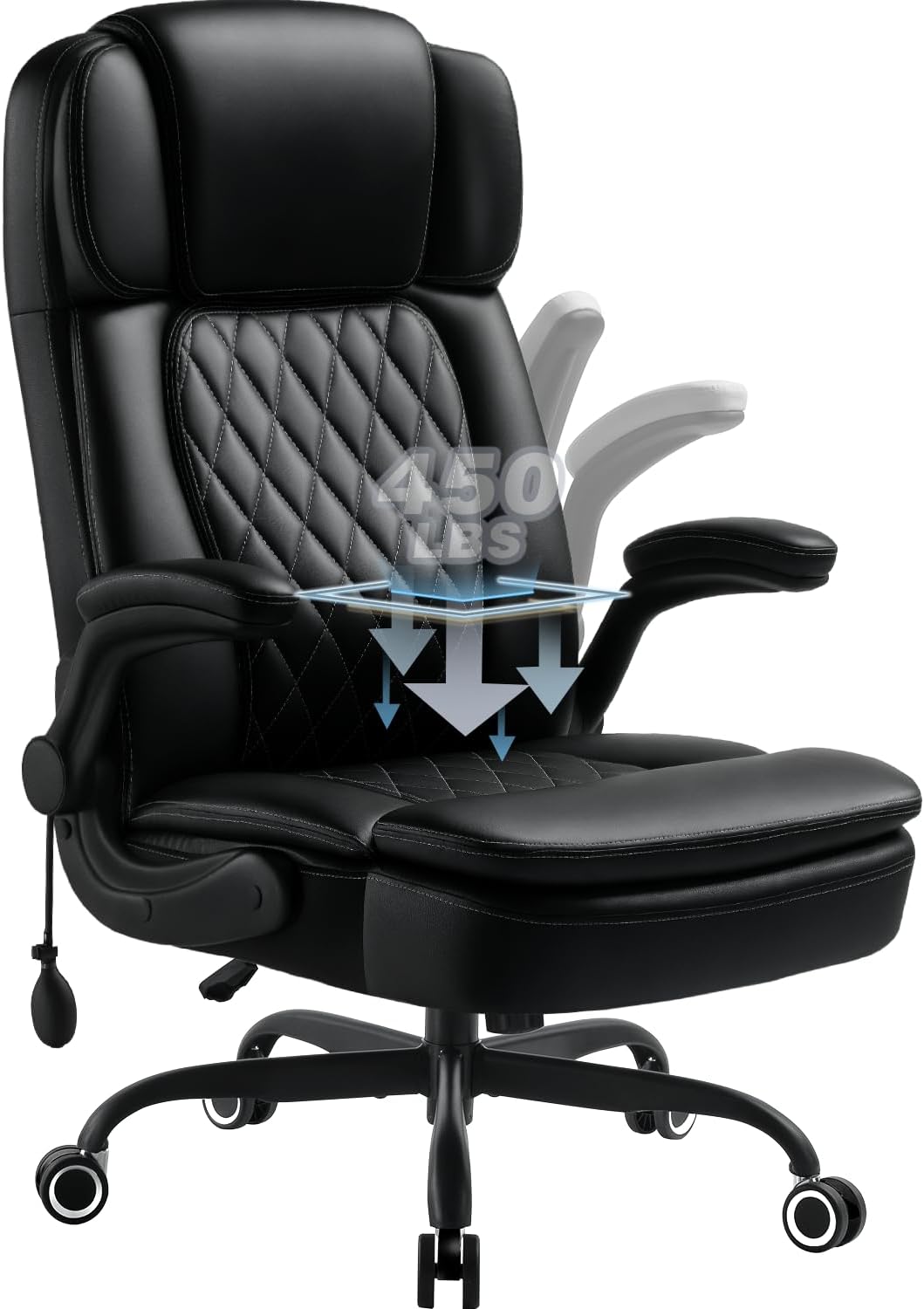
Pros
- 750 lb rating is among the highest in the entire Big and Tall category on this site
- Seat height around 19.3 inches keeps it reachable for most shorter users
- 4D armrests adjust in more directions than fixed or flip-up designs
Cons
- Oversized U-shaped cushion adds bulk to the seat pan
- Heavier overall chair weight makes repositioning it more effort
What to Look for in an Office Chair Rated for 300 Lbs and Up
Weight Capacity: Read the Spec Sheet, Not the Headline
Listing titles and bullet copy sometimes state a higher weight figure than the manufacturer’s own structured specification field. When the two disagree, the more conservative, formally listed rating is the safer number to shop against. A chair rated for 330 pounds still clears the 300 pound mark, but with a much smaller margin than one rated for 500 or 600 pounds, and that margin affects how the chair feels and how long the mechanism lasts under daily load. Treat the headline number in a product title as marketing copy until you have confirmed it against the structured specification field further down the listing, since that field tends to reflect what the manufacturer is willing to stand behind rather than what reads best in a bullet point. Our guide to what to look for in an ergonomic office chair covers how to read a spec sheet before you buy.
Seat Width and Depth Change the Comfort Math
Two chairs can share the same weight rating and feel completely different to sit in, because the number on the spec sheet says nothing about seat width or depth. A chair engineered from the ground up for larger frames, with a genuinely wider seat pan and a thicker cushion, tends to distribute weight more evenly than a standard-width chair that has simply been reinforced to survive a higher load. That distinction is why two chairs on this list carrying near-identical weight ratings can still feel noticeably different in daily use: one spreads your weight across a wider, thicker cushion, while the other concentrates it on a narrower pan held up by a stronger frame. If your shoulders or hips are wider than average, prioritize the picks in this list with explicit seat dimensions over ones that only advertise a weight number, and check the listed seat depth against your own thigh length if you plan to sit for long stretches without a break.
Lumbar Support You Can Actually Adjust
A fixed lumbar bump helps only the fraction of users whose lower back happens to match its exact height and depth. Adjustable lumbar support, whether it moves in two directions or four, lets you fit the chair to your own spine rather than the other way around. This matters even more on a big and tall frame, since a taller torso often needs the lumbar contact point set higher than a standard chair assumes by default, and a wider frame changes how pressure spreads across the lower back compared to a narrow, standard-width seat. Chairs on this list range from a single adjustable pad to a double-layer system paired with a separately adjustable headrest, and the more adjustment points a chair offers, the more likely it is to fit an unusual torso length rather than an average one. See our walkthrough on how to adjust an ergonomic office chair once your new chair arrives.
Base, Casters, and Certification for Daily Heavy Use
The base and gas lift carry the full weight load every time you sit down, so this is not a place to assume all chairs are built the same. Reinforced steel bases, SGS-certified gas lifts, and BIFMA-certified frames all signal that the manufacturer had the component verified against a recognized safety standard rather than an internal claim, and that verification tends to matter more at the higher end of the weight range, where a mediocre gas lift fails months earlier than a certified one. Quiet-rolling casters rated for hard floors or carpet are a smaller detail, but they matter for daily wear over years of use, not just the first few months, and the wrong caster type on a hardwood floor will scuff and roll less smoothly regardless of how well the rest of the chair is built.
Final Thoughts
For most shoppers in the 300 to 400 pound range who want a chair built by an established commercial furniture brand rather than a newer direct-to-consumer name, the HON Sadie Big and Tall is the strongest overall pick on this list, backed by a genuinely wide seat, a high-back profile, and a 350 pound rating that comes from a manufacturer with decades of commercial furniture experience behind it. If budget is the deciding factor and your weight sits closer to the 300 pound mark itself, the Synorla 330 Lb Capacity Chair delivers a reinforced steel base and a certified gas lift at a fraction of the price of the premium options above, and it remains the most sensible starting point for anyone who wants to confirm a big and tall chair actually helps before spending more on one of the higher-capacity picks further up this list.
FAQ
What weight capacity should I look for if I weigh close to 300 pounds?
Aim for a chair rated at least 50 to 100 pounds above your actual weight rather than one rated exactly at your weight. That margin accounts for movement, leaning, and the gradual wear a gas lift and frame experience over years of daily use, and it typically means the mechanism runs more smoothly for longer. A chair rated within a few pounds of your own weight is the one most likely to show early signs of strain, such as a gas lift that slowly sinks over months or a base that starts to creak under normal use.
Are big and tall office chairs different from a standard chair with a higher weight rating?
Often, yes. A true big and tall design typically widens the seat pan, raises the back height, and reinforces the base and frame together, rather than just swapping in a stronger gas lift under an otherwise standard chair. Two products can carry the same printed weight number while differing meaningfully in how that capacity was engineered, so it is worth checking whether a listing mentions a wider seat pan and reinforced frame specifically, rather than assuming any chair labeled with a high weight rating was designed with a larger body in mind from the start. Our guide to office chairs for heavier users looks at this distinction in more detail.
Can a bigger office chair help with back discomfort during long work days?
A properly sized chair with adjustable lumbar support can make sitting more comfortable by distributing weight more evenly and reducing pressure points, which is a meaningful factor in day-to-day comfort. It is not a treatment for an existing back condition, so if pain persists, a healthcare provider is the right resource rather than a chair alone. Our article on signs your office chair is bad for your back covers warning signs worth watching for.
Do I need to spend a lot to get a chair rated above 300 pounds?
No. Several chairs in this roundup clear 300 pounds of rated capacity at a modest price, though the more affordable options tend to have a smaller safety margin and a shorter review history than premium picks from established brands. Matching the price tier to how much margin above your own weight you want is a reasonable way to narrow the list: a chair rated close to your own weight can usually be found cheaply, while a wider margin, a genuinely oversized seat, or a well-established brand name generally comes with a higher price attached.




Write Your Review
No reviews yet. Be the first to share your experience!