

This article covers general seating features, not medical or mobility equipment. None of the chairs below are designed, certified, or marketed as assistive devices. If you or someone you are shopping for has a diagnosed mobility condition, a fall risk, or specific physical therapy needs, talk to a doctor or occupational therapist before choosing a chair, since they can assess needs that a product listing cannot. What follows are general seating considerations, stable bases, supportive armrests, higher weight ratings, that tend to matter more for an older adult than for a younger, more mobile user, based on publicly available product specifications rather than any clinical evaluation.
Getting in and out of a chair safely depends more on the armrests and base than on cushioning or style, which is where most big and tall office chairs marketing tends to focus instead. A swivel chair that rolls unexpectedly when weight is pushed against the armrest, or a chair with no armrests at all, can make standing up harder than it needs to be regardless of how comfortable the seat itself is. This list prioritizes chairs with a stable base, supportive armrests, and a documented weight rating over recline range, massage features, or gaming-chair styling.
Disclosure: Ergonook is a participant in the Amazon Associates program. Links below are affiliate links, and we may earn a commission from qualifying purchases. This does not affect which chairs we recommend or how we rank them.
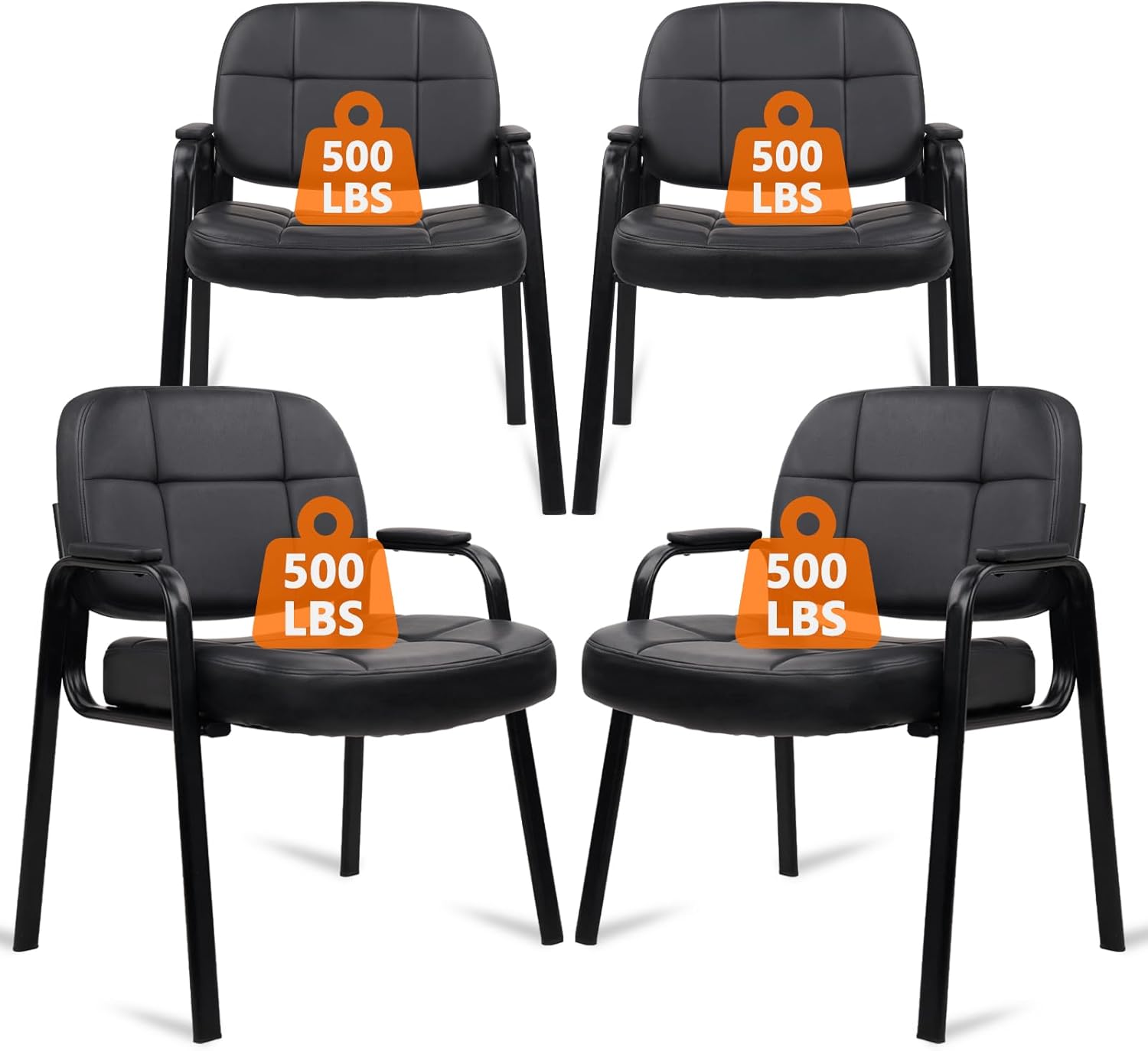
Pros
- Stationary, no-wheel base stays put when pushing up from the armrests, unlike a swivel chair that can roll unexpectedly
- Padded armrests give a stable surface to press against when standing up
- Simple design with fewer moving parts to maintain over time
Cons
- No swivel or recline function, a tradeoff for the stationary stability
- No height adjustment, so confirm seat height fits before ordering
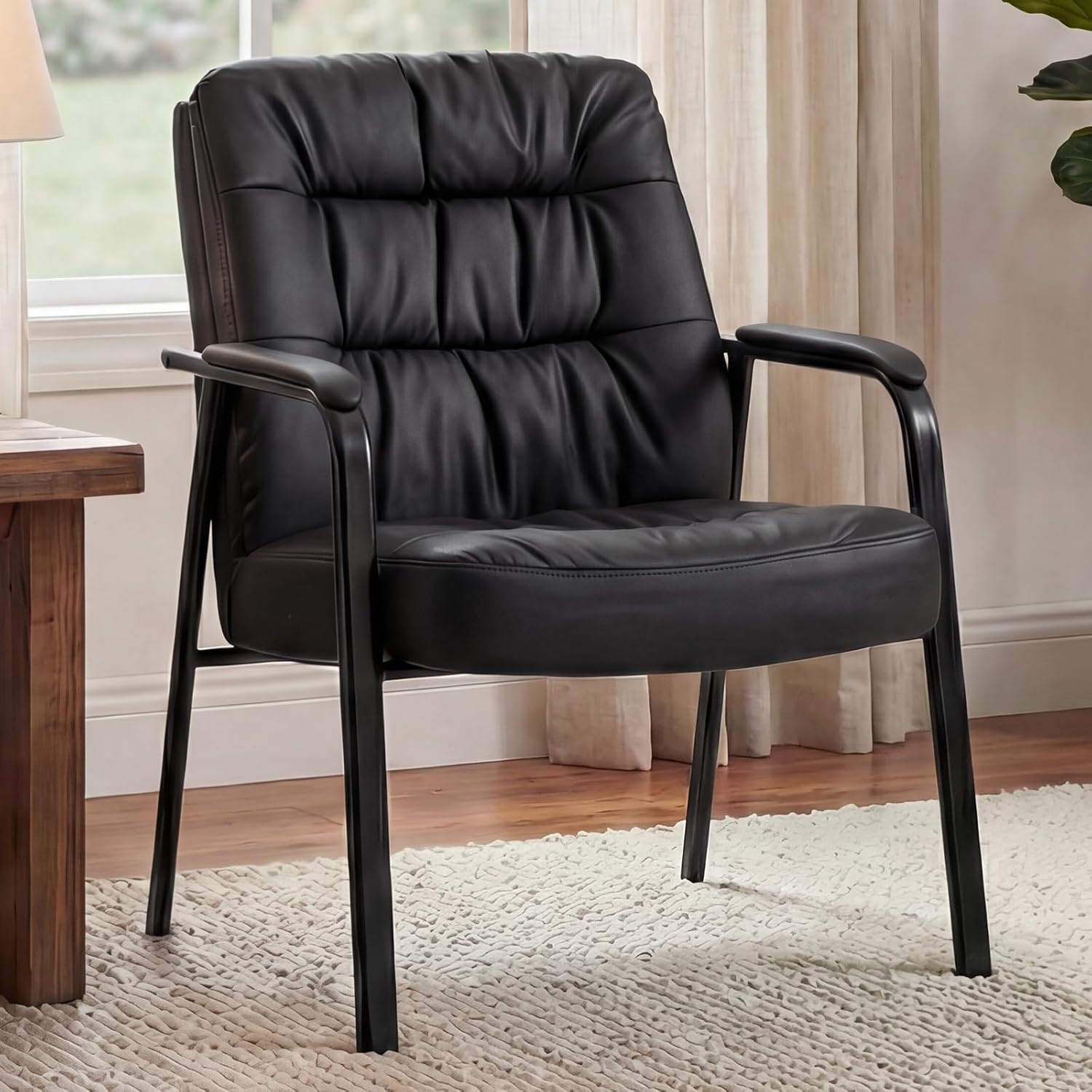
Pros
- Lowest price of any chair in this roundup
- Stationary base avoids the unexpected rolling that can happen when pushing off a swivel chair's armrests
- High-resilience cushion aims to reduce fatigue during longer sitting periods
Cons
- No swivel, recline, or height adjustment
- Faux leather rather than genuine leather or breathable mesh

Pros
- Established furniture brand rather than a newer Amazon-only seller
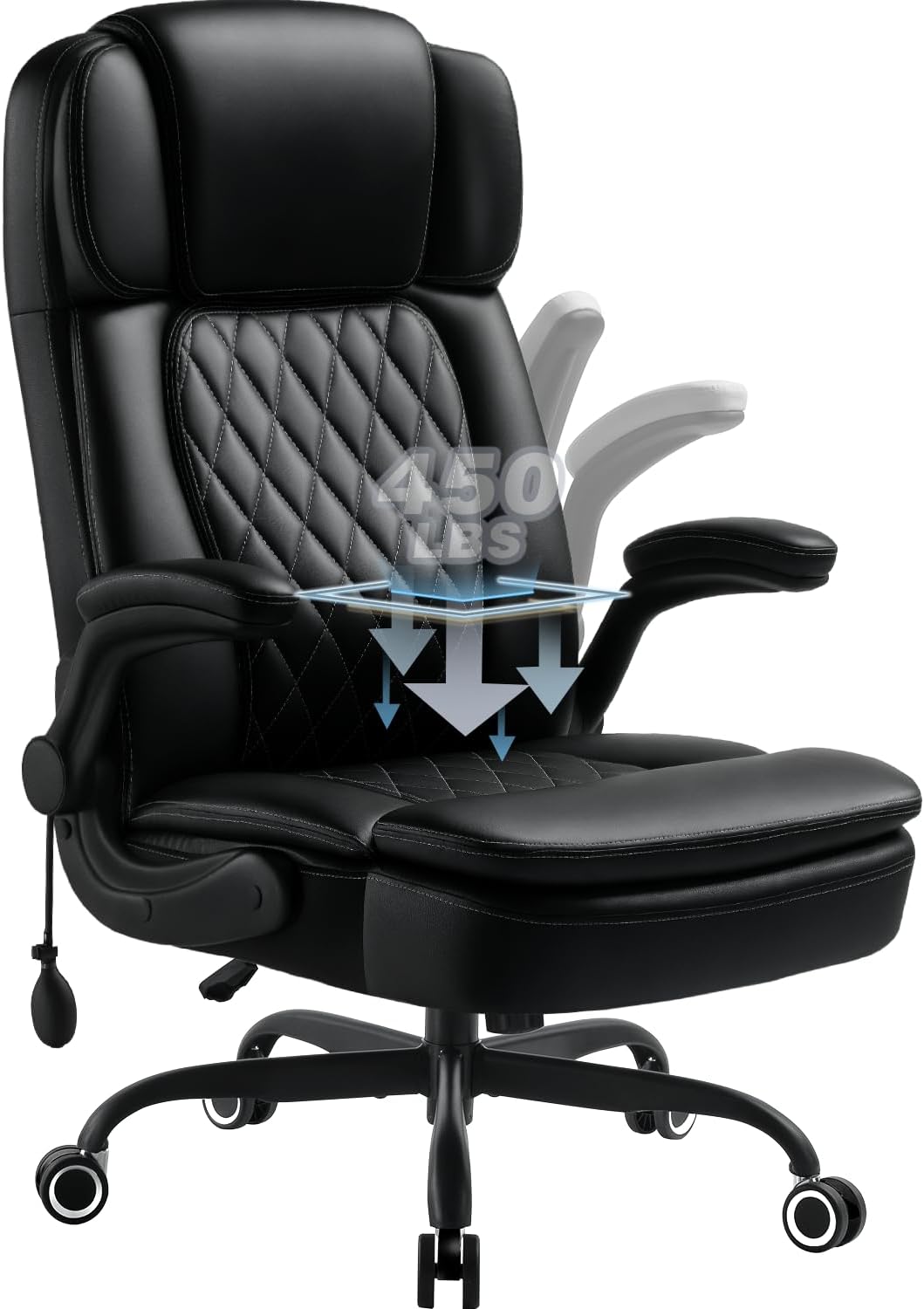
- Flip-up arms can be moved out of the way entirely, useful when a fixed armrest would otherwise be in the way while standing
- Adjustable height and tilt allow fine-tuning for a comfortable, supportive seated position
Cons
- 400 lb capacity is the lowest weight rating in this roundup
- Swivel base and casters mean the chair can move if not braced, unlike the stationary picks in this list
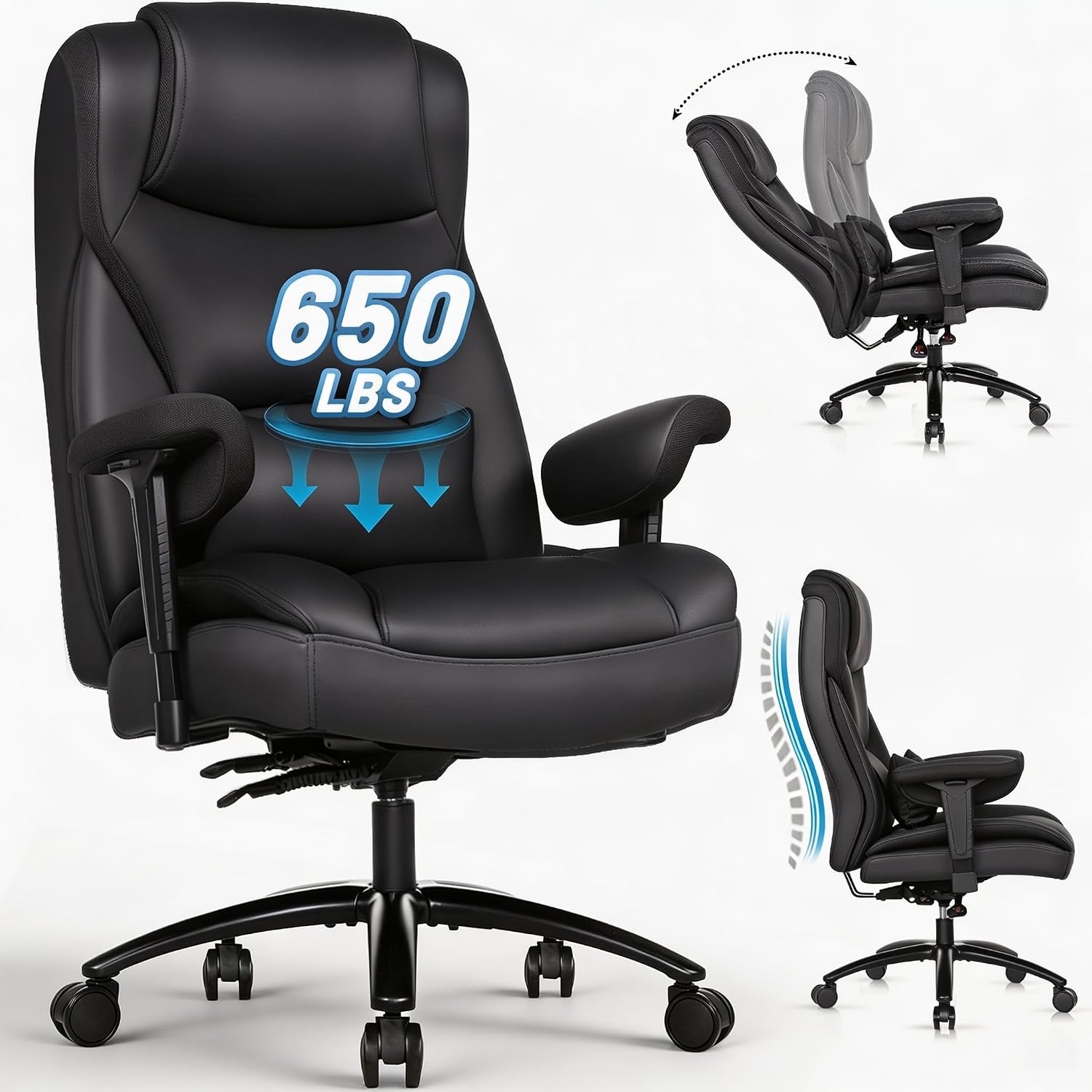
Pros
- 5-position armrests give more options to find a supportive arm height than a fixed or simple flip-up design
- Recline lock at multiple angles allows a range of positions from upright to reclined, each held securely in place rather than floating loosely
- High 650 lb weight rating gives real margin above typical body weights
Cons
- Rating sits at 3.8, lower than several other picks in this roundup
- More adjustment points mean more settings to learn and configure correctly

Pros
- Highest user rating of any chair scraped for this roundup at 4.6
- Thick, spring-supported cushion is built specifically to reduce hip and thigh pressure during extended sitting
- Budget-friendly price relative to the weight rating offered
Cons
- No stated flip-up or multi-position armrest adjustment beyond the standard design
- No dedicated stationary, no-wheel version available for this specific model

Pros
- Pop-out lumbar support can be engaged or disengaged depending on whether you want upright posture support or a more relaxed recline
- 3D flip-up armrests combine height and depth adjustment with a full flip-up option
- 650 lb capacity matches the highest rating in this roundup
Cons
- More adjustment mechanisms than a simple fixed-lumbar design, meaning more settings to understand
- Pocket-spring cushion may feel firmer initially than a memory-foam alternative
What Actually Helps for an Older Adult
Stable Base Over Swivel and Recline
Wheels and swivel bases are useful for active desk work but can work against stability during standing transitions, since the chair can roll or spin at the exact moment someone is pushing off the armrests. Two picks in this list use a stationary, no-wheel base specifically for that reason. If a swivel chair is still preferred for desk flexibility, confirm the casters lock or that the base sits heavy enough to resist unexpected movement. A heavier base, one built from solid metal rather than a lighter plastic five-star frame, also resists tipping better when weight is applied unevenly during a stand, an easy detail to overlook when comparing chairs primarily by cushion or upholstery photos.
Armrests Built to Push Off, Not Just Rest On
A wide, padded, sturdy armrest gives real leverage for standing up, while a thin or narrow one offers little to press against. Adjustable armrests add the ability to match arm height to the user’s own proportions, which matters more here than desk-height matching does for a younger user typing at a keyboard. Flip-up armrests offer an additional benefit worth checking for specifically: the ability to move the arm out of the way entirely during the approach to sitting down or the initial push to stand, rather than navigating around a fixed obstruction on the way in and out of the chair.
Seat Height and Getting Up Without Strain
A seat that sits too low forces more knee and hip effort to stand up from, which compounds for anyone with reduced lower-body strength. Where available, check the manufacturer’s listed seat height and compare it against a chair the user already finds comfortable to rise from, rather than assuming a taller-looking chair automatically means an easier stand.
Weight Rating With Real Margin
As with any big and tall chair, confirm the weight rating against the structured specification field rather than headline marketing copy, and build in more margin than you might for a lighter-use chair. A chair used daily, possibly with more force applied while sitting down or standing up than a typical desk transition, wears differently than one used only occasionally. Sitting down and standing up repeatedly throughout the day places brief but real spikes of extra force on the frame and gas cylinder, above and beyond the static weight the chair holds while someone is simply seated, which is one more reason to shop with margin above your own weight rather than at the printed limit.
Complementary Comfort Accessories
A chair rarely needs to solve every comfort problem on its own. A dedicated seat cushion or a separate lumbar support cushion can supplement a chair that already fits well on base stability and armrest design but falls short on cushioning, without needing to replace the entire chair. A footrest is worth considering separately as well, particularly for a shorter user paired with a chair whose seat height runs on the higher side, since it restores proper knee angle without changing the chair itself.
These accessories are, like the chairs themselves, general comfort products rather than medical equipment, and the same guidance applies: if a specific mobility or health condition is involved, a doctor or occupational therapist is better positioned to recommend equipment suited to that need than a general product roundup. For a broader look at general seating fit beyond this specific list, our guide to what to look for in an ergonomic office chair covers the fundamentals that apply regardless of age or body type.
Final Thoughts
For the most stable, predictable base, the CLATINA 500 Lb No-Wheel Chair with Padded Arms and the lower-priced OLIXIS 500 Lb No-Wheel Chair both trade swivel and recline for a fixed base that will not roll or spin during a standing transition. For a standard swivel desk chair from an established brand with flip-up arms that clear out of the way when needed, the Serta pick above is worth comparing if desk mobility matters more than a stationary base. As always, confirm any specific mobility or medical need with a doctor or occupational therapist before relying on a general seating choice.
FAQ
Are any of these chairs medical or assistive devices?
No. These are general office and seating chairs, not certified medical or mobility equipment. If a specific mobility condition or fall risk is involved, consult a doctor or occupational therapist, who can recommend equipment suited to that specific need rather than relying on general product features.
Is a no-wheel chair always safer than a swivel chair?
Not universally, but a stationary base removes one specific risk: the chair rolling or spinning while someone is pushing off the armrests to stand. If swivel functionality is still wanted for desk use, look for locking casters or a heavier base as a middle-ground option.
What seat height works best for easier standing?
There is no universal number, since it depends on individual leg length and strength. A practical approach is comparing the listed seat height of a new chair against one the user already finds easy to stand from, rather than guessing from a general height chart.
Should I prioritize cushioning or armrest design?
For an older adult, armrest design and base stability generally matter more for day-to-day safety than cushion thickness, though both contribute to overall comfort. If you have to choose one feature to prioritize, a sturdy, well-positioned armrest is the more practical starting point. Comfort features like recline range or a plush cushion can always be layered on afterward with an accessory, but a chair with an unstable base or unusable armrests is much harder to work around after the fact.



Write Your Review
No reviews yet. Be the first to share your experience!