

This article covers general office seating, not medical treatment. None of the chairs below are certified medical devices, and a chair alone will not resolve a diagnosed coccyx injury or condition. If tailbone pain is severe, follows a fall or injury, or does not improve with better seating, see a doctor rather than relying on a chair. What follows are general seating considerations based on published product specifications.
A chair built for lower back support does not automatically help the tailbone, since the two areas need different things from a seat. Tailbone discomfort responds mainly to how the front and center of the seat pan is shaped, specifically whether the cushion drops away at the front edge (a waterfall edge) instead of ending in a hard, flat line that presses directly into the underside of the thighs and the tailbone when leaning forward. This is different from a seat cushion accessory, like our seat cushion for tailbone pain picks; the chairs below build that shaping into the chair itself rather than adding it on top of an existing seat. All are drawn from our Chairs for Back Pain lineup.
If a full chair replacement is not what you need right now, and the goal is a quick add-on fix instead, our companion guide to using a seat cushion for tailbone pain covers how to get similar pressure relief without buying a new chair.
Disclosure: Ergonook is a participant in the Amazon Associates program. Links below are affiliate links, and we may earn a commission from qualifying purchases. This does not affect which chairs we recommend or how we rank them.

Pros
- Waterfall edge is the seat's defining design feature rather than a minor spec line, built specifically to reduce thigh and tailbone pressure
- 4D armrests adjust on more axes than most chairs on this list, useful for keeping the shoulders relaxed while the seat handles pressure relief
- Five-step recline lock offers more positions than a simple two-stage tilt
Cons
- Highest price point in this roundup by a wide margin
- No dedicated lumbar mechanism beyond the overall backrest shape

Pros
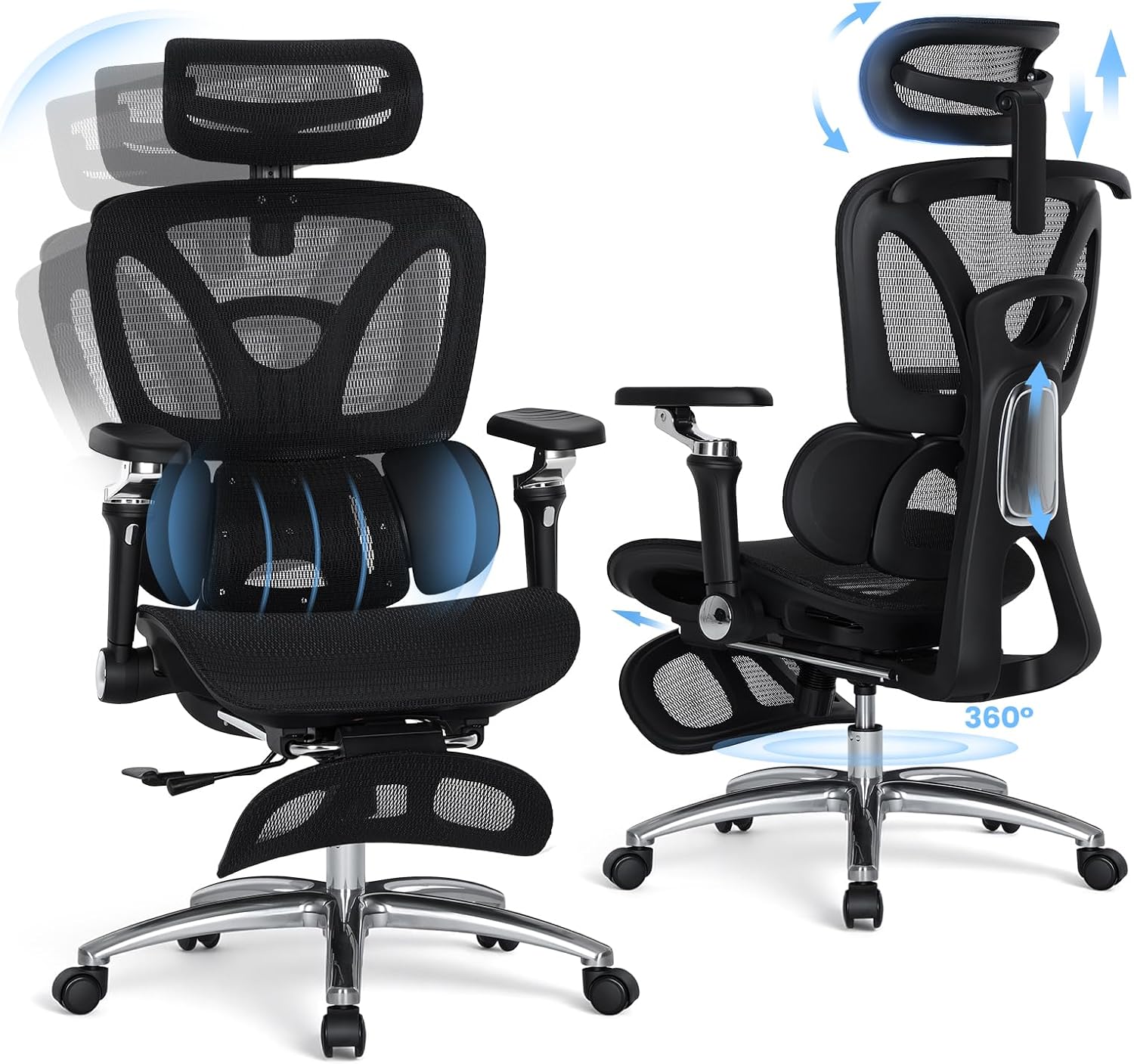
- Combines waterfall edge seat pressure relief with a headrest, covering both the tailbone and the neck in one chair
- Documented 350 lb weight capacity and BIFMA safety standard give a verifiable baseline
- 5 year warranty is longer than most chairs in this roundup
Cons
- Lumbar pad adjusts on height only, not a full multi-axis system
- High-back frame takes up more visual and floor space than a mid-back task chair

Pros
- 3.15 inch cushion is among the thicker waterfall seats in this roundup, more cushioning depth for larger frames
- Documented 400 lb weight capacity is on the higher end of this list
- Dynamic lumbar support moves with the body rather than staying in one fixed position
Cons
- No headrest included
- Rocking range (90 to 120 degrees) is narrower than some other chairs here

Pros
- Waterfall edge seat is explicitly firm rather than plush, which some tailbone-sensitive sitters prefer over a soft cushion that lets the tailbone sink in
- Carries a named third-party endorsement (American Chiropractors Association) beyond a generic safety certification
- Layered body pillow design addresses the lumbar region separately from the seat pressure relief
Cons
- 275 lb weight capacity is the lowest documented figure in this roundup
- Mid-back height means less upper back and shoulder coverage than the high-back chairs on this list

Pros
- Air lumbar cushion adjusts by feel through a squeeze bulb rather than fixed height notches, letting you fine-tune firmness directly
- Unusually deep seat (20.66 inches) with a pronounced waterfall slope, aimed specifically at larger frames where thigh and tailbone pressure concentrate more
- Diamond-quilted foam is described as high-resilience, intended to resist flattening over time
Cons
- Listing copy leans heavily on marketing language, so weigh the specific measurable features (seat depth, air lumbar) over broader comfort claims
- Only 1 year of manufacturer coverage, shorter than several other chairs in this roundup

Pros
- Lumbar support adjusts on two axes (vertical and horizontal), a more precise fit than height-only systems
- Waterfall edge seat uses the same 3.15 inch depth as the thicker options in this roundup at a notably lower price
- Multi-posture recline covers both focused work and short breaks in one range
Cons
- 300 lb weight capacity is on the lower end of this roundup
- No headrest included

Pros
- Lowest price in this roundup while still including a genuine waterfall seat design rather than a flat cushion
- Three separate certifications (BIFMA casters, SGS gas lift, FSC wood frame) at a budget price point
- Adjustable tilt tension lets you set recline resistance rather than a fixed feel
Cons
- No headrest included
- Simpler lumbar mechanism than the multi-axis systems on pricier chairs in this roundup
What Actually Helps Tailbone Discomfort
The Waterfall Edge Is the Feature That Matters Most
Look specifically for the term waterfall edge, or a description of the front of the seat curving downward rather than ending flat. This shape reduces contact pressure on the underside of the thighs and, by extension, keeps weight distributed more evenly across the seat pan instead of concentrating right on the tailbone when you lean forward toward a keyboard or monitor. Every chair in this roundup was chosen specifically because the listing describes this shaping directly, not because it is simply labeled ergonomic.
Cushion Depth and Density Both Matter
A thicker cushion is not automatically better if the foam is soft enough to let the tailbone sink through it and hit the frame underneath. Look for stated foam density, high-resilience or high-density language in the listing, alongside cushion thickness. A firm, well-supported 3 inch cushion often outperforms a soft 4 inch one for tailbone-specific pressure, since density determines how much the foam compresses under sustained weight rather than thickness alone.
Seat Depth Affects How Far Back You Actually Sit
A seat that is too shallow for your frame pushes you to perch near the front edge, defeating the purpose of a waterfall design entirely, since the pressure relief only works if you are sitting far enough back to use it. Larger or taller users especially should check the published seat depth rather than assuming a standard size will fit; one chair on this list runs over 20 inches deep specifically to address that gap for bigger frames. As a rough guide, aim to leave 2 to 4 finger widths of space between the front edge of the seat and the back of your knees when sitting fully back, a sign the depth genuinely matches your leg length rather than forcing a compromise.
Certification Still Matters Alongside Seat Shape
A well-shaped seat on a poorly built frame is not a good tradeoff. Look for BIFMA or SGS certification on the gas cylinder and base, and confirm the published weight capacity against the structured specification field rather than a general size label. A chair that sags or sinks unevenly at the base over time can reintroduce the exact pressure problem a good waterfall edge was meant to solve in the first place. For a broader look at what to check on any ergonomic chair, our guide to what to look for in an ergonomic office chair covers the fundamentals beyond seat shape specifically.
Fixed Versus Adjustable Lumbar Alongside the Seat
Tailbone-focused seat shaping and lumbar support are two separate systems on most chairs, and a strong waterfall edge does not guarantee good lumbar adjustment or vice versa. Some chairs in this roundup pair the seat shaping with an inflatable or dynamic lumbar mechanism, while others rely on a simpler fixed backrest curve. Neither approach is wrong, but check both specs independently rather than assuming a chair marketed around tailbone relief automatically has strong lumbar adjustment too, or the reverse. If lumbar precision matters more to you than the seat shaping covered in this list, our separate roundup on chairs with adjustable headrest and lumbar support covers that pairing in more depth.
Final Thoughts
For the most pronounced waterfall edge on this list, the Elgato Embrace Studio Chair builds its entire seat design around that curve, backed by highly adjustable 4D armrests, though at the highest price in this roundup. For a larger frame that needs both depth and a steep waterfall slope, the Big and Tall Executive Chair with Air-Lumbar Support pairs a 20.66 inch deep seat with a squeeze-bulb adjustable lumbar cushion. Both are worth comparing against the more budget-friendly waterfall seat picks further down the list.
FAQ
Can an office chair fix tailbone pain on its own?
Not on its own. A chair with a well-shaped waterfall seat can reduce the pressure that builds up during long sitting stretches, but it is not a treatment for an existing coccyx injury or condition. Persistent, severe, or worsening tailbone pain, especially following a fall, should be evaluated by a doctor.
Is a seat cushion or a full chair better for tailbone pain?
Both can help, and they are not mutually exclusive. A dedicated seat cushion is a lower-cost way to add waterfall-style pressure relief to a chair you already own, while a chair built with the shaping integrated into the seat pan itself tends to feel more consistent since the cushion cannot shift out of place the way an add-on cushion sometimes does.
Does a thicker cushion always mean more tailbone relief?
No. Foam density matters as much as thickness. A thick but soft cushion can let the tailbone sink through to the hard frame underneath, while a firmer, moderately thick cushion often distributes pressure more evenly across the whole seat pan. When comparing listings, look for terms like high-density or high-resilience foam alongside the thickness measurement rather than judging by thickness in inches alone.
When should I see a doctor about tailbone pain instead of changing chairs?
If tailbone pain follows a fall or direct injury, is severe, or does not improve after a few weeks of better seating, see a doctor rather than continuing to try different chairs or cushions. Persistent coccyx pain can have causes that seating changes alone will not resolve. Our guide on reducing back pain from sitting all day covers general posture and movement habits worth pairing with any chair, but it does not replace medical care when symptoms are serious.




Write Your Review
No reviews yet. Be the first to share your experience!