

This article covers general office seating, not medical treatment. None of the chairs below are certified medical devices. A better chair may help reduce postural strain during the workday, but it does not diagnose or treat a neck or spine condition. If pain is severe, persistent, or comes with numbness, tingling, or weakness, see a doctor or physical therapist rather than relying on a chair alone.
Neck and back pain tend to arrive together at a desk job because they share a cause: hours of forward head posture pull on the same muscles that support the upper spine, and once those muscles fatigue, the shoulders round forward and the lower back compensates to keep the head balanced over the body. A chair aimed only at the lower back, like the picks in our lower back pain roundup, may still leave the neck unsupported, and vice versa for a chair built only around a headrest. This list focuses on chairs from our Chairs for Back Pain lineup that combine a genuinely adjustable headrest with real lumbar support, rather than treating one as an afterthought to the other.
If your discomfort is more specifically upper back and shoulder tension rather than the neck itself, our upper back pain roundup covers backrest shapes built around that region specifically, and our chairs for sciatica relief guide addresses the opposite end of the spine if lower body nerve discomfort is a bigger factor than the neck.
Disclosure: Ergonook is a participant in the Amazon Associates program. Links below are affiliate links, and we may earn a commission from qualifying purchases. This does not affect which chairs we recommend or how we rank them.

Pros
- Headrest and lumbar support adjust independently, so neck and lower back positioning can be tuned separately
- Three separate certifications (BIFMA, SGS, EN1335) give more independent documentation than most chairs in this price range
- Armrests adjust on height, rotation, and depth together
Cons
- Relatively new listing with a small review count, less of a track record than some other picks here
- Mesh-only backrest may run cooler than some users prefer in an air-conditioned office

Pros
- Headrest and lumbar pad both adjust on two axes each, rare precision for the price
- 400 lb weight capacity is on the higher end of this roundup
- Full mesh construction breathes well front and back, not just the backrest
Cons
- Small review count relative to more established competitors on this list
- Assembly takes 15 to 25 minutes, longer than some simpler chairs here

Pros
- Most adjustment axes for lumbar positioning among the picks on this list
- V-shaped backrest is a distinct design from the flat or gently curved backs elsewhere in this roundup
- Headrest and armrests both adjust independently of the lumbar system
Cons
- More adjustment points means more initial setup time to dial in correctly
- Rotation adjustment is a less common mechanism that may take longer to get used to than a simple slider
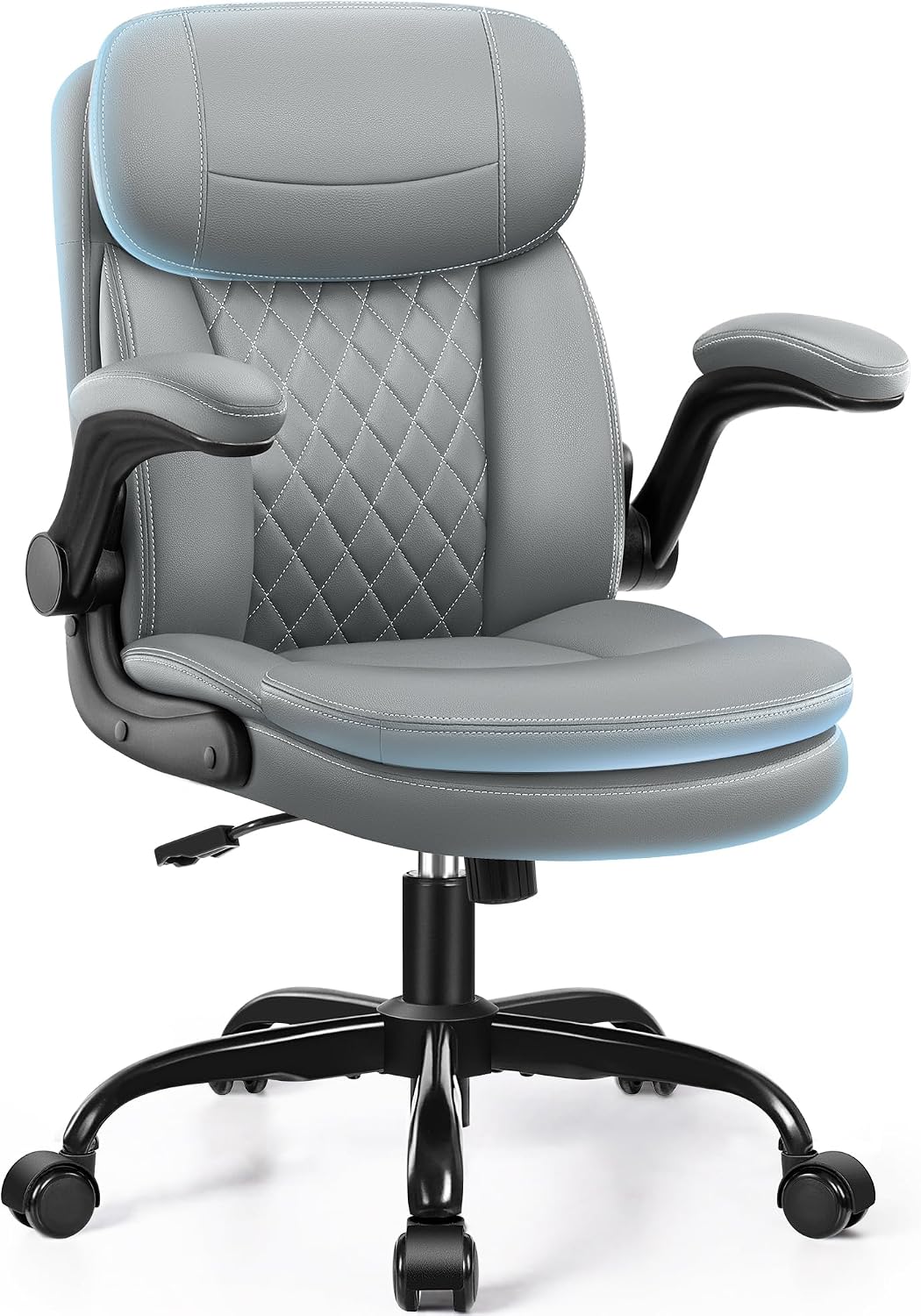
Pros
- Neckrest is specifically dual-layered and shaped for the cervical curve, a more direct approach to neck pain than a generic headrest pad
- Double-layer seat cushion is built specifically to extend comfortable sitting time before fatigue sets in
- Compact frame fits shorter users and smaller desks better than the larger executive-style chairs on this list
Cons
- No separately adjustable lumbar mechanism, back support comes from the overall backrest shape
- PU leather traps more heat than mesh over a full day

Pros
- Inflatable lumbar system lets you dial in firmness precisely rather than choosing from fixed height notches
- Wide seat supports sitting cross-legged, a position some people shift into to relieve lower back and hip tension during the day
- Lifetime warranty is longer than most chairs in this roundup
Cons
- No dedicated headrest, so neck support relies on the backrest height rather than direct head contact
- Bonded leather runs warmer than the mesh options on this list

Pros
- Headrest adjusts on two directions specifically to reduce cervical pressure, described directly in the product's own positioning
- Retractable footrest supports a genuine recline break rather than staying upright all day
- Lowest price among chairs with both a headrest and a footrest in this roundup
Cons
- 275 lb weight capacity is the lowest documented figure among the chairs in this article
- Lumbar support is a soft pillow rather than an adjustable mechanical pad

Pros
- Lowest price point in this roundup while still including a dedicated headrest
- Waterfall seat edge specifically reduces pressure behind the knees, which helps posture higher up the spine indirectly
- BIFMA-certified materials give a documented baseline despite the low price
Cons
- No independently adjustable lumbar mechanism beyond backrest tilt
- Lower customer rating (4.0) than most other picks on this list
What to Check for Combined Neck and Back Support
The Headrest Needs to Reach You Upright, Not Just Reclined
Many chairs advertise a headrest that only makes contact once you recline well past a normal working angle, which is useless for the hours spent typing upright. Look specifically for a headrest with real vertical travel, several inches at minimum, and ideally forward-back or angle adjustment too, so it can meet your head during ordinary desk posture, not just during a break. A headrest listed only as decorative or fixed in place is effectively a design element rather than a functional support point.
Lumbar and Headrest Should Adjust Independently
Neck position and lower back position do not always need the same adjustment at the same time. Chairs that let the headrest and lumbar pad move on separate mechanisms give you more precise control than a chair where one setting forces a compromise on the other. A few picks on this list go further and let the lumbar pad rotate as well as move vertically, which matters if you shift position between typing and reading a second monitor throughout the day.
Certification Adds a Layer of Documentation
BIFMA and EN1335 are the two certifications that show up most often on chairs in this category. Neither certification claims anything about pain relief specifically, but both point to independently verified structural safety standards, which is a more concrete signal than marketing copy alone. A chair listing two separate certifications, rather than one or none, has generally gone through more independent scrutiny before reaching the market, though certification is a floor for build quality rather than a guarantee of comfort. For a broader rundown of what to check on any ergonomic chair beyond neck and back support, see our guide to what to look for in an ergonomic office chair.
Weight Capacity and Frame Size Still Apply
A well-designed headrest does not matter if the frame is not rated to hold you, or if the overall chair size does not suit your build. Confirm the published weight capacity against the structured specification field before buying, and note that a couple of chairs on this list run smaller, built specifically for shorter users or more compact desks, rather than assuming every chair fits every body the same way. The weight capacity figures in this roundup range from 275 to 400 lbs, a wider spread than you might expect from chairs otherwise grouped under the same neck-and-back-support theme, so it is worth checking the specification tab for each pick rather than assuming they are interchangeable.
Inflatable Versus Mechanical Lumbar Systems
Most lumbar support on this list adjusts through a mechanical pad that clicks into fixed height or depth positions, which is quick to set and predictable once dialed in. A less common alternative is an inflatable air cushion, adjusted by pumping air in or letting it out rather than sliding a pad along a track. The inflatable approach allows stepless firmness control, which some users prefer if fixed-notch pads have never quite matched their spine curve, though it does require occasional manual re-inflation rather than a set-and-forget mechanism. Neither approach is inherently more effective for neck and back pain specifically; the choice comes down to whether you would rather fine-tune firmness by feel or set a position once and leave it alone.
Final Thoughts
For the most precise neck and lower back adjustment on this list, the Fizzin Mesh Office Chair lets both the headrest and lumbar pad move on two axes each, a rare level of control at this price. If your lumbar support also needs to rotate along with your posture, the HOLLUDLE Mesh Office Chair adds that extra rotation on top of standard vertical adjustment, backed by two separate safety certifications. Both are worth comparing against the more budget-focused picks further down the list.
FAQ
Will a new chair fix neck and back pain on its own?
Not by itself. A chair with a genuinely adjustable headrest and lumbar support can reduce the postural strain that builds up during a workday, but it is not a treatment for an existing neck or spine condition. Persistent, severe, or worsening pain should be evaluated by a doctor or physical therapist.
Should the headrest touch my head while I am sitting upright and typing?
Ideally yes, at least lightly. A headrest that only makes contact when fully reclined offers little benefit during normal desk work, which is most of the day. Check the listed vertical adjustment range before buying rather than assuming any headrest will reach your head in an upright position.
Is an inflatable lumbar cushion better than a mechanical adjustable pad?
Neither is universally better. An inflatable cushion allows stepless, precise firmness adjustment, while a mechanical pad offers fixed positions that are quicker to set and forget. Choose based on whether you prefer fine-tuning or a simpler one-time adjustment.
When should I see a doctor instead of trying another chair?
If neck or back pain is severe, does not improve after a few weeks of better seating and posture habits, or comes with numbness, tingling, or weakness in the arms or hands, see a doctor rather than continuing to try different chairs. Our guide on reducing back pain from sitting all day covers general habits worth pairing with any chair, but it does not replace medical care when symptoms are serious.




Write Your Review
No reviews yet. Be the first to share your experience!