

Lower back pain from sitting is one of the most common complaints among people who work at a desk, and lumbar support is the single feature most directly tied to preventing it. Not all lumbar support is built the same way, though: some chairs mold a fixed curve into the mesh itself, others add a pad you can raise or tighten, and a few use mechanisms that actively track your posture as you shift throughout the day. See our full mesh office chair lineup for more options.
We compared six mesh chairs specifically on how their lumbar support actually works, not just whether the listing mentions the words. If lower back pain is a recurring issue for you rather than an occasional discomfort, our guide to signs your office chair is bad for your back covers the warning signs worth watching for regardless of which chair you choose.
This article is for informational purposes only and is not medical advice. If you have persistent or worsening back pain, consult a physician or physical therapist rather than relying on a chair purchase alone.

Pros
- Adaptive lumbar tracks your recline instead of staying fixed, useful for anyone who shifts positions often
- Weight capacity matches the highest-rated chairs in this roundup
- Warranty coverage beats the budget and mid-range picks here
Cons
- Average rating trails the rest of the chairs in this roundup, though it remains solidly positive
- Split-back design looks different from the solid-back chairs on this list, worth checking photos against your preference
- Assembly involves attaching several parts with the included tool
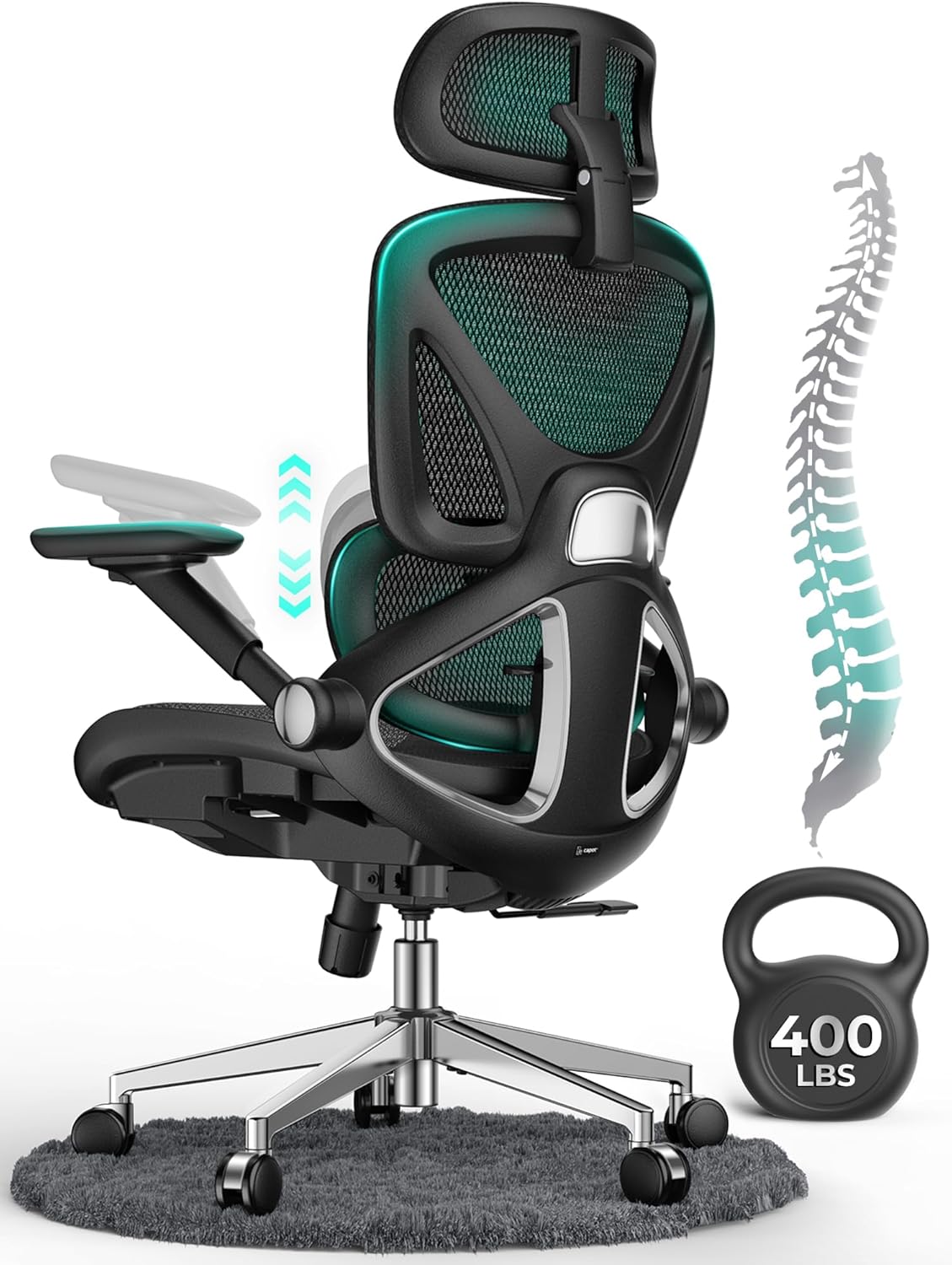
SIHOO's pitch for the B100 centers on lumbar support that moves with you instead of staying locked at a fixed height, useful for anyone who alternates between leaning forward to type and sitting back for a call. The split-back mesh design is a visual departure from the solid mesh backs on the rest of this list, though it serves the same airflow purpose.
The armrests flip up, the headrest is wide and adjustable, and the frame supports multiple recline positions. Warranty coverage runs several years, ahead of the budget option in this roundup.
Its average rating trails the rest of the chairs compared here, though it remains solidly positive overall. Assembly requires attaching a few more parts than the simplest chairs on this list.
For anyone whose main priority is lumbar support that adapts through the day rather than a fixed pad, this is the most purpose-built option here.
Chair Type: Split-back mesh ergonomic office chair. Frame Material: Polypropylene frame. Seat Material: Polypropylene seat base with mesh, polyester, and nylon upholstery.
Headrest: Wide, adjustable headrest. Armrests: Flip-up design. Lumbar Support: Adaptive lumbar support that adjusts with posture. Recline: 3-position tilt, 5 height positions. Base Movement: Swivel on a star base.
Color: Grey. Brand: SIHOO. Model: B100. Warranty: 3-year parts replacement coverage. Suitable for hard floor and carpet surfaces.
If lower back support is your single biggest priority in a new chair, this is the most purpose-built option in this roundup, with lumbar support designed to move as you shift positions rather than staying fixed at one height.
Consider this chair if you spend long stretches alternating between leaning forward to focus and sitting back for calls or breaks. The adaptive lumbar mechanism is designed specifically for that kind of movement throughout the day.
The split-back mesh design is a visual departure from the solid-back chairs elsewhere on this list, so it is worth checking product photos to make sure the look fits your space before buying.
This is best suited to buyers whose main complaint with previous chairs has been inconsistent or fixed lower back support. If a more traditional solid-back look matters more to you, other picks on this list may be a better fit.
Pros
- Highest average rating of any chair across our mesh office chair roundups so far
- Adjustable back support goes beyond a simple fixed lumbar pad
- Large and rapidly growing review base backs up that rating
Cons
- Heavier than most other picks at a similar price
- Newer brand relative to established names like Lorell or Staples
- Solid-back design rather than full mesh throughout
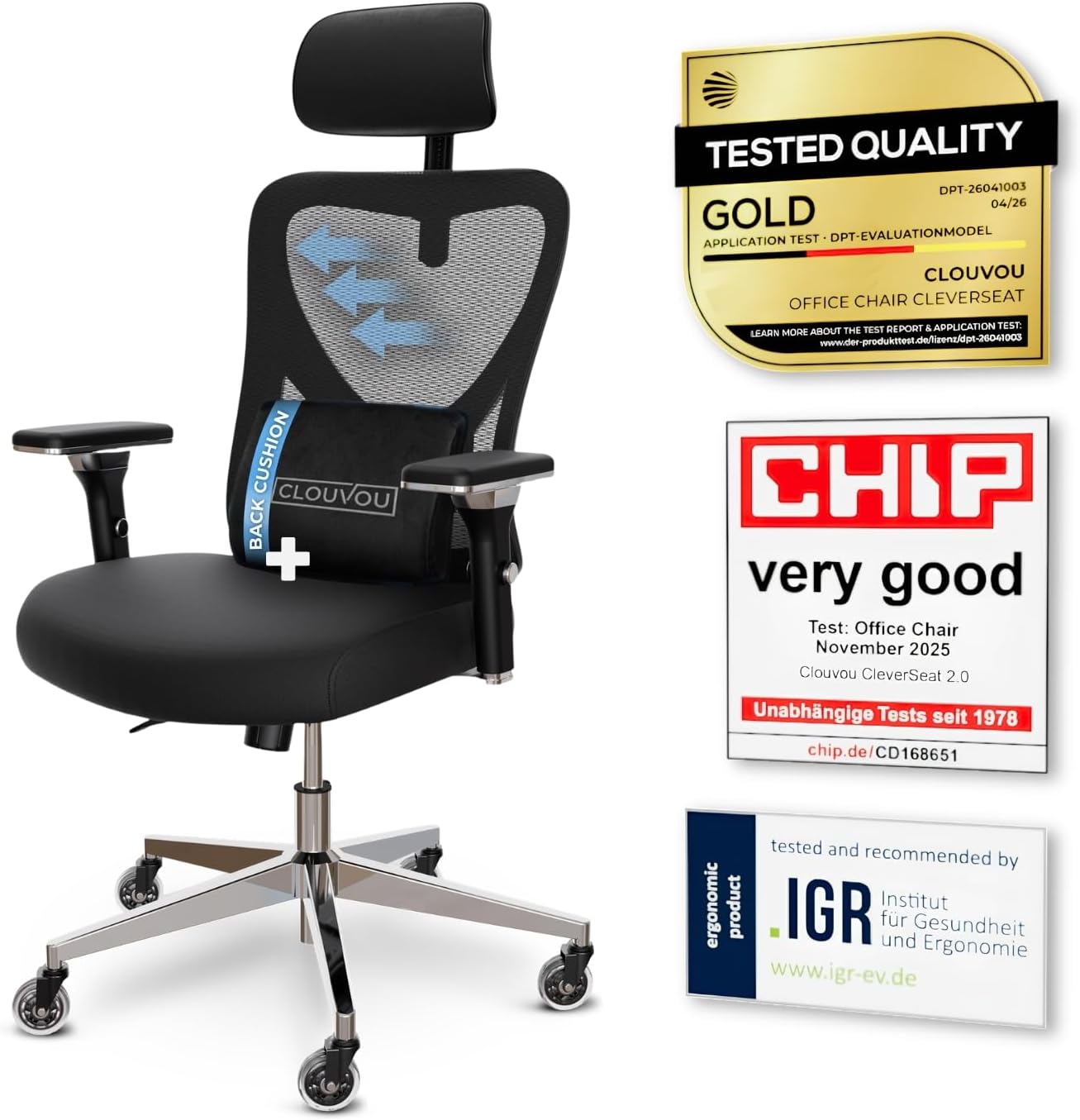
CleverSeat's chair carries the highest average rating of any chair we have covered across our mesh office chair comparisons, backed by a review base that has grown substantially in a short time, a strong signal of consistent buyer satisfaction.
The back support adjusts rather than relying on a single fixed lumbar bump, and the 2D headrest adds coverage that many chairs at this price skip entirely. It is rated for 330 pounds, matching the higher-capacity picks in our comparisons.
The backrest uses a solid-back design rather than full mesh throughout, trading some breathability for structure, and at 40 pounds it is heavier than several competitors.
For anyone prioritizing rating and adjustable back support above all else, this is currently the strongest performer we have found in this category.
Chair Type: Ergonomic mesh office chair with adjustable back. Frame Material: Reinforced polymer. Seat Material: Mesh. Back Style: Adjustable, solid back.
Armrests: Adjustable. Headrest: 2D. Base Movement: Swivel on rolling casters.
Weight: 40 pounds. Maximum weight recommendation: 330 pounds, per manufacturer listing.
If overall rating is your deciding factor above any single spec, this chair currently leads every comparison we have run in this category.
Consider this chair if adjustable back support and a 2D headrest matter more to you than a full mesh build throughout.
Weigh the newer brand history against more established names if a long-standing company track record matters to you specifically.
This is best suited to buyers who prioritize current buyer satisfaction over brand tenure.

Pros
- Enormous review base, among the largest of any chair in this comparison
- V-shaped back design distributes support differently than a standard flat mesh back
- 3D adjustment on both the lumbar support and armrests
Cons
- Single recline position only
- DIY-style assembly instructions, less detailed than some competitors
- V-shaped back design may not suit every body type equally well
This chair carries one of the largest review bases in this entire comparison, a strong signal of consistent performance across an unusually large number of buyers over time.
The V-shaped back is the most distinctive design choice here, aiming to distribute support differently than a standard flat mesh backrest. Both the lumbar support and armrests adjust in 3D, giving more precise positioning than fixed alternatives.
Assembly instructions are described as DIY-style, less hand-held than some competitors, and recline is limited to a single position.
For anyone curious about a genuinely different back design backed by an enormous amount of buyer feedback, this is one of the most-proven picks in this comparison.
Chair Type: Ergonomic mesh office chair with V-shaped back. Frame Material: Nylon. Seat Material: Foam.
Armrests: 3D adjustable. Lumbar Support: 3D adjustable. Recline: Single position. Assembly: DIY.
Back Style: V-shaped design, a departure from the flat mesh backs elsewhere in this comparison.
If review volume matters most to you, this chair's track record is among the strongest in this comparison.
Consider this chair if you want 3D adjustment on both the lumbar support and armrests rather than fixed or simpler flip-up designs.
Check photos of the V-shaped back carefully; it is a genuinely different silhouette than the standard flat mesh backs on most other picks here.
This is best suited to buyers drawn to a distinctive design backed by an unusually large amount of buyer feedback.

Pros
- One of the largest review bases in this comparison
- Armless design allows the chair to slide fully under a desk
- 330 lb weight rating, higher than several other picks here
Cons
- No armrests at all, which some buyers specifically want to avoid
- Only 2 recline positions
- Metal frame adds some weight compared to lighter nylon-frame competitors
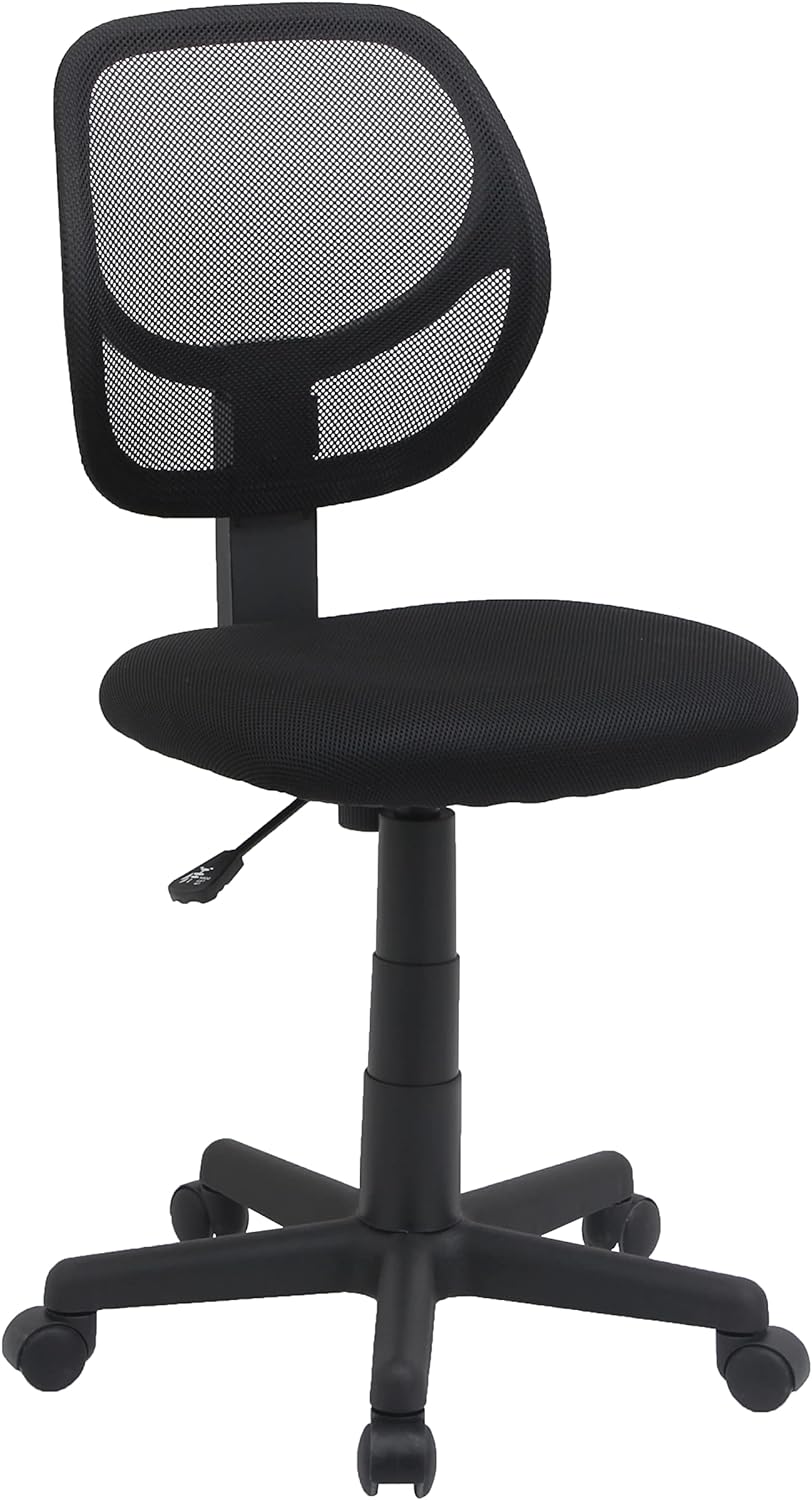
TRALT's chair carries one of the largest review bases in this comparison, giving real confidence behind its rating. The armless design is the defining feature, letting it slide fully under a desk in a way armed chairs cannot.
The 330 lb weight rating is higher than several other picks in this price range, backed by a metal frame and nylon seat construction. Lumbar support is adjustable rather than fixed.
The tradeoff is the complete lack of armrests, which will be a dealbreaker for buyers who specifically want them, and the recline is limited to 2 positions.
For a tight desk setup or anyone who prefers sitting without armrests, this is a well-proven, higher-capacity pick.
Chair Type: Armless ergonomic mesh office chair. Frame Material: Metal. Seat Material: Nylon. Back Style: Mesh back.
Armrests: None, armless design. Lumbar Support: Adjustable. Recline: 2 positions. Base Movement: Swivel.
Weight: 28 pounds. Maximum weight recommendation: 330 pounds. Assembly required, instructions included.
If your desk is tight on space or you simply prefer no armrests, this is one of the strongest-reviewed armless options in this comparison.
Consider this chair if you want a higher weight capacity than the typical budget pick offers, backed by a large, established review base.
Skip it if armrests are a requirement for you; several other picks in this comparison include them.
This is best suited to buyers prioritizing desk clearance and review volume over armrest coverage.

Pros
- One of the largest review bases of any chair in this category, which adds real confidence to its rating
- 5-year warranty beats most chairs at this level
- Headrest and armrests both adjust independently for a more personalized fit
Cons
- Best suited to users roughly 5'5" to 6'2"; taller or shorter users should check the seat depth and height range against their own measurements
- Requires full assembly out of the box
- Only two recline positions compared to the multi-position tilt on some competitors
GABRYLLY built this chair around a wide age and body-size range, with an adjustable 3D headrest, flip-up armrests, and a tilt lock that holds between 90 and 120 degrees for controlled reclining. The frame is rated for users roughly 5'5" to 6'2", and the seat is wider than average to accommodate different body types.
What sets it apart in this roundup is sheer review volume. Chairs with only a few hundred reviews can look great on paper, but a rating built on thousands of purchases carries more weight. That volume, combined with a 5-year warranty, makes it a reasonably low-risk pick for a first ergonomic chair.
The tradeoffs are modest. It ships unassembled, and the two-position recline is more basic than the multi-angle tilt found on the Lorell or SIHOO picks in this list. Neither is a dealbreaker for most home office setups.
Overall, this is a safe default choice for someone who wants proven demand and solid ergonomic basics without chasing a specific niche feature.
Chair Type: High-back ergonomic mesh office chair designed for a wide range of user heights. Frame Material: High-density nylon with a metal-reinforced base. Seat Material: High-elastic mesh throughout.
Headrest: Adjustable 3D headrest that moves independently of the backrest. Armrests: Flip-up, 2D adjustable. Recline: 90 to 120 degree tilt lock, 2 recline positions.
Base Movement: 360-degree swivel with heavy-duty caster wheels. Color: Black. Brand: GABRYLLY. Warranty: 5-year manufacturer coverage. Recommended user height: approximately 5'5" to 6'2". Suitable for tile, hardwood, and carpet floors.
This chair is built for a wide range of users, both in terms of body size and the sheer number of people who have already bought and reviewed it. That review volume is worth weighing heavily if you want proof a product performs consistently across many households, not just a handful of early reviewers.
Consider this chair if you fall within the recommended height range of roughly 5'5" to 6'2". Outside that range, check the seat depth and height figures carefully against your own measurements before buying.
The 5-year warranty is longer than most competitors at this level, which matters if you plan to keep the chair for years rather than replace it after a short period.
This is a solid default pick for someone who wants a well-proven, no-surprises mesh chair rather than a niche feature set. If you specifically need adaptive lumbar support or a built-in footrest, look at the other picks in this roundup instead.

Pros
- Lowest price point in this comparison without dropping core ergonomic features
- SGS certification on the gas lift is a legitimate safety standard, not just marketing language
- Covers adjustable lumbar support and flip-up arms, features often missing at this price
Cons
- 1-year warranty is the shortest in this roundup
- Weight rating is on the lower end of the chairs compared here
- Single recline position, no multi-angle tilt lock
NEO CHAIR's pitch is simple: cover the ergonomic basics, adjustable lumbar support, flip-up armrests, and a breathable mesh back, at the lowest price point in this comparison. The gas lift cylinder carries SGS certification, meaning a third party has verified it against basic safety standards rather than the brand simply claiming it.
The chair keeps things straightforward with a single recline position rather than a multi-angle tilt lock, and the weight rating sits at the lower end of this roundup. Neither is unusual for a chair at this price.
The one-year warranty is the shortest in this comparison, the clearest tradeoff for the lower cost. For a first chair, a guest office setup, or anyone who wants to try a mesh chair before committing to a pricier option, it covers the fundamentals without much risk.
Chair Type: High-back mesh office chair built for home office or general computer use. Frame Material: Polypropylene frame. Seat Material: Foam seat with mesh backrest.
Armrests: Flip-up design. Lumbar Support: Adjustable lumbar support. Recline: Single recline position. Base Movement: Swivel base on rolling casters. Gas Lift: SGS-certified pneumatic cylinder.
Color: Black. Brand: NEO CHAIR. Warranty: 1-year manufacturer coverage. Suitable for indoor use on standard flooring.
If price is your primary constraint, this is the chair on this list built specifically to hit a lower cost without cutting the ergonomic features that actually matter: adjustable lumbar support and a real safety-certified gas lift.
Consider this chair for a first home office setup, a guest workspace, or as a way to try a mesh chair before committing to a pricier long-term option. It covers the essentials without asking you to pay for features you may not use.
Keep the 1-year warranty in mind. It is the shortest coverage window in this roundup, so if you want a chair backed for five-plus years, a pricier pick with a longer warranty may be worth the difference.
This is best suited to buyers who prioritize covering the basics affordably over chasing every adjustable feature. If footrests, multi-position recline, or adaptive lumbar support matter to you, look further up this list.
Understanding the Different Types of Lumbar Support
Fixed vs. Adjustable Lumbar Pads
A fixed lumbar curve, molded directly into the mesh or foam, works reasonably well if your torso happens to match the height it was designed around, and poorly if it does not. There is no way to move it, so if the curve sits too high or too low for your spine, you are simply out of luck with that particular chair. This is a common complaint in reviews for budget chairs specifically, buyers describing the support as either perfectly placed or completely useless with no middle ground, depending entirely on how their own torso length happens to line up.
An adjustable lumbar pad solves this by letting you raise, lower, or sometimes tighten the support to match your own body, a meaningful upgrade for anyone outside an average torso length. Several chairs in this comparison include this as a standard feature rather than a premium add-on. Look specifically for language like height-adjustable or sliding lumbar pad on the listing, rather than just the word adjustable alone, which sometimes refers only to the seat height.
Adaptive Lumbar Support That Moves With You
A newer category goes further than a manually adjustable pad: adaptive lumbar mechanisms that flex and follow your spine as you shift positions throughout the day, rather than staying locked wherever you last set them. This matters most for anyone who alternates between leaning forward to focus and sitting back for a call. It is a more mechanically complex design than a simple pad, which is part of why it tends to appear on pricier chairs rather than the cheapest listings in a category.
One chair in this comparison is built specifically around this mechanism, and it is worth prioritizing if lower back pain is a recurring, specific issue for you rather than a general comfort preference.
3D Lumbar Adjustment: Height and Depth Together
Beyond simple height adjustment, some chairs in this comparison offer 3D lumbar control, adjusting both how high the support sits and how far it projects forward, giving a more precise fit than height adjustment alone. This is closer to what you would find on a dedicated ergonomic chair costing considerably more. The tradeoff is usually a slightly more complex adjustment process, with two dials or levers instead of one, worth the extra effort for anyone who has struggled to get comfortable with simpler mechanisms.
If you have tried adjustable lumbar support before and still found it uncomfortable, a 3D adjustment mechanism is worth trying before assuming lumbar support in general simply does not work for your body.
Why Review Volume Matters More for This Specific Feature
Comfort is subjective in a way that weight capacity or dimensions are not, and lumbar support specifically is one of the most individual features on any chair. A large review base helps here more than almost anywhere else, since it means more people with different body types have weighed in on whether the support actually worked for them.
For a broader look at what else separates a genuinely ergonomic chair from one that just uses the word, our full buying guide for ergonomic office chairs covers the full range of criteria worth checking. For more on why this specific feature matters, see our guide on what lumbar support is and why it matters.
Final Thoughts
SIHOO B100 Mesh Ergonomic Office Chair is the clearest specialist pick in this comparison, built specifically around lumbar support that adjusts to your posture in real time rather than staying fixed at one height, useful for anyone who shifts between focused work and more relaxed sitting throughout the day. If overall rating matters more to you than the specific lumbar mechanism, CleverSeat Ergonomic Office Chair currently holds the highest average rating of any chair we have covered across our mesh office chair comparisons, with adjustable back support backing that rating up.
Frequently Asked Questions
Do all mesh office chairs have lumbar support?
Most claim some form of it, but the quality varies enormously, from a barely-there curve molded into the mesh to a fully adjustable or adaptive mechanism. Reading the specific description on the listing, and ideally the reviews, matters more than the presence of the words lumbar support alone, since that phrase gets used loosely across very different actual designs. A quick way to check is to search the reviews specifically for the word lumbar and see what buyers say about it, rather than trusting the bullet points in the listing alone.
Is adjustable lumbar support worth paying more for?
For most people, yes, particularly if you do not have an average-length torso, since a fixed lumbar curve is designed around a general population average that will not fit everyone well. Adjustable support lets you correct for that mismatch directly rather than hoping the fixed design happens to work for your specific body. The added cost is usually modest compared to the chair as a whole, making it one of the better value upgrades available if lower back comfort is a priority for you.
Can a good chair alone fix chronic back pain?
A supportive chair can meaningfully reduce strain during the workday for many people, but it addresses posture and pressure, not underlying causes like disc or nerve issues. See the disclaimer near the top of this article, and consult a physician or physical therapist for ongoing or worsening pain rather than relying on a chair purchase alone to resolve it.
How do I know if a chair’s lumbar support actually fits me?
The most reliable signal is sitting in the chair for an extended period, not just a few minutes, since lumbar discomfort often takes thirty minutes or more to become noticeable. Short of that, reading reviews from buyers who mention their own height or torso length can help you gauge whether a fixed curve is likely to land in the right place for your body specifically.
Is adjustable lumbar support worth paying extra for?
For most people who sit for several hours a day, yes. A fixed lumbar bulge helps some body types and does nothing for others, while an adjustable one can be moved to match your specific lower back curve. If you already own a separate lumbar cushion that works well, the built-in adjustable version matters less.



Write Your Review
No reviews yet. Be the first to share your experience!