

This article covers general office seating, not medical treatment. None of the chairs below are certified medical devices. A wider, better-shaped seat may reduce pressure during the workday, but it does not diagnose or treat a hip or spine condition. If pain is severe, persistent, or spreads down the leg, see a doctor rather than relying on a chair alone.
Back pain and hip pain often overlap at a desk job because both respond to the same underlying problem: a seat that is too narrow, too shallow, or too flat concentrates pressure exactly where the hips meet the seat pan, which then radiates upward into the lower back. A chair optimized only for lower back support can still leave the hips cramped if the seat itself is undersized, and a chair marketed around hip room alone can leave the lumbar region unsupported. This list, drawn from our Chairs for Back Pain lineup, focuses on chairs with a genuinely wide seat pan alongside real lumbar adjustment, rather than treating hip room as an afterthought to a standard task chair design.
If tailbone pressure specifically, rather than broader hip discomfort, is the bigger issue, our tailbone pain roundup covers waterfall-edge seat shaping in more depth, and if the neck is also part of the picture, our neck and back pain roundup addresses that combination separately.
Disclosure: Ergonook is a participant in the Amazon Associates program. Links below are affiliate links, and we may earn a commission from qualifying purchases. This does not affect which chairs we recommend or how we rank them.

Pros
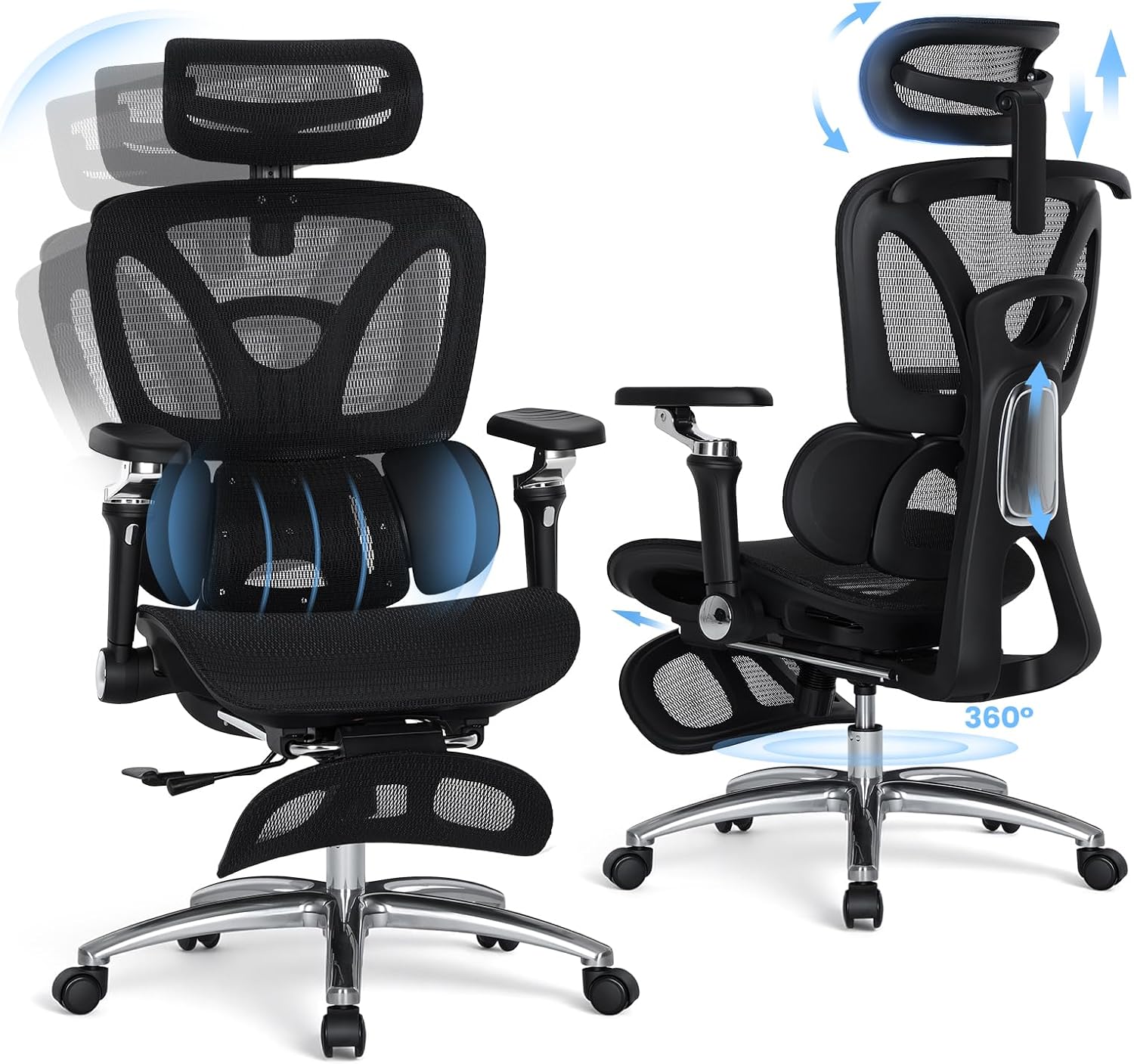
- 23.62 inch seat width is the widest in this roundup, directly addressing hip pressure for larger frames
- Armrests are deliberately spaced wider (22.05 inches apart) to avoid squeezing at the hips, a detail specific to this chair
- SGS-certified Class 4 gas lift is a higher-rated cylinder class than the Class 3 lifts on some other chairs here
Cons
- Highest price in this roundup
- Large overall footprint needs more floor space than the compact task chairs on this list

Pros
- BIFMA X5.1 is a more specific structural certification than a generic "BIFMA compliant" claim, worth checking for on any chair in this price range
- Seat width and depth are both above average for this roundup, giving more room across the hips
- Lumbar support adjusts on two axes rather than height alone
Cons
- Among the pricier picks in this roundup
- Armrest panel ships in a sliding configuration by default; a fixed panel requires contacting the manufacturer directly

Pros
- Tempur material is a recognized, named material brand rather than a generic memory foam claim, with a documented history in mattress and seating pressure distribution
- Cooling gel layer addresses a common tradeoff where pressure-conforming foam traps more heat than firmer cushions
- Synchro tilt mechanism adjusts tension separately from the lock, giving finer control than a simple two-position recline
Cons
- 275 lb weight capacity is the lowest documented figure in this roundup
- Highest price point among chairs with a comparable feature set here

Pros
- Documented 600 lb capacity is the highest weight rating in this roundup
- Independent spring cushion matrix is a genuinely different construction than molded or layered foam, aimed specifically at resisting long-term compression under the hips
- Airbag lumbar system allows stepless firmness adjustment through a valve
Cons
- Fabric upholstery is described as prone to some backflow (texture shading from pressure), a normal but visible cosmetic effect
- Shortest warranty (1 year) among the chairs in this roundup

Pros
- Molded foam seat cushion holds up well over long, uninterrupted sitting sessions
- Adjustable lumbar cushion is independent of the backrest shape
- High rating relative to price point
Cons
- No independent headrest
- Fewer armrest adjustment points than the pricier picks on this list

Pros
- Cushion is explicitly described as thicker than a standard computer chair seat, aimed at dispersing weight to avoid hip and leg numbness
- Adaptive lumbar support targets back pressure from long work sessions specifically, not just a static pad
- Among the more affordable picks in this roundup
Cons
- No documented weight capacity figure published in the listing
- Single-layer mesh may run warmer than the double-layer options on this list
What to Check for Combined Back and Hip Support
Seat Width Is the Feature Most Listings Bury
Most chair listings lead with weight capacity or lumbar features, but seat width is the number that most directly determines hip comfort. Look for the actual seat width measurement, not just an overall chair width figure, which often includes the armrests and frame rather than the usable seat pan. The chairs in this roundup range from roughly 20 to nearly 24 inches wide, a meaningful spread for hip room, and that gap is often larger between two chairs marketed identically as “wide seat” than the listing photos suggest.
Armrest Spacing Matters as Much as Seat Width
A wide seat does not help if the armrests are mounted close enough to squeeze the hips from the sides. A few chairs on this list specifically publish the distance between armrests, worth checking directly rather than assuming a wide seat automatically means wide armrest spacing too, since the two measurements are set independently by the manufacturer.
Cushion Construction Affects Pressure Over Time
Standard foam cushions compress unevenly over months of daily use, which can reintroduce the exact hip pressure a wider seat was meant to solve. Molded foam, high-density foam, and independent spring matrices each resist that flattening differently. There is no single best construction, but it is worth reading past generic comfort language in a listing to find the specific material described, since two chairs both labeled “premium foam” can behave very differently after a year of daily use.
Independent Lumbar Adjustment, Not Just a Wide Seat
A wide seat solves hip pressure but not lower back support on its own. Look for a lumbar system that adjusts separately from the seat, whether mechanical or inflatable, so both areas can be tuned independently rather than compromising on one to fix the other. For a broader look at what to check on any ergonomic chair, see our guide to what to look for in an ergonomic office chair.
Certification and Weight Rating Still Apply
A wide, well-cushioned seat on an uncertified frame is not a good tradeoff. Look for BIFMA or SGS certification, and check the gas lift class where published; a higher-rated cylinder class generally indicates a sturdier lift mechanism under sustained daily use. Weight capacity in this roundup ranges from 275 to 600 lbs, a wide spread worth checking carefully against your own needs rather than assuming every chair here fits every body the same way.
Material Choice Shapes Long-Term Comfort, Not Just Looks
Mesh, fabric, and named pressure-conforming materials each handle hip and back pressure differently over a full day. Mesh distributes weight while staying cool, fabric tends to be more forgiving on pressure points than firm leather but can show wear patterns over time, and named foam technologies like the ones used in premium task chairs prioritize contouring to the body over airflow. None of these is a wrong choice; the decision comes down to whether you sit still for long stretches or shift position frequently, and how much a warmer material bothers you in your specific office.
Final Thoughts
For the widest seat and most hip room in this roundup, the Big and Tall Mesh Chair with 23.62 Inch Wide Seat pairs that width with deliberately wide-spaced armrests and a higher-rated gas lift class, though at the highest price on this list. For a genuinely different cushion construction aimed at resisting compression over time, the Fabric Big and Tall Chair with Airbag Lumbar uses an independent spring matrix alongside the highest documented weight capacity here. Both are worth comparing against the mid-range and named-material picks further down the list.
FAQ
Will a wider chair seat fix hip and back pain on its own?
Not on its own. A wider, better-cushioned seat can reduce the pressure that builds up during a workday, but it is not a treatment for an existing hip or spine condition. Persistent, severe, or worsening pain, especially pain that spreads down the leg, should be evaluated by a doctor.
How do I know if my current chair is too narrow?
A common sign is feeling the edges of the seat pressing into the outer hips while sitting normally, or leaning to one side to find a more comfortable position. If that sounds familiar, check your current seat width measurement against the wider options in this roundup, most standard task chairs run 18 to 19 inches wide, so anything at or above 20 inches is already a meaningful upgrade. Measuring your own current chair with a tape measure before shopping is a more reliable comparison point than guessing from memory or photos alone.
Is a spring cushion better than foam for hip pressure?
Neither is universally better. An independent spring matrix tends to resist long-term flattening better than standard foam, but high-density molded foam can offer more consistent, predictable support in the meantime. Both are legitimate approaches; the difference shows up more in durability over years than in day-one comfort, so weigh your own expected years of daily use alongside price when choosing between the two.
When should I see a doctor instead of buying a wider chair?
If back or hip pain is severe, does not improve after a few weeks of better seating, or comes with numbness, tingling, or pain radiating down the leg, see a doctor rather than continuing to try different chairs. Our guide on reducing back pain from sitting all day covers general habits worth pairing with any chair, but it does not replace medical care when symptoms are serious.




Write Your Review
No reviews yet. Be the first to share your experience!