

The clearest signs your mesh office chair is sagging are a visible dip in the seat when you sit down, feeling the frame through the fabric, and the mesh no longer springing back once you stand up. A little give is normal. A dip that doesn’t recover, or fabric that stays stretched after you get up, means the mesh has lost its tension for good.
- Press your palm into the seat or lumbar area. If it deflects more than about two inches with no noticeable spring-back, the mesh’s elastic tension is likely compromised.
- Once mesh loses its tension, there’s no fixing it by adjusting or tightening. Replacement of the mesh panel or the chair is the only real fix.
- ANSI/BIFMA X5.1, the industry standard most general office chairs are built and tested against, covers users up to 275 lbs and includes durability testing, though it evaluates structural safety, not subjective comfort or how long fabric tension lasts.
- Cornell’s ergonomics program notes that roughly half your body weight rests on just 8 percent of the seat’s surface, the area under your sit bones, where pressure can reach 85 to 100 psi on a flat, unsupportive surface.
- Sagging shows up first in the highest-pressure zones, the seat pan under your sit bones and the lumbar area of the backrest, well before the edges of the mesh show any wear.
In this article:
- Why mesh loses tension in the first place
- 5 signs your mesh office chair is sagging
- What to do if you spot these
- When it’s worth replacing vs just the cushion
- Frequently asked questions
5 Signs Your Mesh Office Chair Is Sagging
Mesh doesn’t fail all at once. It loosens gradually, which is exactly why the early signs are easy to write off as normal break-in rather than the start of real wear.
Why Mesh Loses Tension in the First Place
Mesh seating works because the weave is under constant tension across a frame, similar to how a trampoline surface holds its shape only as long as the springs around the edge stay tight. Every time you sit down, the fibers stretch to absorb your weight, then relax back when you stand. That cycle is fine thousands of times over. It is not fine indefinitely.
The fibers themselves are usually a blend of polyester and elastane or a similar stretch yarn. Elastane specifically loses elasticity with repeated stretching, heat, and UV exposure, the same reason old stretchy clothing eventually stops snapping back. A chair near a sunny window or a radiator ages faster than one in a shaded, climate-controlled office for exactly this reason. Body weight matters too: heavier daily loads and longer sitting hours put more cumulative stretch cycles on the same small area of fabric, which is why the seat pan under your sit bones and the lumbar zone of the backrest are almost always the first places to show it.
1. A Visible Dip Forms When You Sit Down
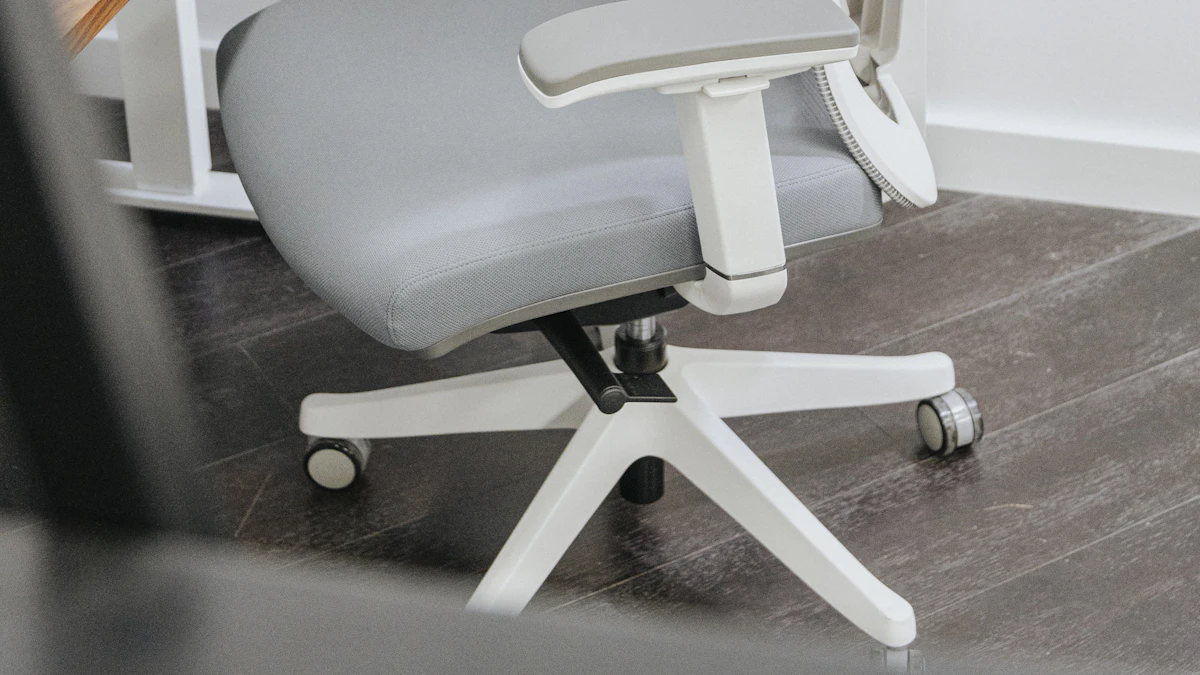
A new mesh seat holds a flat, even tension across the whole pan. As the weave stretches, a bowl-shaped dip forms right under your sit bones, the exact spot carrying roughly half your body weight on a small area. Once that dip is visible with the chair empty, not just while you’re sitting in it, the mesh has already lost meaningful tension. Compare it to a chair of the same model that gets little use, a guest chair or a spare, if you have one nearby. Side by side, the difference in how flat the seat sits is usually obvious in a way it isn’t when you’re just looking at your own chair in isolation.
2. You Can Feel the Frame Through the Mesh
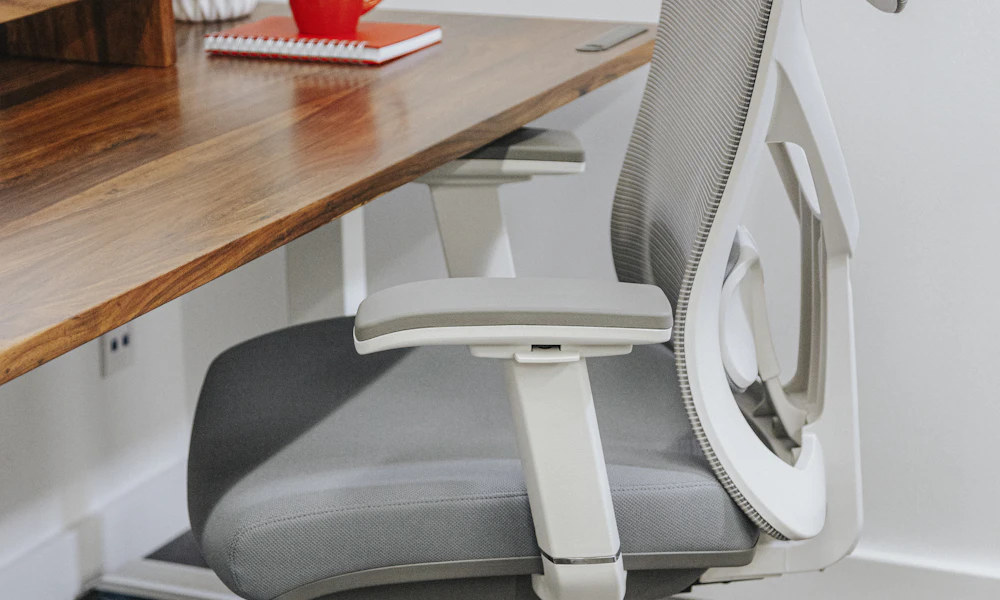
Mesh is supposed to suspend you above the chair’s frame, not press you against it. When the fabric stretches enough that you feel a hard edge or bar underneath, usually at the front lip of the seat or the base of the backrest, the mesh is no longer doing the one job it has. That hard-edge feeling is also where circulation-cutting pressure starts, the same problem a flat, unsupportive seat causes according to Cornell’s ergonomics research. Run your hand flat across the seat from front to back. A healthy mesh seat feels like a taut trampoline the whole way. A sagging one feels like it dips toward a firmer ridge somewhere in the middle or rear third.
3. The Mesh Has Lost Its Spring-Back
Press firmly into the center of the seat or lumbar panel with your palm, then let go. Healthy mesh springs back to flat within a second or two. Sagging mesh stays dented, sometimes for several seconds, sometimes permanently. This test works even on a chair that looks fine at a glance, since visible sagging usually shows up after the spring-back is already gone.
4. Your Sitting Position Has Changed Without You Trying
As the seat pan sags lower in the center, your hips rotate backward and your lower back rounds instead of holding its natural curve. If you’ve noticed yourself slouching more, sitting closer to the front edge, or feeling like the lumbar support isn’t reaching your back the way it used to, the chair’s shape has likely changed underneath you rather than your posture getting worse on its own. This one is easy to blame on yourself, tiredness, a long week, getting older, when the actual cause is a few millimeters of fabric stretch adding up over months.
5. Wrinkles or Stretched Fibers Show Up in High-Use Areas
Look at the mesh at a low angle in good light. Loose wrinkles, thinning fibers, or a slightly frosted look concentrated where you actually sit and lean, rather than spread evenly across the whole panel, mean that section has stretched past its original weave tension. Even mesh, uniform texture across the panel is a sign the tension is still even. A phone flashlight held at a shallow angle across the fabric makes this easier to spot than overhead room lighting, since the raking light throws small ripples into shadow that flat light washes out.
What to Do If You Spot These
Run the palm-press test in a few different spots before deciding anything. A single soft spot might be isolated. Sag across the whole seat pan or the full lumbar area is a tension problem with the fabric itself, not a one-off weak point. Check the armrests and gas cylinder height adjustment while you’re at it, since a chair old enough to have sagging mesh is often due for a broader check anyway. Write down or photograph what you find. If you’re debating a warranty claim or comparing against a replacement panel spec sheet later, having a specific description, not just “it feels saggy,” makes that conversation faster.
Some higher-end chairs use a removable mesh panel held by a plastic retainer strip, which can be replaced on its own for a fraction of the cost of a new chair. Check your chair’s model documentation for this before assuming you need to replace the whole thing. If your current chair doesn’t support that, or the frame and mechanism are also showing their age, see our picks for mesh office chairs built for back support or our broader mesh office chair roundup for a full replacement. Our guide to mesh vs padded fabric chairs is worth a look too if you’re reconsidering mesh altogether after dealing with a sagging one.
When It’s Worth Replacing vs Just the Cushion
| Situation | What to Do |
|---|---|
| Sag is isolated to the seat pan, chair otherwise solid | Add a seat cushion, or replace just the mesh panel if your model supports it. |
| Sag is in the lumbar area only | A clip-on lumbar support cushion can compensate while the rest of the chair is still fine. |
| Sag is across seat and backrest both | Replace the chair. Patching two failed panels rarely costs less than a new mid-range mesh chair. |
| Frame, gas cylinder, or armrests are also failing | Replace the chair. Fabric tension is the smallest of several problems at that point. |
| Chair is under 2 years old and already sagging | Check the warranty first. Premature sagging on a recent chair is often a material defect, not normal wear. |
Frequently Asked Questions
Can a sagging mesh office chair be fixed?
Not by adjusting or tightening. Once the weave loses its elastic tension, the only real fixes are replacing the mesh panel itself, if the chair supports that, or replacing the chair.
How long does mesh take to start sagging?
It varies widely with mesh quality and daily use. Lower-quality mesh can show noticeable sag within a year of daily use, while higher-quality weaves can hold tension for several years under the same conditions.
Will a seat cushion fix a sagging mesh chair?
A cushion can mask isolated seat pan sag by adding support on top, but it does not restore the mesh’s original tension underneath, and it will not help if the backrest is sagging too.
Can a sagging mesh chair cause back pain?
It can contribute to it. A sagging seat pulls your pelvis out of a neutral position and reduces the lumbar support reaching your lower back, which are both factors in the kind of slouched posture linked to back discomfort over a full workday.
How do I check mesh tension before buying a used office chair?
Press firmly into the seat pan and lumbar area and watch for spring-back. Also sit in it for a few minutes and check whether your position feels stable or like you are slowly sinking toward the frame.
A little give in mesh is normal and even helps it stay comfortable. A dip that stays after you stand up, a frame you can feel through the fabric, or a spot that never springs back are different signs entirely, and none of them improve on their own. Catching sag early, before it spreads across the whole seat pan, is usually the difference between a cheap panel swap and a full chair replacement.
Related reading: How Long Does Mesh Office Chair Fabric Last?




Write Your Review
No reviews yet. Be the first to share your experience!