

Back pain from sitting rarely comes from one single cause, but a chair that forces poor posture for eight hours a day makes almost any underlying issue worse. The chairs worth considering here share adjustable or adaptive lumbar mechanisms, not just a fixed curve molded into the mesh and labeled as support. See our full mesh office chair lineup for more options.
We compared five mesh chairs specifically on lumbar mechanism quality, seat cushioning, and tilt control, the three factors that most directly affect lower back comfort during long sitting sessions.
This article is for informational purposes only and is not medical advice. If you have persistent or worsening back pain, consult a physician or physical therapist rather than relying on a chair purchase alone.

Pros
- Adaptive lumbar tracks your recline instead of staying fixed, useful for anyone who shifts positions often
- Weight capacity matches the highest-rated chairs in this roundup
- Warranty coverage beats the budget and mid-range picks here
Cons
- Average rating trails the rest of the chairs in this roundup, though it remains solidly positive
- Split-back design looks different from the solid-back chairs on this list, worth checking photos against your preference
- Assembly involves attaching several parts with the included tool
SIHOO's pitch for the B100 centers on lumbar support that moves with you instead of staying locked at a fixed height, useful for anyone who alternates between leaning forward to type and sitting back for a call. The split-back mesh design is a visual departure from the solid mesh backs on the rest of this list, though it serves the same airflow purpose.
The armrests flip up, the headrest is wide and adjustable, and the frame supports multiple recline positions. Warranty coverage runs several years, ahead of the budget option in this roundup.
Its average rating trails the rest of the chairs compared here, though it remains solidly positive overall. Assembly requires attaching a few more parts than the simplest chairs on this list.
For anyone whose main priority is lumbar support that adapts through the day rather than a fixed pad, this is the most purpose-built option here.
Chair Type: Split-back mesh ergonomic office chair. Frame Material: Polypropylene frame. Seat Material: Polypropylene seat base with mesh, polyester, and nylon upholstery.
Headrest: Wide, adjustable headrest. Armrests: Flip-up design. Lumbar Support: Adaptive lumbar support that adjusts with posture. Recline: 3-position tilt, 5 height positions. Base Movement: Swivel on a star base.
Color: Grey. Brand: SIHOO. Model: B100. Warranty: 3-year parts replacement coverage. Suitable for hard floor and carpet surfaces.
If lower back support is your single biggest priority in a new chair, this is the most purpose-built option in this roundup, with lumbar support designed to move as you shift positions rather than staying fixed at one height.
Consider this chair if you spend long stretches alternating between leaning forward to focus and sitting back for calls or breaks. The adaptive lumbar mechanism is designed specifically for that kind of movement throughout the day.
The split-back mesh design is a visual departure from the solid-back chairs elsewhere on this list, so it is worth checking product photos to make sure the look fits your space before buying.
This is best suited to buyers whose main complaint with previous chairs has been inconsistent or fixed lower back support. If a more traditional solid-back look matters more to you, other picks on this list may be a better fit.
Pros
- Highest average rating of any chair across our mesh office chair roundups so far
- Adjustable back support goes beyond a simple fixed lumbar pad
- Large and rapidly growing review base backs up that rating
Cons
- Heavier than most other picks at a similar price
- Newer brand relative to established names like Lorell or Staples
- Solid-back design rather than full mesh throughout
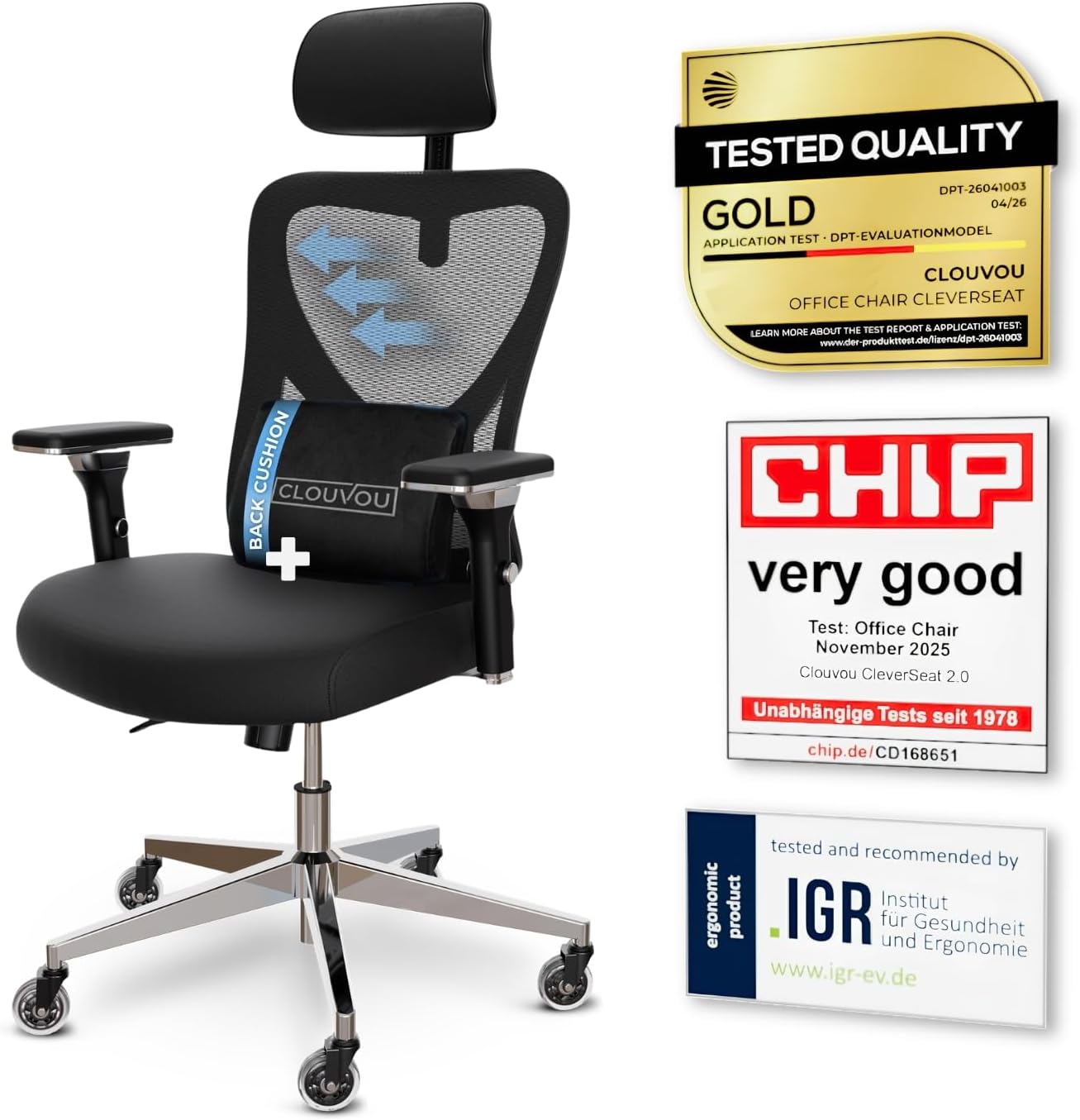
CleverSeat's chair carries the highest average rating of any chair we have covered across our mesh office chair comparisons, backed by a review base that has grown substantially in a short time, a strong signal of consistent buyer satisfaction.
The back support adjusts rather than relying on a single fixed lumbar bump, and the 2D headrest adds coverage that many chairs at this price skip entirely. It is rated for 330 pounds, matching the higher-capacity picks in our comparisons.
The backrest uses a solid-back design rather than full mesh throughout, trading some breathability for structure, and at 40 pounds it is heavier than several competitors.
For anyone prioritizing rating and adjustable back support above all else, this is currently the strongest performer we have found in this category.
Chair Type: Ergonomic mesh office chair with adjustable back. Frame Material: Reinforced polymer. Seat Material: Mesh. Back Style: Adjustable, solid back.
Armrests: Adjustable. Headrest: 2D. Base Movement: Swivel on rolling casters.
Weight: 40 pounds. Maximum weight recommendation: 330 pounds, per manufacturer listing.
If overall rating is your deciding factor above any single spec, this chair currently leads every comparison we have run in this category.
Consider this chair if adjustable back support and a 2D headrest matter more to you than a full mesh build throughout.
Weigh the newer brand history against more established names if a long-standing company track record matters to you specifically.
This is best suited to buyers who prioritize current buyer satisfaction over brand tenure.

Pros
- Weight rating clears the 300-pound threshold with room to spare
- 4D lumbar adjustment is more precise than most chairs at this price
- Mesh back stays cool during long sessions compared to foam-backed chairs
- Recline and tilt tension adjust independently for a more personalized fit
Cons
- Seat pan is standard width, not an oversized XL seat, so very broad-framed users should check the dedicated big and tall picks below
- Assembly instructions are adequate but not as detailed as premium competitors
The Duramont sits in an interesting spot for this list. It is not marketed as a big and tall chair, but its manufacturer weight rating of 330 pounds clears the 300-pound threshold this roundup is built around, and it does so while keeping a more standard seat width and profile than the XL-specific chairs further down this page.
The main draw is adjustability. The 4D lumbar system moves in four directions rather than the simple up-down adjustment found on cheaper chairs, so users can dial in support for the exact curve of their lower back. Recline angle and tilt tension are also independently adjustable, which matters for anyone who alternates between focused typing and leaning back to think.
Build quality centers on a reinforced aluminum base and a breathable mesh backrest, with a memory foam seat cushion that holds its shape better than basic polyurethane foam over time. Reviewers consistently point to the lumbar support and mesh breathability as the strongest points of the design.
The tradeoff is proportions. Because this is a general ergonomic chair rather than a purpose-built big and tall model, the seat itself is not as wide as options like the HON Sadie or GABRYLLY below. It suits users near the lower end of this roundup's weight range who want strong adjustability more than extra-wide dimensions.
Weight Rating: 330 lbs per manufacturer specification. Frame: reinforced aluminum base with alloy steel frame. Backrest: 100 percent breathable mesh.
Seat: memory foam cushion with a boxed edge. Seat Height: approximately 20.8 inches. Seat Depth: approximately 20 inches.
Lumbar Support: 4D adjustable (up, down, in, out). Armrests: height-adjustable. Recline: 3 locking positions with adjustable tilt tension.
Item Weight: approximately 44.5 lbs. Warranty: 5 years. Color: black.
Consider the Duramont if your weight is close to the 300-pound mark and you value precise lumbar and recline adjustment over maximum seat width. Its 330-pound rating leaves a real margin, but it is not built with the reinforced, extra-wide frame of a true big and tall chair.
If you are closer to 400 pounds and above, or if you specifically need a wider seat pan for comfort rather than just weight capacity, look at the AnyGod, YFO, or KWKSV picks in this roundup instead, since they are engineered from the ground up for larger frames.
The independent recline and tilt tension controls make this a strong choice for anyone who shifts between upright typing and reclined reading or calls throughout the day.

Pros
- Enormous review base, among the largest of any chair in this comparison
- V-shaped back design distributes support differently than a standard flat mesh back
- 3D adjustment on both the lumbar support and armrests
Cons
- Single recline position only
- DIY-style assembly instructions, less detailed than some competitors
- V-shaped back design may not suit every body type equally well
This chair carries one of the largest review bases in this entire comparison, a strong signal of consistent performance across an unusually large number of buyers over time.
The V-shaped back is the most distinctive design choice here, aiming to distribute support differently than a standard flat mesh backrest. Both the lumbar support and armrests adjust in 3D, giving more precise positioning than fixed alternatives.
Assembly instructions are described as DIY-style, less hand-held than some competitors, and recline is limited to a single position.
For anyone curious about a genuinely different back design backed by an enormous amount of buyer feedback, this is one of the most-proven picks in this comparison.
Chair Type: Ergonomic mesh office chair with V-shaped back. Frame Material: Nylon. Seat Material: Foam.
Armrests: 3D adjustable. Lumbar Support: 3D adjustable. Recline: Single position. Assembly: DIY.
Back Style: V-shaped design, a departure from the flat mesh backs elsewhere in this comparison.
If review volume matters most to you, this chair's track record is among the strongest in this comparison.
Consider this chair if you want 3D adjustment on both the lumbar support and armrests rather than fixed or simpler flip-up designs.
Check photos of the V-shaped back carefully; it is a genuinely different silhouette than the standard flat mesh backs on most other picks here.
This is best suited to buyers drawn to a distinctive design backed by an unusually large amount of buyer feedback.
Pros
- Tilt lock holds at any angle rather than forcing a preset position
- Thick seat cushion adds comfort for extended sitting
- Height-adjustable armrests and lumbar support together
Cons
- Weight rating on the listing overstates the verified spec sheet figure, worth confirming directly before buying
- Narrower backrest width than several other picks in this comparison
- Plastic and wood frame components rather than metal throughout
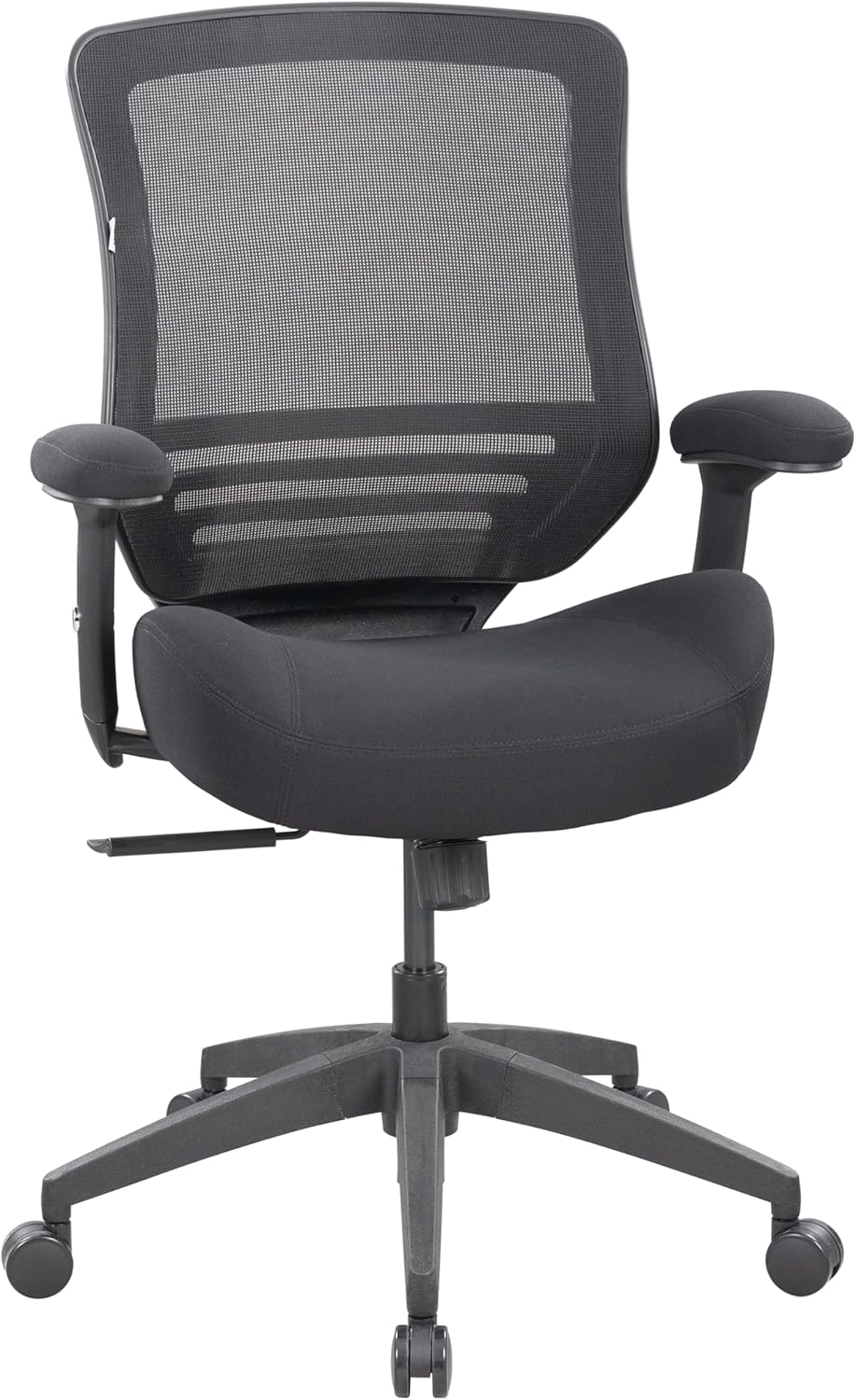
BOLISS builds this chair around a thick, soft seat cushion and height-adjustable lumbar support, aimed at reducing the kind of lower back discomfort that comes from long, uninterrupted sitting sessions.
The tilt lock is a genuinely useful detail: rather than clicking into a few preset positions, it holds at whatever angle you set it to, letting you fine-tune recline more precisely than a standard multi-position tilt.
The listing's marketing copy states a higher weight figure than the manufacturer's own specification sheet lists, so it is worth confirming the verified rating directly before buying if capacity is a concern for you.
For anyone who wants a soft, thick seat paired with adjustable lumbar support and a flexible tilt lock, this covers the basics well.
Chair Type: Ergonomic mesh office chair. Frame Material: Plastic and wood. Seat Material: Foam. Back Style: Mesh back.
Armrests: Height adjustable. Lumbar Support: Height adjustable. Recline: Tilt lock at any position.
Brand: BOLISS. Weight: 30.6 pounds. Maximum weight recommendation per manufacturer specification sheet: 300 pounds.
If a soft, thick seat cushion matters as much to you as lumbar support itself, this chair leans further into cushioning than several other picks in this comparison.
Consider this chair if a free-lock tilt mechanism, rather than fixed preset positions, appeals to you for fine-tuning your recline angle.
Confirm the weight rating directly against the manufacturer's specification sheet rather than the listing's marketing copy before buying.
This is best suited to buyers who prioritize seat cushioning and precise tilt control together.
What Actually Helps With Back Pain in a Chair
Adaptive Lumbar Beats Fixed Lumbar for Most People
A fixed lumbar curve works only if your torso happens to match the height it was designed around. An adaptive mechanism that moves with your posture as you shift throughout the day addresses a wider range of body types and sitting habits, which matters more for genuine back pain than for general comfort preference alone.
If you have tried adjustable lumbar support before without relief, an adaptive mechanism is worth trying specifically before concluding that lumbar support in general does not help your situation. The difference is often subtle in a quick showroom sit but becomes noticeable only after a full workday of actual use.
Free-Lock Tilt vs. Preset Positions
A tilt mechanism that locks at any angle rather than a few fixed presets lets you find the exact recline that relieves pressure on your lower back, rather than settling for the closest preset. This precision matters more for genuine back pain than for a buyer without existing discomfort.
Check specifically for language like tilt tension or lock at any position on the listing, rather than assuming any adjustable tilt mechanism offers this level of control. A chair limited to 2 or 3 fixed positions still helps most people, but it cannot match the precision of a free-lock system for finding one exact angle.
Seat Cushioning and Pressure Distribution
Lower back pain is sometimes actually referred discomfort from poor seat pressure distribution rather than the backrest alone. A thicker, well-distributed cushion reduces pressure points that can indirectly contribute to lower back tension over a long sitting session. Memory foam tends to distribute pressure more evenly than basic sponge foam, worth checking the seat material specifically alongside the backrest features.
For a broader look at posture and desk setup beyond the chair itself, our guide to signs your office chair is bad for your back covers related warning signs worth checking.
Verify Specifications Directly, Not Just Marketing Copy
Some listings state weight ratings or feature claims in the title that do not match the manufacturer’s own specification sheet further down the page. This matters more for back-pain-focused shopping than casual browsing, since an overstated capacity on a chair you are relying on for real support is a real risk, not just a minor inconvenience. Scrolling past the title to the full specification sheet before buying takes an extra minute and is worth doing every time.
None of the five chairs here needed a discount code or sponsored placement to make this list; each one is currently in stock with a verifiable rating and real specifications behind it. For broader strategies beyond chair choice, see our guide on how to reduce back pain from sitting all day.
Final Thoughts
SIHOO B100 Mesh Ergonomic Office Chair is the clearest specialist pick in this comparison, built specifically around lumbar support that adjusts to your posture in real time rather than staying fixed at one height, useful for anyone who shifts between focused work and more relaxed sitting throughout the day. If overall rating matters more to you than the specific lumbar mechanism, CleverSeat Ergonomic Office Chair currently holds one of the highest average ratings of any chair we have compared, with adjustable back support backing that rating up.
Frequently Asked Questions
Can the right office chair actually fix back pain?
A well-fitted chair with proper lumbar support can meaningfully reduce strain and discomfort caused or worsened by poor sitting posture for many people, but it addresses posture and pressure, not underlying medical causes like a herniated disc or nerve issue. See the disclaimer near the top of this article, and consult a physician or physical therapist for persistent or worsening pain rather than relying on a chair purchase alone.
How long does it take to notice a difference from a better chair?
Some people notice reduced end-of-day discomfort within the first week, while for others it takes longer as posture habits gradually adjust to the new support. A chair alone will not undo years of poor posture overnight, and pairing it with regular movement breaks tends to produce better results than the chair by itself.
Should I prioritize lumbar support or seat cushioning for back pain?
Both matter, but for lower back pain specifically, lumbar support tends to have the more direct effect since it addresses the spine’s natural curve during sitting. Seat cushioning affects comfort and pressure distribution more broadly, which can indirectly contribute to back tension over a long day but is generally the secondary factor to prioritize.
Is a more expensive chair always better for back pain?
Not necessarily. The specific lumbar mechanism and how well the chair fits your body matter more than price alone, and a well-designed mid-range chair with adaptive lumbar support can outperform a pricier chair with only a fixed lumbar curve. Focus on the mechanism itself rather than assuming the highest price guarantees the best outcome for your specific back pain.
How long should I expect to wait before a new chair noticeably helps my back pain?
It varies, but many people notice some difference within the first one to two weeks of consistent use, particularly if poor lumbar support was a clear contributing factor. A chair alone will not resolve pain caused by an underlying medical condition. See the disclaimer near the top of this article, and consult a physician or physical therapist if symptoms persist or worsen.



Write Your Review
No reviews yet. Be the first to share your experience!