

This article covers general office seating, not medical treatment. None of the chairs below are certified medical devices, and sitting in a different chair will not cure a diagnosed spine or muscle condition. If upper back pain is persistent, severe, worsening, or comes with numbness or tingling, talk to a doctor or physical therapist rather than relying on a chair alone. What follows are general seating considerations based on published product specifications, not a clinical recommendation.
Upper back pain from a desk job usually traces back to the same pattern: shoulders rounding forward, the neck craning toward a screen, and a backrest that only supports the lower spine while leaving the shoulder blades to fend for themselves. A chair built for lower back pain does not automatically solve that, since the two regions need different kinds of support, a lumbar bulge sits several inches below where a rounded upper back and tight shoulder blades actually need contact. This list focuses on chairs from our Chairs for Back Pain lineup that specifically address the upper back and shoulder area, through a shaped backrest curve, a built-in headrest, or sectioned cushioning that treats the shoulders as their own zone rather than an extension of the lumbar region.
Sciatica and upper back pain are often discussed together since both get lumped under general back discomfort, but they call for different chair features entirely. If sciatica is the primary issue rather than the shoulders and upper spine, our chairs for sciatica relief roundup covers seat pan and pressure-point features more relevant to that condition.
Disclosure: Ergonook is a participant in the Amazon Associates program. Links below are affiliate links, and we may earn a commission from qualifying purchases. This does not affect which chairs we recommend or how we rank them.
Pros
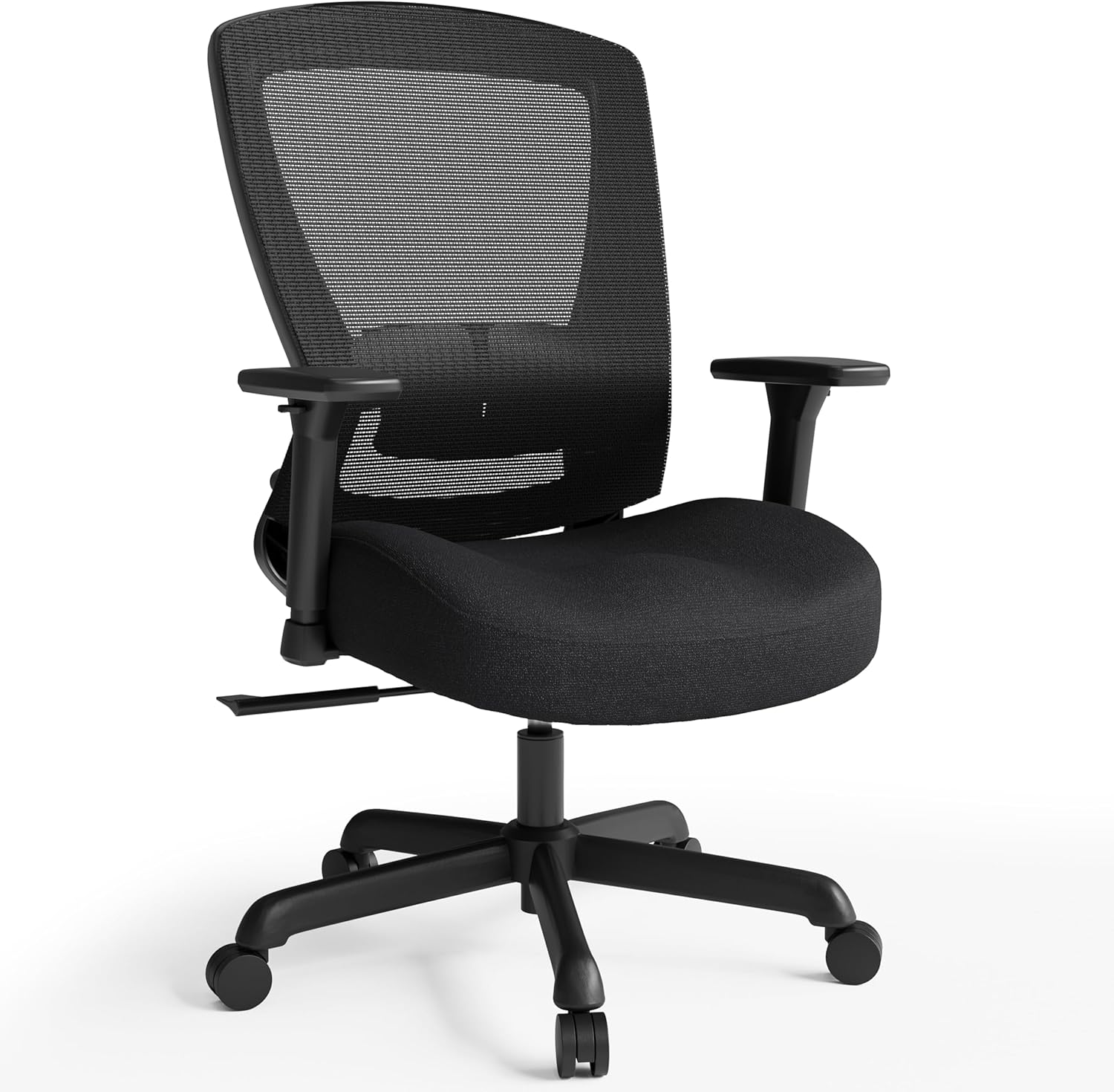
- Backrest curve is specifically shaped around the shoulder region rather than a generic S-curve, a direct fit for upper back and shoulder discomfort
- Documented 300 lb weight capacity gives a clear number to check against
- Wide seat height range (19 to 22.8 inches) fits a broader range of desk heights
Cons
- 300 lb weight capacity is lower than several other picks on this list
- No headrest included, support stops at the upper back and shoulder curve

Pros
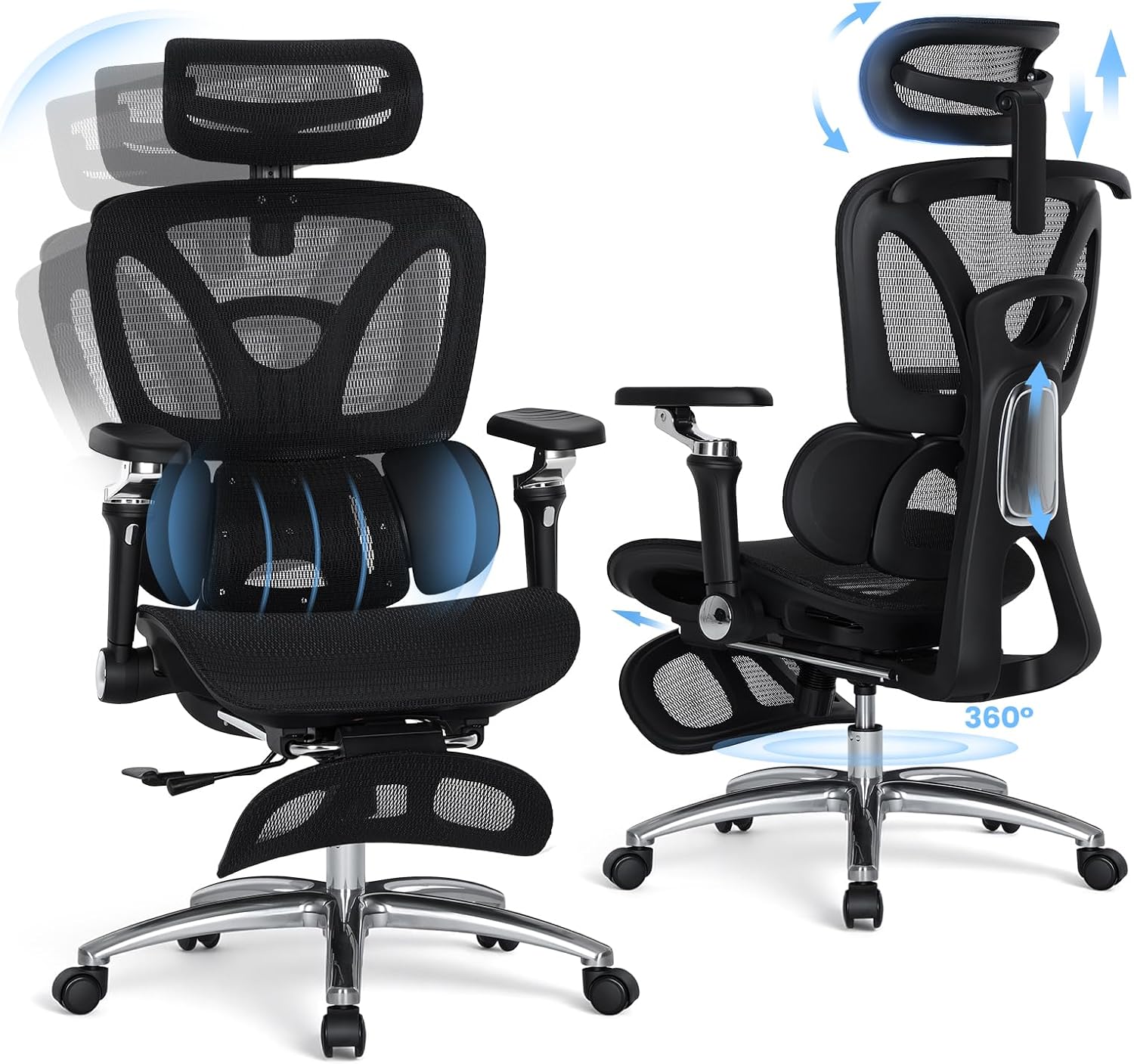
- Headrest is built into the frame rather than added on, so it lines up with the upper back and neck together
- Tall backrest and recline range suit taller frames that often run out of headrest coverage on shorter chairs
- Mesh back keeps airflow moving during long stretches
Cons
- Frame is listed as plastic rather than a metal core, which feels less substantial under heavier use
- Manufacturer does not publish a weight capacity figure, so heavier users should look elsewhere on this list for a documented number

Pros
- Layered cushion design specifically sections off shoulder and head support rather than treating the backrest as one flat panel
- Retractable footrest is a genuine extra for anyone who reclines through a break rather than staying upright all day
- SGS certified gas cylinder is independently documented rather than a bare manufacturer claim
Cons
- PU leather traps more heat than the mesh options on this list over a full workday
- Bulkier executive shape takes up more floor space than a task-style chair

Pros
- Documented 350 lb weight capacity and BIFMA safety standard give a verifiable baseline other budget chairs skip
- Waterfall front edge on the seat cushion is specifically shaped to reduce pressure behind the knees on long sitting stretches
- 5 year warranty is longer than most chairs in this price range
Cons
- No dedicated headrest, so upper back support comes from the tall backrest shape rather than head and neck contact
- Lumbar pad adjusts but is not a full dynamic system that moves with recline
Pros
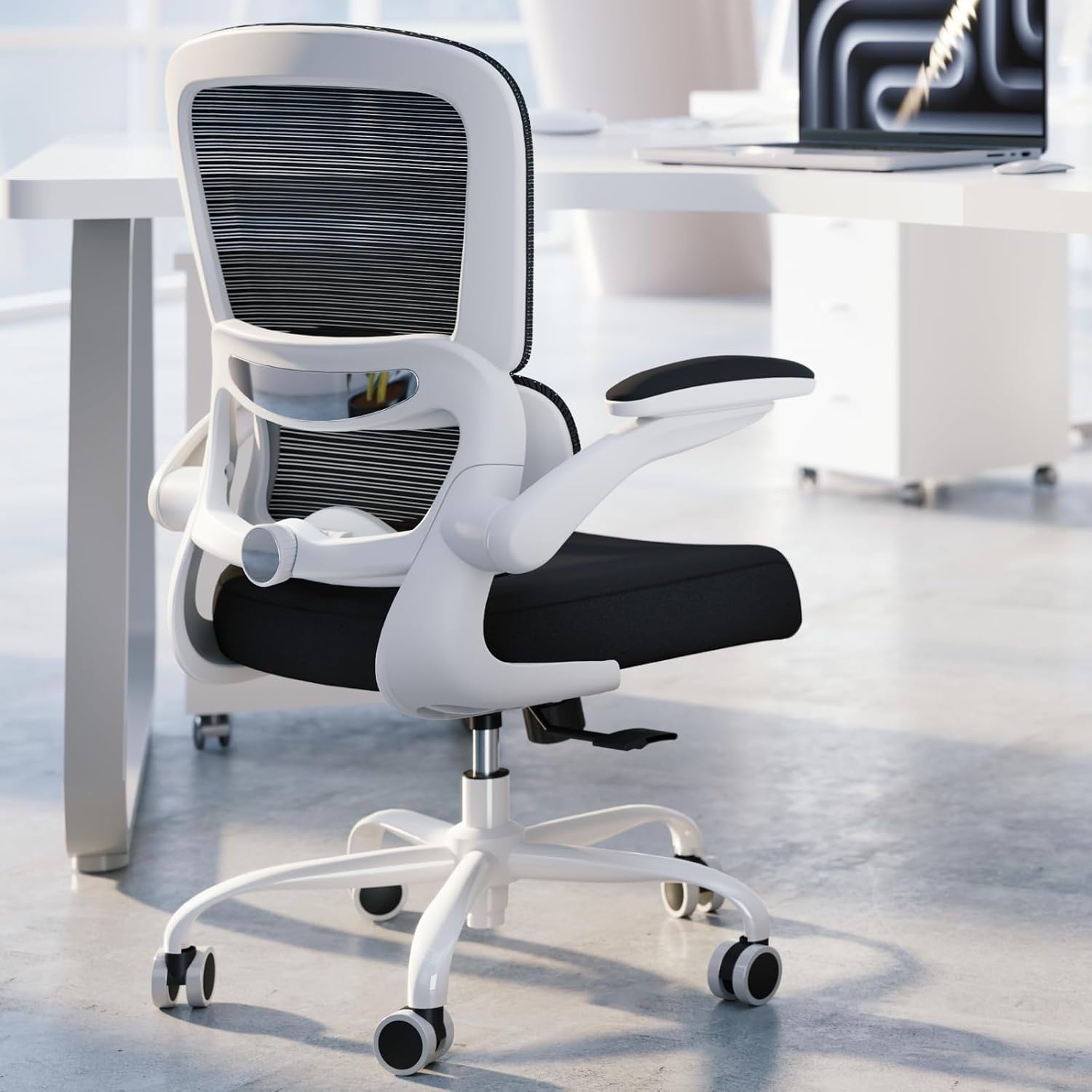
- Manufacturer states plainly that the headrest was intentionally left out to fund a better lumbar mechanism, base, and certified gas cylinder instead, a transparent tradeoff rather than a hidden one
- BIFMA certified gas cylinder addresses a common failure point (slow sinking) that budget chairs often skip
- Highest review count in this roundup by a wide margin, a useful signal of real-world durability feedback
Cons
- No headrest, by the maker's own design choice, so this is not the pick if head and neck contact is the priority
- 330 lb weight capacity is on the lower end of this list

Pros
- Wide seat pan suits a broader range of body types than narrower task chairs
- Stated height range helps set expectations before ordering
- Simple, no-frills adjustment is easy to set correctly the first time
Cons
- Fewer premium features, such as a headrest or inflatable lumbar, than pricier picks on this list
- Armrests are simpler than the multi-directional arms on higher-priced chairs here
Pros
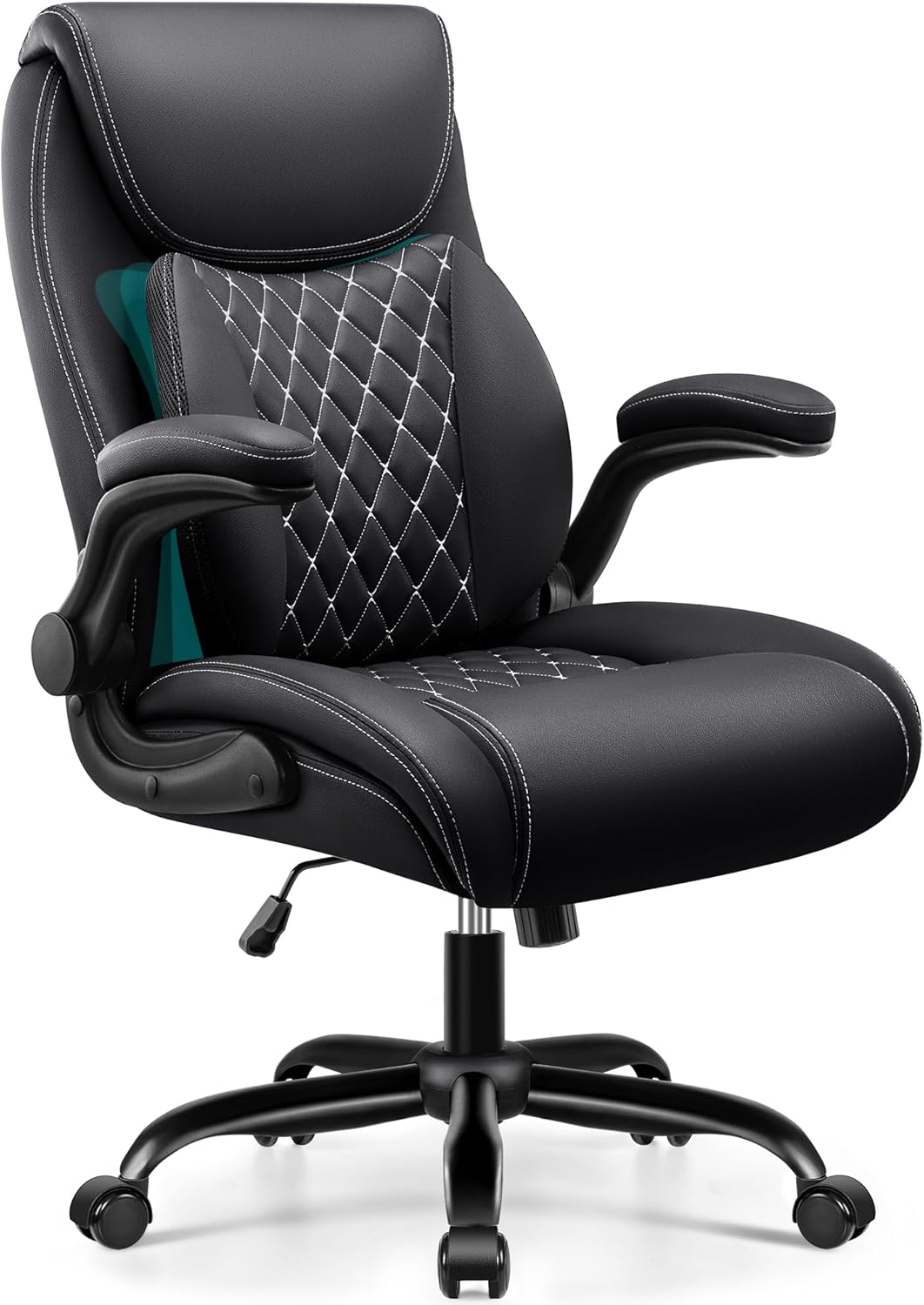
- High-back shape covers more of the upper back than task-height chairs on this list
- Dual-layer lumbar system adds a separate adaptive layer rather than a single fixed pad
- Rocking function with adjustable tension lets you dial in resistance rather than a fixed recline angle
Cons
- Lowest customer rating in this roundup, worth weighing against the feature list
- No headrest despite the high-back frame

Pros
- Nearly 3 inches of lumbar height travel covers a wide range of torso lengths
- Extra-thick molded foam seat reduces pressure during long sitting sessions
- Flip-up, rotating armrests slide neatly under tables when not needed
Cons
- Lumbar adjusts in height only, not forward-and-backward depth
- Lower price point means fewer premium finishing details than the executive-style picks on this list
What Actually Helps Upper Back and Shoulder Pain
Backrest Shape Matters More Than Backrest Height
A tall backrest alone does not guarantee upper back support if the curve is designed only around the lumbar region. Look for language in the listing about a shoulder-shaped curve, a segmented or layered cushion, or a backrest specifically described as covering the upper back, not just overall chair height. A few chairs in this list build the shoulder area into the curve directly rather than relying on backrest height to reach that far up the spine, which is a meaningfully different design decision than simply making the same lumbar-focused backrest taller.
A Headrest Helps the Neck, Not Just the Head
Upper back pain and neck strain often show up together, since the muscles that stabilize the shoulder blades also support the neck. A headrest that actually contacts the base of the skull during normal, upright typing, not just during a full recline, gives those muscles a break they otherwise never get during a workday. Not every chair on this list includes one; several deliberately put that budget into a better lumbar mechanism or a certified gas cylinder instead, which is a legitimate tradeoff depending on where your discomfort concentrates. If you already know a headrest is not the priority, our general guide to lumbar support explains why the lower and upper back can need attention independently.
Recline and Rocking Range for Real Breaks
Static posture, even good posture, contributes to upper back tightness over a full day. A chair that reclines through a real range, rather than locking to a single fixed angle, lets you shift position periodically without leaving the desk. Adjustable recline tension is worth checking too, since a recline that is too loose or too stiff for your weight defeats the purpose, either fighting you on the way back or dropping you further than intended.
Weight Capacity and Certification Are Still Worth Checking
A shoulder-friendly curve does not matter if the underlying frame is not rated to hold you safely. Confirm the published weight capacity against the structured specification field, and look for an independently certified gas cylinder, BIFMA compliance being a common one, rather than relying on marketing language alone. For a broader look at what to check on any ergonomic chair, our guide to what to look for in an ergonomic office chair covers the fundamentals beyond upper back support specifically.
Material Affects Comfort Over a Full Day, Not Just Looks
Mesh backrests breathe better and tend to run lighter, which matters if the chair needs to be moved or adjusted often through the day. PU leather and faux leather hold their shape a bit more consistently over time and wipe clean easily, at the cost of trapping more heat against the upper back and shoulders specifically, an area that already runs warmer than the lower back due to how upright posture concentrates contact there. Neither material determines shoulder support on its own; that comes down to the backrest curve and cushion layout covered above.
Final Thoughts
If your discomfort concentrates specifically around the shoulder blades, the ELABEST Mesh Office Chair is the most direct match on this list, with a backrest curve shaped around the shoulder region rather than the lumbar area alone. For anyone who wants head, shoulder, and back support treated as separate zones on one chair, the DUMOS Executive Chair layers cushioning specifically for that purpose, with a retractable footrest as a bonus for recline breaks. Both are worth comparing before the budget and certification-focused picks further down the list.
FAQ
Can an office chair actually fix upper back pain?
Not on its own. A well-shaped chair can reduce the postural habits that contribute to upper back tension during the workday, but it is not a treatment for an existing condition. If pain is persistent, severe, or spreading into the arms or hands, see a doctor or physical therapist rather than relying on seating alone.
Do I need a headrest for upper back pain, or is lumbar support enough?
It depends on where the discomfort concentrates. If it stays in the mid and upper back, a shaped backrest curve without a headrest can be enough, and several chairs on this list are built that way deliberately. If neck strain is part of the pattern, a headrest that contacts the skull during upright typing is worth prioritizing.
Is a mesh or leather backrest better for shoulder support?
Material affects comfort and heat more than shoulder support directly. Mesh breathes better over a full day, while leather holds its shape a bit more consistently and wipes clean easily. Choose based on climate and cleaning habits rather than assuming one is better for the shoulder area.
When should I see a doctor instead of just changing chairs?
If upper back pain is severe, does not improve after a few weeks of better seating and posture habits, or comes with numbness, tingling, or weakness in the arms or hands, see a doctor rather than continuing to try different chairs. Our guide on reducing back pain from sitting all day covers general habits worth pairing with any chair on this list, but it is not a substitute for medical care when symptoms are serious.




Write Your Review
No reviews yet. Be the first to share your experience!