

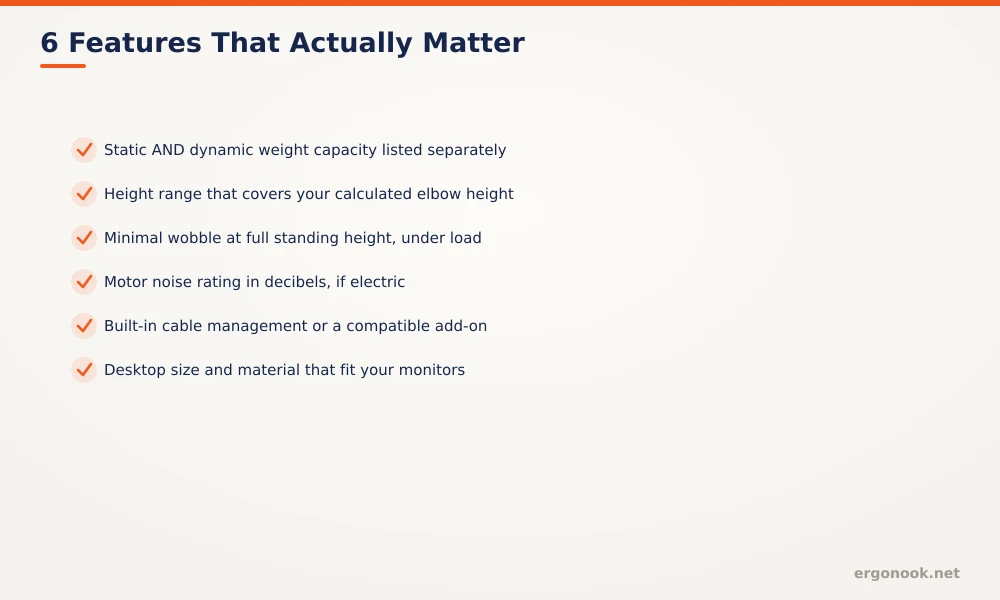
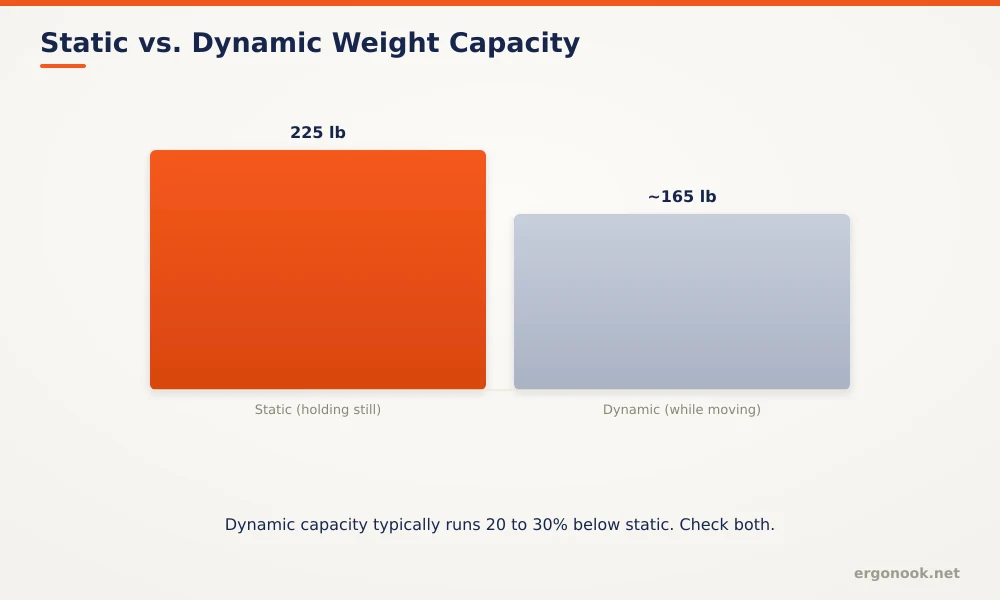
What to look for in a standing desk: weight capacity listed as both static and dynamic, a height range that covers your calculated elbow height, and minimal wobble at full extension. Dynamic capacity, the weight the motor can actually lift, typically runs 20 to 30% below static capacity, so check both numbers, not just one.
- Electric standing desks list two weight ratings: static, the load it holds while stationary, and dynamic, the lower load the motor can reliably lift.
- ANSI/BIFMA X5.5 is the relevant standard for height-adjustable desks, covering stability and repeated-cycle testing for the lifting mechanism.
- Height range matters more than motor speed for most buyers. Check the actual minimum and maximum inches against your measured elbow height, both sitting and standing.
- Budget desks under $250 often skip the independent stability and weight testing that pricier models publish specs for.
In this article:
- 6 features that actually matter
- Features you can safely ignore
- How much should you spend?
- Certifications and standards to look for
- Red flags in product listings
- Printable checklist
- Frequently asked questions
6 Features That Actually Matter
1. Static and Dynamic Weight Capacity
Static capacity is what the desk can hold while parked in place. Dynamic capacity is the lower number that matters while the motor is actually raising or lowering it, typically 20 to 30% below the static figure. Add up your monitors, dock, and accessories, and keep that total comfortably under the dynamic rating, not just the static one.
2. Height Range That Actually Fits You
Compare the listed minimum and maximum height, in inches, against your own measured elbow height sitting and standing, not against a generic body-height chart. Taller and shorter users are the ones most likely to get burned by a desk whose range looks fine on paper but doesn’t actually reach their needed extremes.
3. Stability at Full Height, Under Load
Wobble gets worse the taller a desk extends and the heavier the load on top, since more leverage acts on the frame. A single-motor desk is more prone to this than a dual-motor design, and thinner leg columns flex more than thicker ones at full extension. Reviews that specifically mention typing-induced wobble at standing height are more useful here than star ratings alone.
4. Motor Noise, if Electric
A loud motor discourages the exact behavior you bought the desk for, since nobody wants to raise and lower a desk that draws attention on every video call. Decibel ratings aren’t always listed, but user reviews mentioning noise during calls are a reasonable substitute when they aren’t.
5. Cable Management
A desk that raises and lowers cleanly gets used more than one where cables catch on drawers or go taut at full height, which becomes its own reason people stop adjusting a desk they otherwise like. Built-in trays or compatible clip systems solve this; desks with no cable plan at all shift the problem onto you after purchase.
6. Desktop Size and Material
Check depth as carefully as width, since a shallow desktop limits monitor distance and forces some users closer to the recommended 20-inch minimum than they’d like. Laminate is durable and budget-friendly; solid wood costs more but resists edge chipping better over years of daily use.
Features You Can Safely Ignore
More than three or four height memory presets rarely gets used in practice, since most people settle into one sitting and one standing height. Built-in USB charging ports and wireless charging pads are convenient but not ergonomic features, and they’re easy to add separately if a desk you otherwise like lacks them. Anti-collision sensors are worth having but shouldn’t be a deciding factor between two otherwise similar desks, since a slow, deliberate raise avoids most collisions anyway.
How Much Should You Spend?
| Tier | Price | What You Get |
|---|---|---|
| Desk converter | $100 to $200 | Sits on an existing desk, lowest-cost way to try the habit |
| Budget electric desk | $250 to $400 | Full-size desktop, single or dual motor, modest weight capacity |
| Mid-range to premium electric | $450 to $600+ | Wider height range, higher weight capacity, quieter dual motors |
Certifications and Standards to Look For
ANSI/BIFMA X5.5 is the standard covering height-adjustable desks specifically, testing stability under load and repeated raise-lower cycles for the lifting mechanism. It’s a separate standard from BIFMA X5.1, which covers general office chairs, so check that a standing desk cites the desk-specific standard rather than a chair one used loosely as a marketing stamp.
Red Flags in Product Listings
A listing with only one weight capacity number and no indication of whether it’s static or dynamic is worth a second look, since the honest answer is usually the lower, less impressive figure. Height range listed only in centimeters with no inch conversion, on a site targeting US buyers, often signals a listing template that wasn’t localized carefully. No mention of motor count or noise level at all, on an electric desk specifically, usually means that spec wasn’t good enough to highlight.
Printable Checklist
- Static and dynamic weight capacity both listed
- Height range covers your measured elbow height, sitting and standing
- Stability confirmed at full height under a realistic load
- Motor noise level or reviews mentioning it, if electric
- Cable management included or compatible
- Desktop depth checked, not just width
Once you’ve narrowed down what you need, our budget electric standing desks and standing desk converters for small spaces roundups apply this checklist to specific picks.
Frequently Asked Questions
Is a dual-motor desk always worth the extra cost?
For stability at full height and higher weight capacity, generally yes. For a lighter, mostly-sitting setup, a single motor desk is often enough.
Should I consider a manual crank desk to save money?
It’s a reasonable way to save on cost with fewer parts to fail, though the extra effort to adjust it means people tend to use it less often than an electric one.
What warranty length is reasonable for the motor?
Look for coverage specifically on the motor and frame, not just the desktop surface, since the motor is the part most likely to need service over years of daily use.
How do I choose between a converter and a full desk?
A converter is the lower-cost way to confirm you’ll actually use the habit. A full desk makes more sense once you know you will.
What to look for in a standing desk comes down to weight capacity you can verify in two numbers, a height range that matches your actual body, and stability you can confirm before or shortly after buying. Motor presets and charging ports are nice extras, not deciding factors.




Write Your Review
No reviews yet. Be the first to share your experience!