

Bamboo is the better standing desk top for most home offices because it resists moisture and warping better over years of daily use, while laminate wins on upfront cost, running $100 to $250 less for a comparable frame. Choose laminate if budget is the deciding factor. Choose bamboo if you want the surface to still look good in five years.
- A bamboo standing desk top typically adds $100 to $250 to the price of a comparable laminate desk from the same brand.
- Bamboo is a grass, not a hardwood, and it matures in three to five years, which is part of why manufacturers can offer it without a massive price jump over laminate.
- OSHA’s computer workstation guidance recommends a matte work surface to cut down on reflected glare, and bamboo’s satin factory finish meets that bar more consistently than glossy laminate grades.
- Look for a desk rated to the ANSI/BIFMA X5.5 standard regardless of which top material you pick. That standard covers structural stability and leg strength, not the surface finish, so it does not tell you anything about scratch or moisture resistance on its own.
In this article:
- Bamboo vs laminate standing desk top at a glance
- What is a bamboo desktop?
- What is a laminate desktop?
- Durability and scratch resistance
- Moisture and humidity resistance
- Cost
- Frequently asked questions
Bamboo vs Laminate Standing Desk Top: At a Glance
Both materials sit on top of the same electric or manual frame, so the choice mostly comes down to how the surface looks and holds up, not how the desk moves. Here’s the short version before we get into why.
| Factor | Bamboo | Laminate |
|---|---|---|
| Typical price add-on | $100 to $250 over a base frame | Usually included in the base price |
| Scratch resistance | Softer, shows scuffs from keys and tools more easily | Harder wear layer, resists everyday scratches better |
| Moisture resistance | Good long-term resistance to humidity swings when sealed | Very good, laminate itself does not absorb water |
| Glare | Satin, low-glare finish as standard | Varies by grade, from matte to glossy |
| Weight | Heavier per square foot | Lighter, easier for one person to assemble |
| Look and feel | Warm, natural wood grain | Uniform color, wood-look or solid finishes available |
| Best for | Long-term daily use, home offices meant to last | Budget setups, rentals, secondary desks |
What Is a Bamboo Desktop?
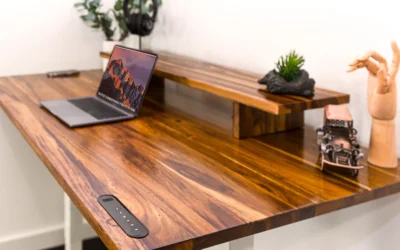
A bamboo desktop is made from strips of bamboo, a fast-growing grass, glued and pressed into solid panels under heat and pressure. Manufacturers then sand and seal the surface with a factory finish, usually a satin or semi-gloss coat that protects the wood and gives it that warm, striped grain look. It’s not a veneer over particleboard. The bamboo layer typically runs most of the way through the panel, which is part of why it holds up to years of daily contact better than a thin laminate sheet does.
Color varies by how the bamboo was processed. Natural bamboo keeps a lighter, blonde tone, while carbonized bamboo is heat-treated to a darker, amber shade closer to walnut. The carbonizing process softens the material slightly, so a natural finish holds up marginally better against dents if that level of detail matters to you.
What Is a Laminate Desktop?
A laminate desktop is a core of particleboard or MDF (medium-density fiberboard) covered with a thin, hard plastic layer that’s fused on under heat and pressure. That top layer is what gives laminate its scratch resistance and its wide range of colors and finishes, from plain white to wood-grain prints that mimic oak or walnut. The core underneath is not solid wood, so if the laminate layer chips or peels at an edge, the particleboard core underneath can absorb moisture and swell. That’s the main long-term weak point, not the laminate surface itself.
Bamboo vs Laminate: Durability and Scratch Resistance
Laminate generally wins on scratch resistance. The hard plastic top layer shrugs off the kind of everyday contact a desk sees: keys set down too hard, a stapler dragged across the surface, a mug slid instead of lifted. Bamboo’s satin finish is softer, and it will pick up light scuffs and scratches faster than laminate does, especially in the first year before a natural patina builds up.
Where bamboo pulls ahead is over the long run. Minor scratches on bamboo tend to blend into the grain rather than stand out as bright white marks the way they can on a dark laminate finish. If you’re rough on a desk surface day to day, budget for a desk pad either way. It solves the scratch problem for both materials at once.
Bamboo vs Laminate: Moisture and Humidity Resistance
This is where the two materials fail differently rather than one being simply worse. Laminate’s plastic top layer does not absorb water on its own, so a spilled coffee wiped up promptly leaves no mark. The risk with laminate is at the edges and seams, where the particleboard core can be exposed. Water that sits there for hours, not minutes, can swell the core and cause bubbling that doesn’t reverse.
Bamboo, being a real wood product, expands and contracts slightly with humidity, but its dense, laminated construction resists the warping that solid hardwood desks are prone to. A sealed bamboo top handles day-to-day humidity swings in a typical home well. The same coffee spill needs a wipe-down too, since standing liquid can work its way past the finish over time. Neither material likes being left wet. Bamboo is more forgiving about it long-term because there’s no thin plastic layer that can separate from the core.
Bamboo vs Laminate: Cost
Laminate is almost always the standard, included top on budget and mid-range standing desks. Bamboo shows up as an upgrade option, typically adding somewhere in the range of $100 to $250 over the same frame with a laminate top, depending on the brand and desk size. That gap has narrowed over the past few years as more brands added bamboo as a standard tier rather than a premium add-on, so it’s worth comparing options directly rather than assuming bamboo always costs more everywhere.
Factor in how long you’ll actually own the desk when you weigh that $100 to $250 gap. A laminate top that needs replacing after heavy wear costs more in the long run than paying extra once for bamboo and not thinking about the surface again. Neither desk top is sold as a separate replaceable part on most frames, so this is really a bet on which material you’d rather live with daily, not a repair cost to plan around.
When Bamboo Is the Better Choice
Pick bamboo if you plan to keep this desk for five years or more and want the surface to still look good at the end of that stretch. It’s also the better pick if reducing screen glare matters to you, since its satin finish reflects less overhead light than a glossy laminate top does. If you’ve already got hardwood furniture in the room and want the desk to match, bamboo’s grain fits that look better than a laminate print ever will. See our bamboo standing desk picks for specific models.
When Laminate Is the Better Choice
Pick laminate if you’re outfitting a home office on a tight budget, furnishing a rental where the desk might not come with you, or you just want a reliable surface that resists scuffs without babying it. Laminate is also the easier pick if you want a color other than natural wood tones, since it comes in far more finishes than bamboo does. Check our budget electric standing desk roundup for laminate-top options that keep the price down.
Can You Mix Materials on the Same Desk?
Yes, and a lot of home offices already do without thinking about it. The desktop and the frame are sold as separate decisions on most electric standing desks, so you can pair a bamboo top with any compatible frame regardless of what finish the base model shipped with. The same goes for accessories: a laminate desk with a wood-look keyboard tray, or a bamboo desk with a black metal monitor arm, is common and doesn’t cause any functional issue. If you’re trying to match an existing piece of furniture exactly, bring a sample or photo when comparing finishes online, since bamboo tones vary noticeably by brand and by how the bamboo was carbonized during manufacturing.
Frequently Asked Questions
Does a bamboo desk top scratch easily?
More easily than laminate, yes. Bamboo’s satin finish is softer than a hard plastic laminate layer, so it picks up light scuffs faster. A desk pad or placemat under a keyboard and mouse prevents most of the everyday wear.
Can a laminate desk get water damage?
Yes, mainly at the edges and seams where the particleboard core underneath can be exposed. The flat laminate surface itself resists water well, so quick spills wiped up promptly are rarely a problem.
Is a bamboo desk top worth the extra cost?
For a desk you plan to keep five years or more, most owners find the $100 to $250 upgrade worthwhile for the look and long-term durability. For a short-term or budget setup, laminate covers the basics for less money.
Which desk top material reduces screen glare more?
Bamboo’s satin finish typically reflects less overhead light than glossy laminate grades. OSHA’s workstation guidance recommends a matte work surface specifically to cut down on this kind of reflected glare.
How do you clean a bamboo desk top?
Wipe it with a lightly damp cloth and dry it right away rather than letting water sit. Avoid harsh cleaners or abrasive pads, which can wear through the factory finish over time and expose the bamboo underneath.
Both materials sit on the same range of frames, so this comes down to how long you plan to keep the desk and how much the surface finish matters to you day to day. Bamboo costs more upfront and holds up better over years of use. Laminate costs less and resists everyday scratches better out of the box. Neither is the wrong answer, they’re built for different priorities.
Related Reading
Signs Your Standing Desk Motor Is Failing · What Is a Standing Desk Memory Preset?



Write Your Review
No reviews yet. Be the first to share your experience!