

Big and tall office chairs are worth the extra cost if you’re over 250 lbs or taller than 6’2″. Standard chairs are tested under a different, lower-capacity BIFMA standard than big and tall models. Below that threshold, a regular chair works fine and the price difference buys support you don’t need.
| Feature | Regular Office Chair | Big and Tall Office Chair |
|---|---|---|
| Weight standard | BIFMA X5.1, built around a 275 lb test weight | BIFMA X5.11, tested to 400+ lbs |
| Base width | 20 to 22 inches | 24 to 28 inches |
| Frame material | Standard steel or reinforced plastic | Heavier-gauge steel |
| Seat width | 18 to 20 inches | 22 to 28 inches |
| Foam density | Standard density, compresses faster under heavier loads | High-density foam, resists compression longer |
| Typical price | $150-$350 | $250-$500 |
- Regular office chairs are tested under BIFMA X5.1, built around a 275 lb assumed body weight. Big and tall chairs use the separate BIFMA X5.11 standard, which covers occupants up to 400 lbs or more with higher static and fatigue loads (BIFMA, Large Occupant Office Chair Standard).
- OSHA’s workstation guidance points to roughly 18 inches as a baseline seat width reference, which is where most standard chairs fall short for wider frames.
- Big and tall chairs typically use a wider base, 24 to 28 inches versus 20 to 22 inches on a regular chair, for stability at higher loads.
- Expect to pay $50 to $150 more for a big and tall chair over a comparable regular model with similar features.
- A “static load rating” (holds a weight once in a lab test) is not the same as a BIFMA X5.11 cyclic fatigue rating (holds that weight daily for years). Check which one is actually listed before you buy.
In this article:
- What is a big and tall office chair?
- What is a regular office chair?
- Comfort and durability
- Cost
- When a big and tall chair is worth it
- When a regular chair is fine
- Can a regular chair be modified?
- How to verify a chair’s actual rating
- Common mistakes
- Frequently asked questions
What Is a Big and Tall Office Chair?
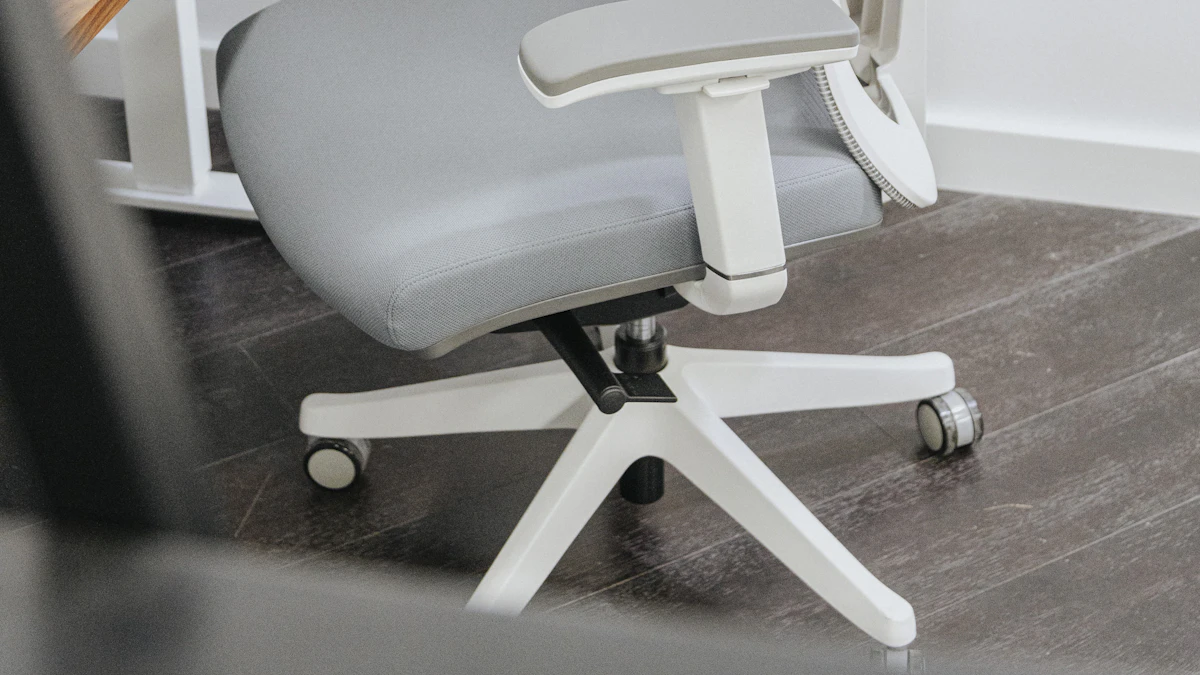
A big and tall office chair is built and tested to a higher weight standard than a regular office chair, using thicker steel in the frame, a wider base for stability, and denser foam that holds its shape under sustained heavier loads. The seat itself usually runs wider too, often 22 to 28 inches across versus 18 to 20 inches on a standard chair.
The certifying difference is the testing standard, not just marketing language. BIFMA introduced X5.11 specifically for large occupant chairs, using higher static and fatigue loads than the general-purpose X5.1 standard applied to regular chairs (BIFMA, Large Occupant Office Chair Standard). A chair labeled “big and tall” without a listed weight rating from either standard is worth a second look before you trust it. For more on what that weight number should actually be for your body, see our guide to what a good weight capacity for an office chair looks like.
What Is a Regular Office Chair?
A regular office chair is tested under BIFMA X5.1, the general-purpose standard most mass-market chairs are built around. It covers a broad range of body sizes but stops short of the higher static and fatigue loads required for large occupant certification. OSHA’s own workstation guidance notes that fixed dimensions on most chairs are sized to accommodate a specific range of users, not everyone, and warns that listed criteria may not fit every body type (OSHA, Computer Workstations eTool: Chairs).
That’s not a flaw in regular chairs. They’re built to a price and a weight range that fits most buyers, and for most home offices that range is the right one to shop in. The mismatch only shows up at the edges, for taller frames or heavier body weights the standard range wasn’t designed around, and that’s specifically the gap big and tall construction is meant to close.
Big and Tall vs Regular: Comfort and Durability

A regular chair loaded past its comfortable range tends to show it fast: the foam compresses unevenly, the gas lift can feel spongy at full extension, and the base can feel less planted when you shift your weight. None of that means the chair is unsafe within its rating, just that it’s working at the edge of what it was built for.
A big and tall chair’s higher-density foam and heavier frame are built to absorb that same daily load without the same wear curve. The wider base also matters more than people expect, since a narrow base under a heavier load is what makes a chair feel tippy when you lean to reach something on your desk.
Big and Tall vs Regular: Cost
Regular office chairs with decent ergonomic adjustability run $150 to $350. Big and tall chairs with similar adjustability run $250 to $500, a $50 to $150 premium for the heavier frame, wider base, and denser foam. Budget big and tall options exist under $250, but check the actual weight standard listed rather than trusting the label alone, since some budget models use a regular frame with a bigger cushion and call it big and tall.
When a Big and Tall Chair Is Worth It
Go big and tall if you’re over 250 lbs, taller than 6’2″, or both. The wider seat alone solves a real comfort problem for taller frames even before weight capacity enters the picture. See our picks for big and tall office chairs, or our picks rated specifically for 300 lb users if you’re at the higher end of that range.
When a Regular Chair Is Fine
Stick with a regular chair if you’re under the 250 lb, 6’2″ range and the seat width and gas lift feel right when you sit in it. Paying extra for big and tall construction you don’t need doesn’t add comfort, it just adds cost.
Can a Regular Chair Be Modified?
Partly. A wider seat cushion or extended armrests can improve comfort on a regular chair, but they don’t change the frame’s rated weight capacity or the base’s stability at higher loads. If the chair’s listed weight rating is close to your body weight, no cushion fixes that gap. Modifications help with fit, not with the underlying engineering limit.
A common example: adding a gel seat cushion to a regular chair rated for 250 lbs doesn’t turn it into a 350 lb chair. It changes how the seat feels, not what the frame, base, and gas lift were engineered to handle over years of daily use. If you’re close to the weight line and the chair already feels tight or unstable, that’s the frame talking, not something a cushion or wider armrests will quiet down.
How to Verify a Chair’s Actual Rating
Product listings throw around “big and tall” freely, so check three things before trusting the label. First, look for an explicit BIFMA standard, X5.1 or X5.11, in the spec sheet or product description. Second, compare the seat width in inches against your own hip width, not just the weight number, since a chair can be rated for your weight and still feel narrow. Third, check the base diameter. A base under 24 inches on a chair marketed for larger users is a sign the rest of the frame probably wasn’t upgraded either, just the cushion.
Manufacturers aren’t required to publish which standard they tested to, so the absence of a listed standard isn’t automatically disqualifying. It’s a reason to read the reviews for mentions of wobble or sagging after a few months, since that’s where an under-built frame shows up first, well before the chair fails outright.
Common Mistakes When Choosing Between Them
- Trusting a static load rating alone. A chair that “holds 400 lbs” in a one-time test is not the same as one rated for daily use at that weight under BIFMA X5.11.
- Ignoring seat width separately from weight rating. A chair can be rated for your weight and still feel too narrow if you’re broad through the hips or shoulders.
- Skipping the base width spec. A narrow base under a heavier load is what makes a chair feel unstable when you lean or reach.
- Assuming a bigger cushion means big and tall construction. Check the listed BIFMA standard or weight rating, not just the product name.
Frequently Asked Questions
Is a big and tall chair’s weight limit accurate?
Check whether the rating comes from BIFMA X5.11 testing or just a manufacturer claim. A tested rating accounts for daily use over years, not a one-time static load.
Do I need a big and tall chair if I’m tall but not heavy?
Often yes, since the wider seat and taller backrest help with fit regardless of weight. Height alone is a common reason people upgrade even under 250 lbs.
Is a big and tall chair the same as an executive chair?
Not necessarily. Executive chairs are a style, usually with a high back and padded leather-look upholstery, while big and tall refers to weight rating and frame construction. Some chairs are both.
What happens if a heavier person uses a regular-rated chair?
The chair may still function within its stated limit, but foam compresses faster and the gas lift and base see more wear over time, which shows up as reduced comfort and stability sooner than expected.
Can a smaller person use a big and tall chair comfortably?
Yes, though the wider seat and taller frame may feel oversized. Many big and tall chairs still adjust down enough to fit a smaller frame reasonably well.
The real difference comes down to the testing standard behind the chair, not the marketing name. Over 250 lbs or 6’2″, look for a chair rated under BIFMA X5.11 specifically, and check the base width and seat width alongside the weight number, not instead of it. Under that threshold, a regular chair with good adjustability covers the comfort side just as well for less money, and the extra you’d spend on big and tall construction buys support you’re not using.




Write Your Review
No reviews yet. Be the first to share your experience!