

Ergonomic chair vs standard chair for lower back pain? An ergonomic chair with adjustable lumbar support wins for most people who sit more than four hours a day. A standard chair paired with a lumbar cushion works fine for shorter or occasional use. Neither chair replaces getting up and moving every 30 minutes.
- Most standard office chairs lack adjustable lumbar support, letting the lower back collapse into a slumped shape, according to Cleveland Clinic.
- OSHA’s chair guidelines call for a stable five-point base and enough adjustability to support a variety of sitting postures through the day.
- Mayo Clinic’s office ergonomics guidance recommends standing up and moving at least every 30 minutes, regardless of chair type.
- A quality ergonomic chair with real lumbar adjustment runs $150 to $400. A standard chair plus a $25 to $40 lumbar cushion gets close for less.
- No chair, ergonomic or standard, fixes existing back pain on its own.
This article is for informational purposes only and is not medical advice. If you have persistent back pain, consult a physician or physical therapist.
In this article:
- What is an ergonomic chair
- What is a standard chair
- Comfort compared
- Cost compared
- Adjustability compared
- How to check your current chair
- When an ergonomic chair is worth it
- When a standard chair is fine
- Can a standard chair work with add-ons
- Frequently asked questions
| Criteria | Ergonomic Chair | Standard Chair |
|---|---|---|
| Lumbar support | Adjustable, moves to match your spine | Fixed or none |
| Seat depth | Often adjustable | Fixed |
| Recline and tilt tension | Adjustable | Usually fixed or none |
| Armrests | Height and width adjustable | Fixed or none |
| Weight capacity | Often rated higher, reinforced base | Varies, often lower |
| Price | $150-$400+ | $50-$150 |
| Best for | 4+ hours of daily sitting | Occasional or short sessions |
What Is an Ergonomic Chair?
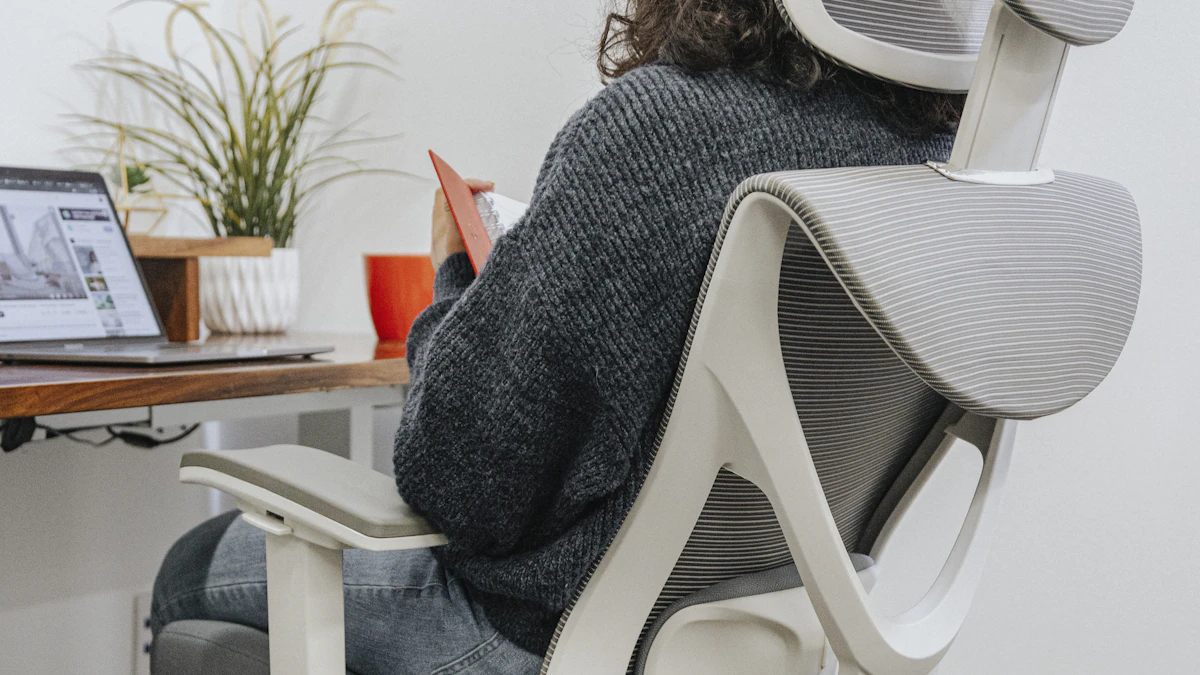
An ergonomic chair is built around adjustment. The backrest moves to match the curve of your lower spine, the seat depth slides to fit your leg length, and the armrests, recline tension, and often the headrest all adjust independently. The goal is a chair that fits your body instead of asking your body to fit the chair. OSHA’s guidance on computer workstation chairs points to the same idea: a strong base and enough adjustability to support a variety of postures through the day (OSHA, Computer Workstations eTool: Chairs).
Most chairs marketed as ergonomic also carry a weight rating, often 250 to 300 lbs (113 to 136 kg) on mid-range models and higher on reinforced ones, and a multi-year warranty that reflects the more durable gas lift and base hardware inside. A $60 chair rarely comes with either.
What Is a Standard Chair?
A standard chair, the kind that ships with most home office desk bundles or gets pulled from the dining room, usually has one adjustment: seat height. The backrest is fixed in shape and angle, the padding is uniform rather than shaped for the spine, and there’s no dedicated lumbar support built in. That doesn’t make it useless. It makes it a chair designed for general use, not for eight hours of typing.
Ergonomic vs Standard Chair: Comfort
Your lower back has a natural inward curve. Without support behind it, gravity pulls you into a slumped position, and that slump strains the structures in your lower spine over the course of a workday (Cleveland Clinic, Poor Posture Hurts Your Health More Than You Realize). An ergonomic chair’s adjustable lumbar support holds that curve in place. A standard chair leaves you to hold it yourself, which your muscles can do for a while, but not for hours without fatigue.
Think about a back-to-back Zoom call day. By the third call you’re leaning forward toward the camera, and your lower back has already lost whatever support it started with. On an ergonomic chair, the lumbar support moves with you. On a standard chair, you drift further into a slump with every call, and by 4 p.m. that adds up to real soreness.
Ergonomic vs Standard Chair: Cost
A standard chair typically runs $50 to $150. A genuinely adjustable ergonomic chair, one with real lumbar movement and seat depth adjustment rather than just a molded lumbar bump, runs $150 to $400 and up. The gap narrows if you add a lumbar cushion to a standard chair, usually $25 to $40, which gets you part of the way to ergonomic-level support without the full price.
Ergonomic vs Standard Chair: Adjustability
This is where the two chairs diverge the most. A standard chair fits an average body reasonably well and everyone else poorly. An ergonomic chair’s seat depth, armrest width, and recline tension exist specifically because bodies vary, and a chair that only adjusts for height leaves shorter or taller users without support in the wrong places. If you’re outside the middle of the height and weight range a standard chair was designed for, adjustability stops being a nice-to-have.
Seat depth is the adjustment people skip over most, and it is often the one that matters most for lower back pain specifically. If the seat is too deep for your legs, you either sit with your back away from the lumbar support entirely or perch on the front edge with no support at all. A standard chair gives you neither option to fix that. An adjustable seat pan does.
How to Check Your Current Chair Before Buying a New One
- Sit back fully for a normal workday and notice where the ache shows up, if any. Lower back specifically points to lumbar support, not overall chair comfort.
- Check the gap between your lower back and the backrest when you sit up straight. More than an inch or two means the built-in lumbar support, if there is any, is not reaching you.
- Try a rolled towel behind your lower back for a few days. If that noticeably helps, a lumbar cushion or an ergonomic chair will likely help more.
- Note the time of day the discomfort starts. Earlier in the day points more strongly to the chair itself rather than general fatigue.
When an Ergonomic Chair Is Worth It
If you’re sitting more than four hours a day, most days of the week, an ergonomic chair is worth the higher price. That’s enough sustained sitting time for a lack of lumbar support to add up into real discomfort by the afternoon. It’s also the right call if you’ve already tried a cushion on a standard chair and it hasn’t been enough, or if your height or weight falls outside what a basic chair’s fixed dimensions were built for. See our picks for office chairs built specifically for lower back pain if you’re ready to shop.
When a Standard Chair Is Fine
A standard chair is fine if you’re at a desk for an hour or two a day, or if the chair is for a guest workspace that doesn’t see daily use. It’s also a reasonable starting point if budget is the main constraint right now. Add a lumbar cushion, keep your feet flat on the floor, and take a short break every 30 minutes, and a standard chair can carry a light workload without becoming the reason your back hurts.
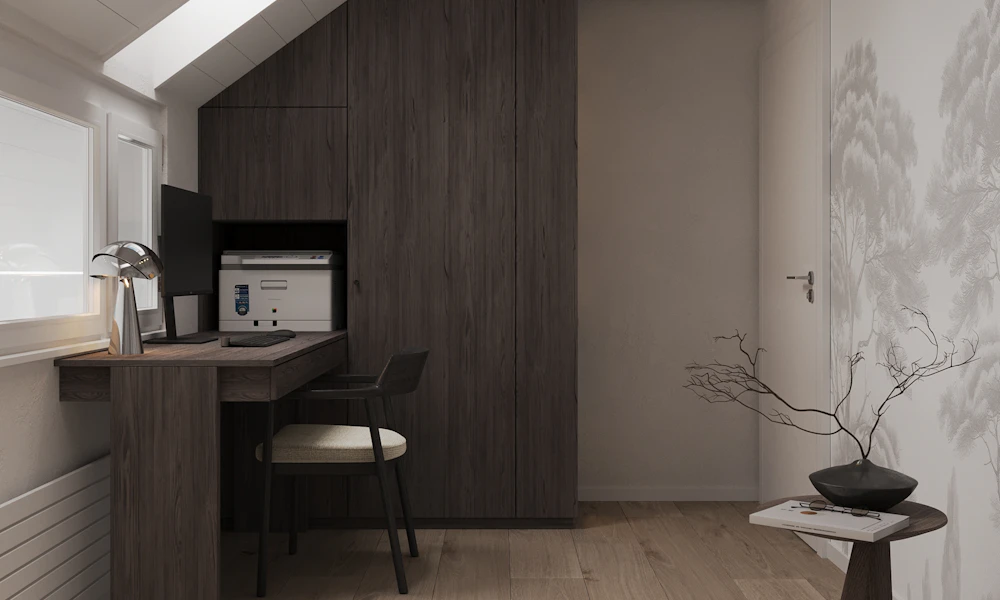
This is also the realistic choice for a studio apartment or a shared kitchen table setup, where a bulky ergonomic chair with a wide base does not fit the space or the aesthetic. A slim standard chair with a cushion solves the same lumbar problem without the footprint.
Can a Standard Chair Work With Add-Ons?
Yes, to a point. A dedicated lumbar cushion strapped to a standard chair’s backrest restores much of the curve support an ergonomic chair builds in, and it’s the cheapest fix available. Our guide to what lumbar support actually does covers how to position one correctly. What add-ons can’t fix is a chair that’s the wrong height for your desk, has no seat depth adjustment for your leg length, or lacks armrests entirely. Past a certain point, you’re paying for parts of an ergonomic chair one at a time, and the full chair ends up cheaper than the sum of the fixes.
A strapped-on lumbar cushion works best on a chair with at least some recline, since a bolt-upright dining chair gives it nothing to brace against. If your current chair reclines even slightly and the seat height is close to right, a cushion is worth trying before you spend on a full replacement.
Frequently Asked Questions
Can an ergonomic chair cure back pain?
No. It can reduce a known source of strain by supporting your lower back, but persistent pain needs to be evaluated by a physician or physical therapist rather than solved by a chair alone.
Is a lumbar cushion as good as an ergonomic chair?
It gets you part of the way there for a fraction of the cost, but it can’t replicate seat depth adjustment, armrest positioning, or tilt tension that a full ergonomic chair provides.
How long does it take to feel a difference with an ergonomic chair?
Many people notice less end-of-day soreness within one to two weeks, though it depends on how your chair is adjusted and how often you’re still getting up to move.
Is it okay to use a standard chair short term?
Yes. Short sessions and occasional use put far less cumulative strain on your lower back than a full workday, so a standard chair is a reasonable choice for light use.
Do ergonomic chairs matter more for taller or shorter people?
Often yes, since a fixed-dimension standard chair is built around an average body. If you’re well outside that range, an ergonomic chair’s seat depth and height adjustment matter more, not less.
Does a mesh back automatically mean good lumbar support?
No. Mesh affects airflow, not spinal support. Some mesh chairs have strong adjustable lumbar support built in and some have none, so check that separately from the material.
For most people sitting more than four hours a day, an ergonomic chair with real lumbar adjustment is worth the cost. For shorter or occasional use, a standard chair with a lumbar cushion and regular movement breaks is a reasonable middle ground.





Write Your Review
No reviews yet. Be the first to share your experience!