

Switching to a standing desk is supposed to energize your workday, but after an hour on a hard floor, your feet ache, your knees stiffen, and you sink back into the chair. A quality ergonomic standing mat changes that equation by cushioning your joints and encouraging subtle movement. If you are hunting for the best anti-fatigue mat for standing desk setups in 2026, the picks below cover contoured terrain, memory foam, and portable designs.
We evaluated the most popular mats from Ergodriven, FEATOL, Ergohead, and KitchenClouds, focusing on support, durability, and ease of use. Before you buy, it helps to understand whether anti-fatigue mats really work, and if you split time between sitting and standing, our guide on how to make an office chair more comfortable can round out your setup. Explore our full anti-fatigue mats category for more options.
These mats are not the right fit if you need a completely flat, chair-friendly surface. The cushioning that makes standing more comfortable also makes it harder to roll an office chair across. Anyone who splits time between sitting and standing at the same spot may prefer a thinner mat, or no mat at all, under the chair’s rolling path.
Disclosure: Ergonook is a participant in the Amazon Associates program. Links below are affiliate links, and we may earn a commission from qualifying purchases. This does not affect which mats we recommend or how we rank them.

Pros
- Strong, well-established review history
- Durable PU leather surface resists wear
- Beveled edges help prevent tripping
Cons
- Single fixed thickness, no customization for firmer or softer feel
- Hand wash only, no machine washing for the surface
The FEATOL mat uses a 0.9 inch high density memory foam core, wrapped in a PU leather top designed to resist punctures and tears over time.
Its non-slip bottom and beveled, low-angle edges are meant to keep the mat in place and reduce the risk of tripping on the edge.
It's built for standing desks as well as kitchens and workbenches, and carries a strong, well-established review history.
The surface is hand wash only, so it needs a damp cloth wipe-down rather than machine washing.
It suits anyone who wants a durable, versatile anti-fatigue mat backed by a large number of reviews.
Dimensions: 32 inches long by 20 inches wide by 0.9 inches thick.
Material: High density memory foam with a PU leather top.
Weight: 4.2 pounds.
Care: Wipe clean with a damp cloth.
Who should buy this mat? Anyone who wants a durable, well-reviewed anti-fatigue mat for a standing desk or kitchen.
Who might want to look elsewhere? Anyone who wants a textured or contoured surface rather than a flat one should consider the Topo or Ergohead mats instead.
Setup tip: Let the mat lie flat for a day before use if it arrived rolled, so it settles evenly on the floor.
Pros
- Distinctive contoured surface not shared by the other mats in this comparison
- Long 7 year manufacturer warranty
- PVC-free, non-toxic materials
Cons
- No recorded reviews in our data at the time of writing
- Higher profile at 2.7 inches thick may feel less stable underfoot for some users than a flatter mat
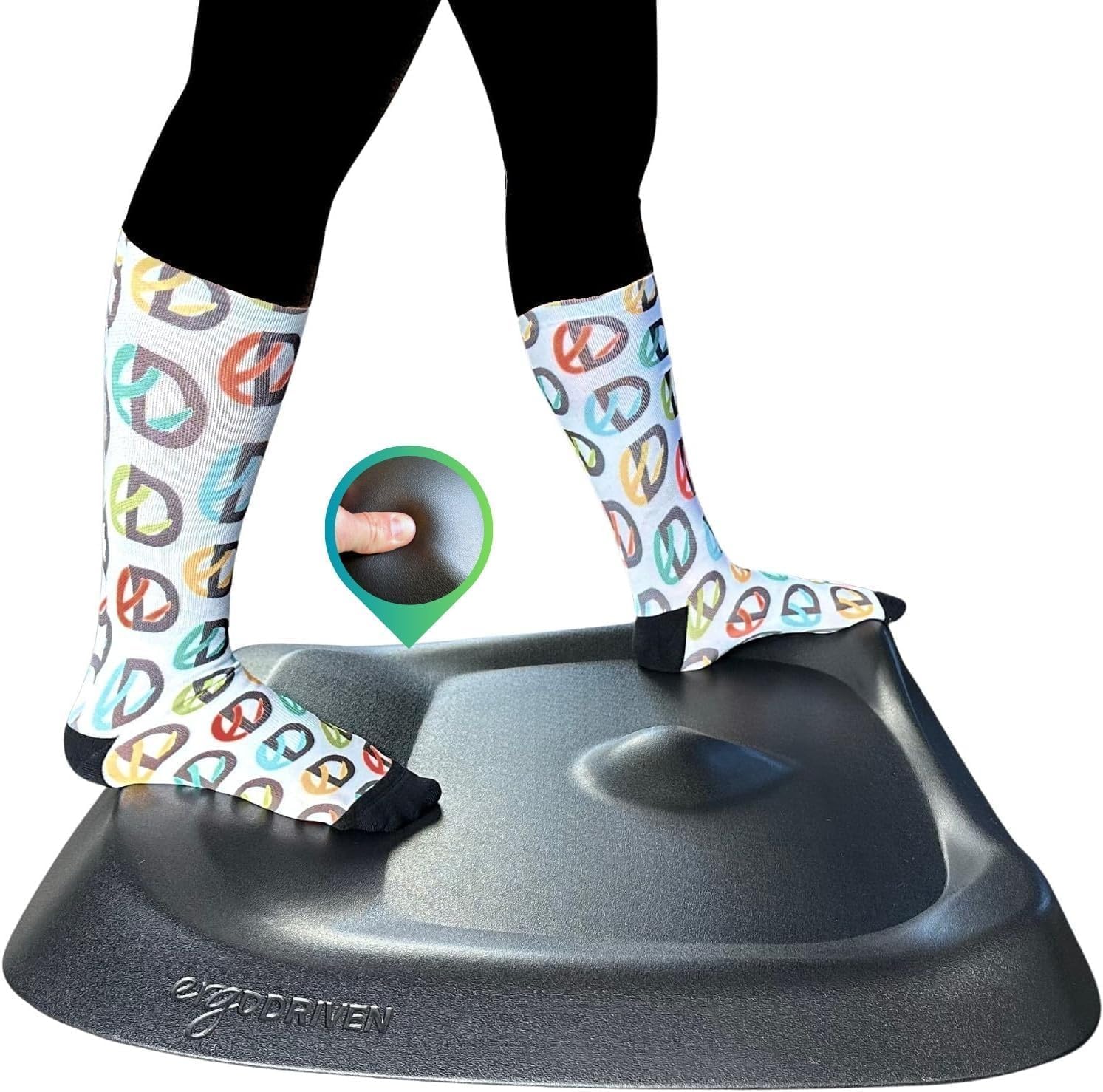
Topo takes a different approach from the other mats in this comparison, using a contoured, textured surface rather than a flat one, intended to encourage your feet to shift position naturally while you stand.
It's built from thick, non-toxic, PVC-free polyurethane foam, and a heel or toe indentation makes it easy to reposition with one foot rather than bending down.
Ergodriven markets Topo citing recognition from outlets that cover standing desk gear, and backs it with a 7 year manufacturer warranty.
Our scraped data shows no recorded customer reviews yet, so weigh that against the brand's own claims before buying.
It suits anyone who specifically wants a contoured, movement-encouraging mat rather than a flat cushioned one.
Dimensions: 29 inches long by 26.25 inches wide by 2.7 inches thick.
Material: Non-toxic polyurethane foam, PVC-free.
Weight: 8 pounds.
Warranty: 7 years.
Who should buy this mat? Anyone who wants a contoured, textured mat designed to encourage movement rather than a flat cushioned surface.
Who might want to look elsewhere? Anyone who prefers a flatter, more stable feel underfoot, or wants a mat with an established review history, should consider the ComfiLife or FEATOL mats instead.
Setup tip: Use the heel or toe indentation to slide the mat out and back rather than lifting it, which is the intended way to reposition it.

Pros
- Largest review base of any mat in this comparison
- Water-resistant surface simplifies cleanup
- Lower profile than the thicker mats in this comparison
Cons
- Thinner cushion at 0.5 inches than most other mats here
- Smaller footprint than the full-size ComfiLife or FEATOL mats
The KitchenClouds mat uses a soft PVC foam cushion with a diamond-pattern non-slip bottom, designed to stay in place on hardwood and other hard floors.
Its water-resistant surface wipes, vacuums, or sweeps clean, and the beveled edge is designed to reduce tripping risk.
It has the largest review base of any mat in this comparison, a strong signal of broad, consistent satisfaction across a wide range of buyers.
At 0.5 inches thick, it has a lower profile than the other mats here, which some people prefer for a less noticeable step up from the floor.
It suits anyone who wants a widely proven, easy-to-clean mat with a lower profile.
Dimensions: 28 inches long by 17.3 inches wide by 0.5 inches thick.
Material: Polyvinyl chloride (PVC) foam.
Additional features: Non-slip, waterproof.
Who should buy this mat? Anyone who wants a widely proven, easy-to-clean mat with a lower profile.
Who might want to look elsewhere? Anyone who wants maximum cushioning thickness should consider the ComfiLife, FEATOL, or Mushyn mats instead.
Setup tip: If the mat arrives creased, lay it flat and warm it gently with a hairdryer on a warm setting to help it flatten out.
Pros
- Encourages more movement and better posture while standing at a desk.
- Premium, durable foam construction with no PFAs or PVC.
- Compact Mini size fits smaller workspaces and is easy to move with one foot.
- Recognized by experts and trusted by a large community of standing desk users.
- Long 7-year warranty adds confidence in the purchase.
Cons
- Higher upfront investment than basic flat anti-fatigue mats.
- Raised, textured terrain may require a short adjustment period for some users.
- Mini size may not suit people who prefer a wide stance or larger standing area.
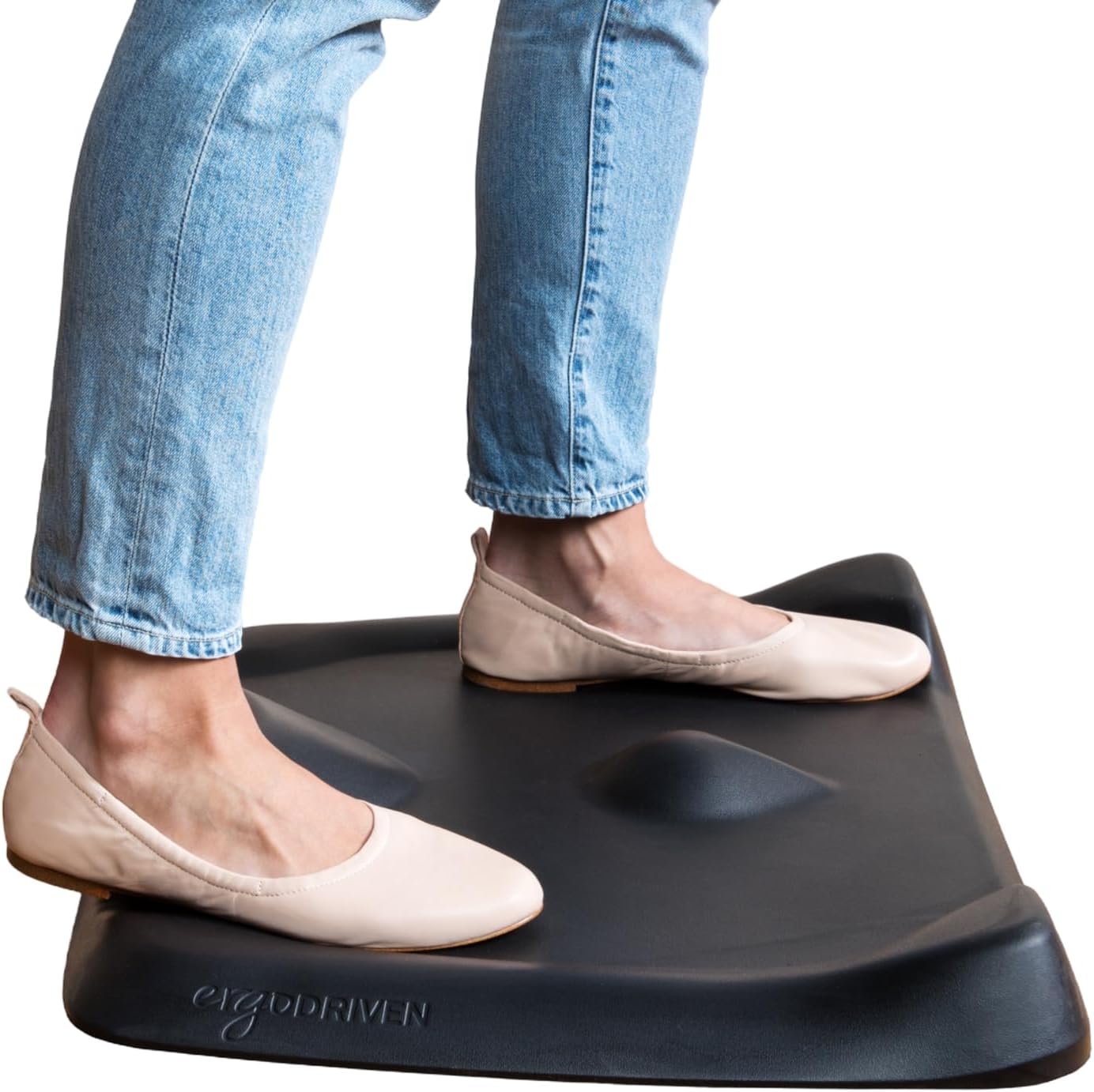
The Ergodriven Topo Mini is a purpose-built anti-fatigue mat for standing desk users who want to stand longer without the aches caused by hard floors or thin flat mats. Its not-flat surface is designed to keep your feet and legs subtly active throughout the day.
Standout features include the calculated terrain, which invites your feet to shift between raised bumps, wedges, and massage-like contours. This encourages more movement than a standard flat mat, helping to reduce stiffness in the lower back, hips, and feet during long standing sessions.
Build quality is excellent. The ultra-thick premium foam feels cushioned yet supportive, and the material is made without PFAs or PVC for a safer, more durable product. The smaller Mini footprint fits well in compact workspaces and is easy to slide under or away from the desk with one foot.
Potential drawbacks include a higher upfront investment compared to basic flat mats, plus a short adjustment period if you are new to textured standing surfaces. Users who prefer a wide stance may find the Mini size limiting, though the standard Topo is available for larger areas.
Overall, the Topo Mini is a smart upgrade for anyone serious about getting the full benefit of a standing desk. It earns strong marks for comfort, durability, and thoughtful design, making it a worthwhile addition to a home or office workspace.

Pros
- Most portable option in this comparison with a built-in handle
- Textured surface adds a different feel from flat foam mats
- Compact size suits smaller spaces
Cons
- Smaller footprint than the other mats here, which may not suit everyone's stance
- Smaller review history than the ComfiLife or FEATOL mats
The Ergohead mat stands out for its portability, with a built-in handle designed to make it easy to carry between rooms or hang up when not in use.
Its surface includes raised massage points intended to promote circulation and movement while you stand, a different feel from the flat foam mats in this comparison.
It's also the most compact mat here at 17 by 22 inches, which suits smaller spaces but offers less room to shift your stance than the larger mats.
It has a smaller review history than the ComfiLife or FEATOL mats in this comparison.
It suits anyone who wants a portable, textured mat they can move between a standing desk and other parts of the home.
Dimensions: 17 inches by 22 inches.
Material: Polyurethane.
Additional features: Massage points, carrying handle, non-slip bottom.
Who should buy this mat? Anyone who wants a portable, textured mat they can carry between spaces.
Who might want to look elsewhere? Anyone who wants maximum surface area to shift their stance should consider the larger ComfiLife or FEATOL mats instead.
Setup tip: Hang it by the handle near your desk when not in use so it's easy to grab and set back down.
Buying Guide: How to Choose an Ergonomic Standing Mat
Think about your primary standing surface, the type of work you do, and how much space you have. These four criteria separate a forgettable mat from one you will use every day.
Mat Thickness and Cushioning
Thickness determines how much support your feet receive over hours of standing. FEATOL’s 9/10-inch extra thick memory foam and Ergodriven’s ultra-thick premium comfort foam both deliver strong rebound without feeling mushy, while Ergohead’s superior cushioning reduces discomfort on hard floors. A mat that compresses too quickly will leave you fatigued by mid-afternoon.
Look for a mat that balances soft cushioning with firm support. KitchenClouds employs high-quality PVC foam for a thick, resilient base, and the Topo Mini’s cushioned core keeps your arches engaged. If you stand on concrete or tile, prioritize the thickest option your floor and joints can comfortably support.
Surface Terrain and Foot Movement
Ergodriven’s Topo and Topo Mini were built specifically for standing desks, featuring calculated terrain rather than a flat slab. That 3D surface invites your feet to shift, stretch, and explore, which improves circulation and reduces static fatigue, and the unique indentation lets you reposition the mat with one foot. Ergohead adds massage points that many wearers find soothing during long shifts.
If you prefer a traditional flat mat, FEATOL and KitchenClouds still provide dependable anti-fatigue cushioning. Think about whether you want a mat that actively encourages movement or one that simply cushions a fixed stance. Both approaches reduce fatigue, but active terrain users often report moving more without thinking, which can ease stiffness over time.
Durability and Easy Cleaning
Daily use calls for a surface that resists punctures, stains, and peeling. FEATOL’s PU leather top wipes clean with a damp cloth, and KitchenClouds’ water-resistant material deters dust and debris. Ergodriven’s durable pebbled skin is PVC-free, a plus for households that avoid certain plastics.
On hardwood or tile, you also need a non-slip bottom and beveled edges to prevent sliding and tripping. For guidance on choosing a mat that protects your floors, see our best anti-fatigue mat for hardwood floors guide.
Size and Portability
Measure the area in front of your desk or sink before buying. The full-size Ergodriven Topo gives you more room to roam, while the Topo Mini suits compact workstations, and Ergohead’s built-in handle makes it easy to store or carry between rooms.
If you alternate between standing and perching, pairing your mat with a footrest can further improve alignment and reduce leg fatigue, especially during long shifts.
Final Thoughts
For most standing desk users, the Standing Desk Mat – Topo Mini by Ergodriven delivers the best balance of calculated terrain, premium cushioning, and compact size, while the FEATOL Anti Fatigue Mat offers a durable memory foam option that works well in kitchens, laundry rooms, and all-day office settings.
Frequently Asked Questions
How thick should an ergonomic standing mat be?
Look for at least 3/4 inch of cushioning to avoid flattening under your weight. FEATOL’s 9/10-inch thickness and Ergodriven’s ultra-thick foam both provide substantial relief for knees and lower back during long sessions in 2026.
Can an ergonomic standing mat relieve back pain?
Mats reduce pressure on the soles of your feet, which helps ease strain that travels up to your knees, hips, and lower back. Pairing a mat with a footrest can further improve posture and comfort during long workdays.
Will an ergonomic standing mat work on hardwood floors?
Yes, but choose a mat with a non-slip bottom and tapered bevel edges to prevent sliding and tripping. For a complete list of options that protect both you and your floors, see the best anti-fatigue mat for hardwood floors.
How do I clean an anti-fatigue standing mat?
Most PU leather and PVC surfaces wipe clean with a damp cloth, and KitchenClouds’ material is water-resistant enough for quick spills. Avoid harsh chemical sprays that can break down foam, and always let the mat air dry before stepping back on smooth floors.

Write Your Review
No reviews yet. Be the first to share your experience!