

This article covers general office seating, not medical treatment. A kneeling chair is not a certified medical device, and it is not the right choice for everyone. It shifts pressure to the knees, shins, and tailbone in exchange for reducing pressure on the lower back, which is a genuine tradeoff, not a universal fix. Kneeling chair makers themselves commonly advise against use for anyone with a history of knee, lumbar spine, or tailbone problems, and recommend standing breaks roughly every 30 minutes. If you have any of those conditions, or if back pain is severe or persistent, talk to a doctor before switching to a kneeling posture.
A kneeling chair works differently than a standard office chair built for lower back pain: instead of supporting the spine from behind with a lumbar pad, it tilts the pelvis forward and distributes body weight between the hips and shins, which naturally straightens the lower spine without a backrest doing the work. That is a fundamentally different mechanism, not just a different chair shape, and it will not suit every back or every workday. These picks are drawn from our broader Chairs for Back Pain lineup, and if a kneeling posture turns out not to be for you after reading this, our standard lower back pain roundup covers a more conventional alternative.
Disclosure: Ergonook is a participant in the Amazon Associates program. Links below are affiliate links, and we may earn a commission from qualifying purchases. This does not affect which chairs we recommend or how we rank them.

Pros
- Backrest and 4-position seat/leg angle adjustment give more configuration options than most kneeling chairs in this roundup
- Manufacturer includes clear, specific safety guidance: take breaks every 30 minutes, and the product is not recommended for anyone with a history of knee, lumbar, or tailbone issues
- Mesh cushion improves airflow compared to solid foam-only designs
Cons
- Recommended height range (65 to 74 inches, or about 5 ft 5 in to 6 ft 2 in) excludes shorter users
- Assembly requires removing a pneumatic rod cover first, an easy step to miss

Pros
- Padded armrests are uncommon on kneeling chairs and specifically address shoulder strain during longer sessions
- Manufacturer provides clear, specific safety guidance including a recommended height range and a caution against use with existing knee, lumbar, or tailbone conditions
- Anti-slip, wide base is called out specifically for tip-resistance on multiple floor types
Cons
- 220 lb weight capacity is the lowest documented figure in this roundup
- Recommended height range (about 5 ft 1 in to 6 ft 1 in) may not suit users outside that band
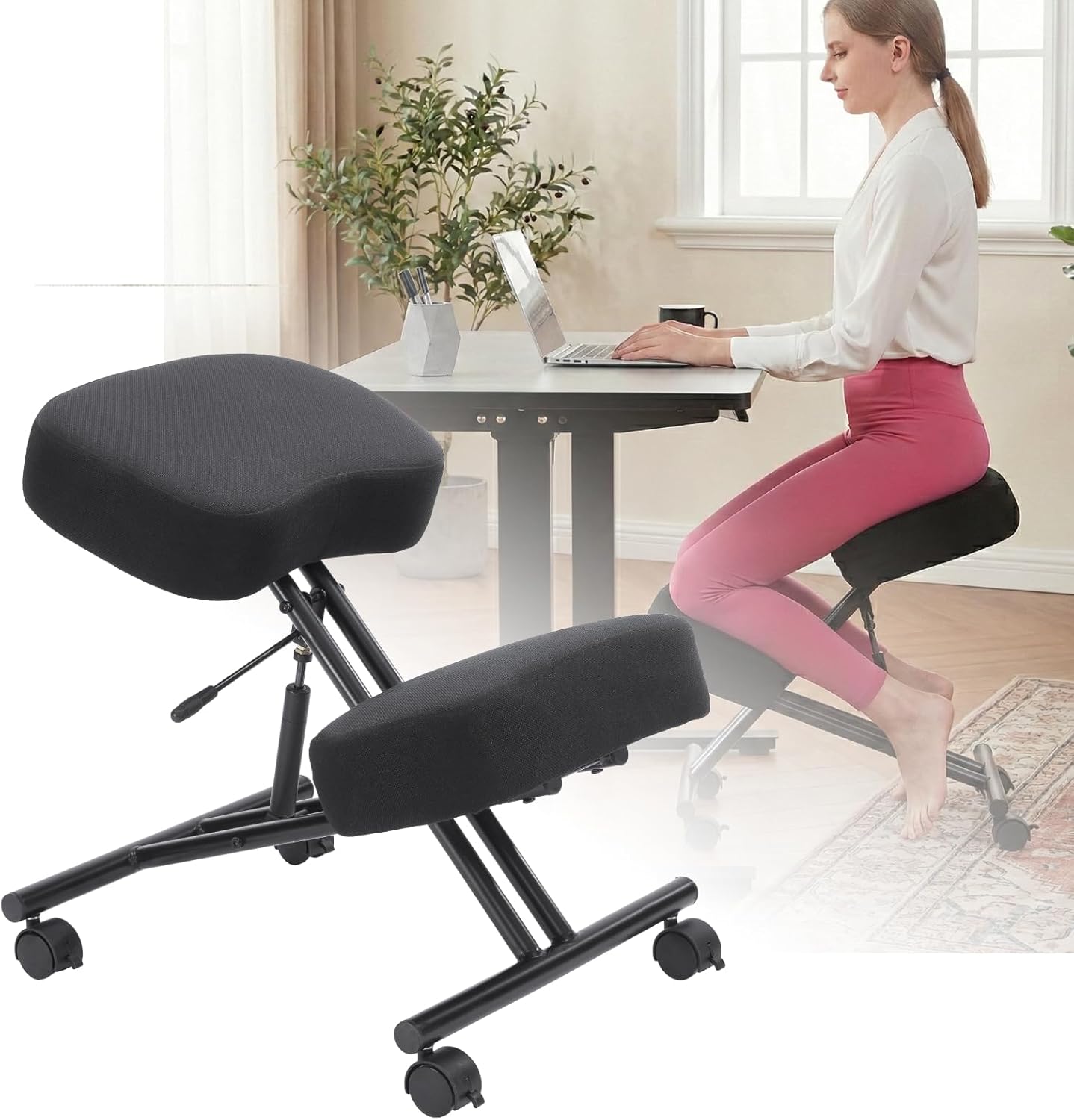
Pros
- Optional backrest lets you choose based on your own preference rather than being locked into one style
- Brake wheels lock for stability during work, a feature not every kneeling chair includes
- Two upholstery choices (PU leather or linen) accommodate different climate and cleaning preferences
Cons
- Lower seat height range (21 to 26.5 inches) than some other adjustable kneeling chairs in this roundup, worth checking against your desk height first
- Metal frame rather than the solid wood construction of some competitors here

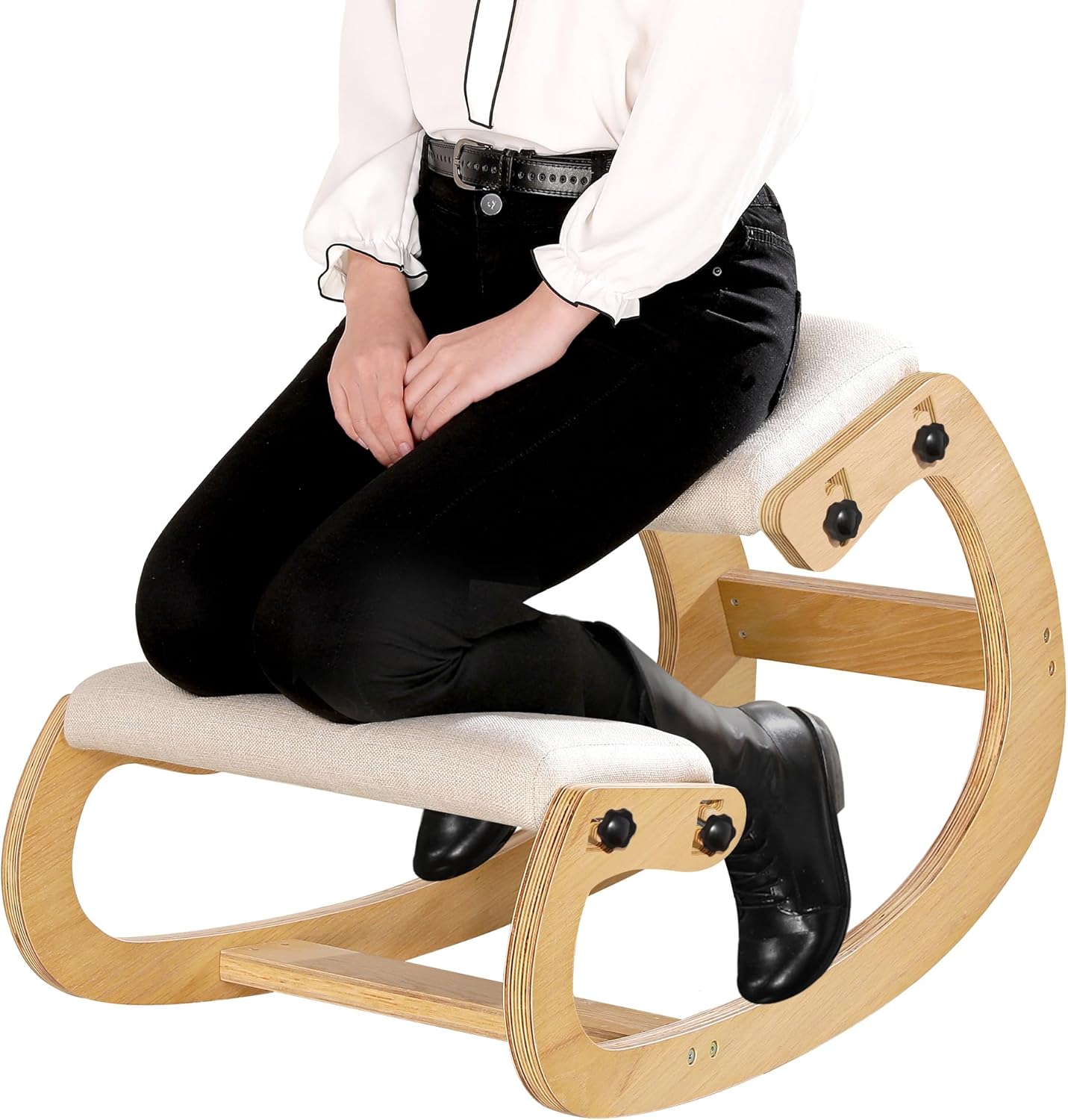
Pros
- 5 year warranty is longer than most kneeling chairs in this roundup
- Manufacturer directly acknowledges an adjustment period, more transparent than listings that only describe benefits
- Rocking motion allows small position shifts without leaving the seat
Cons
- 250 lb weight capacity is on the lower end for a wood-frame kneeling chair
- No backrest included
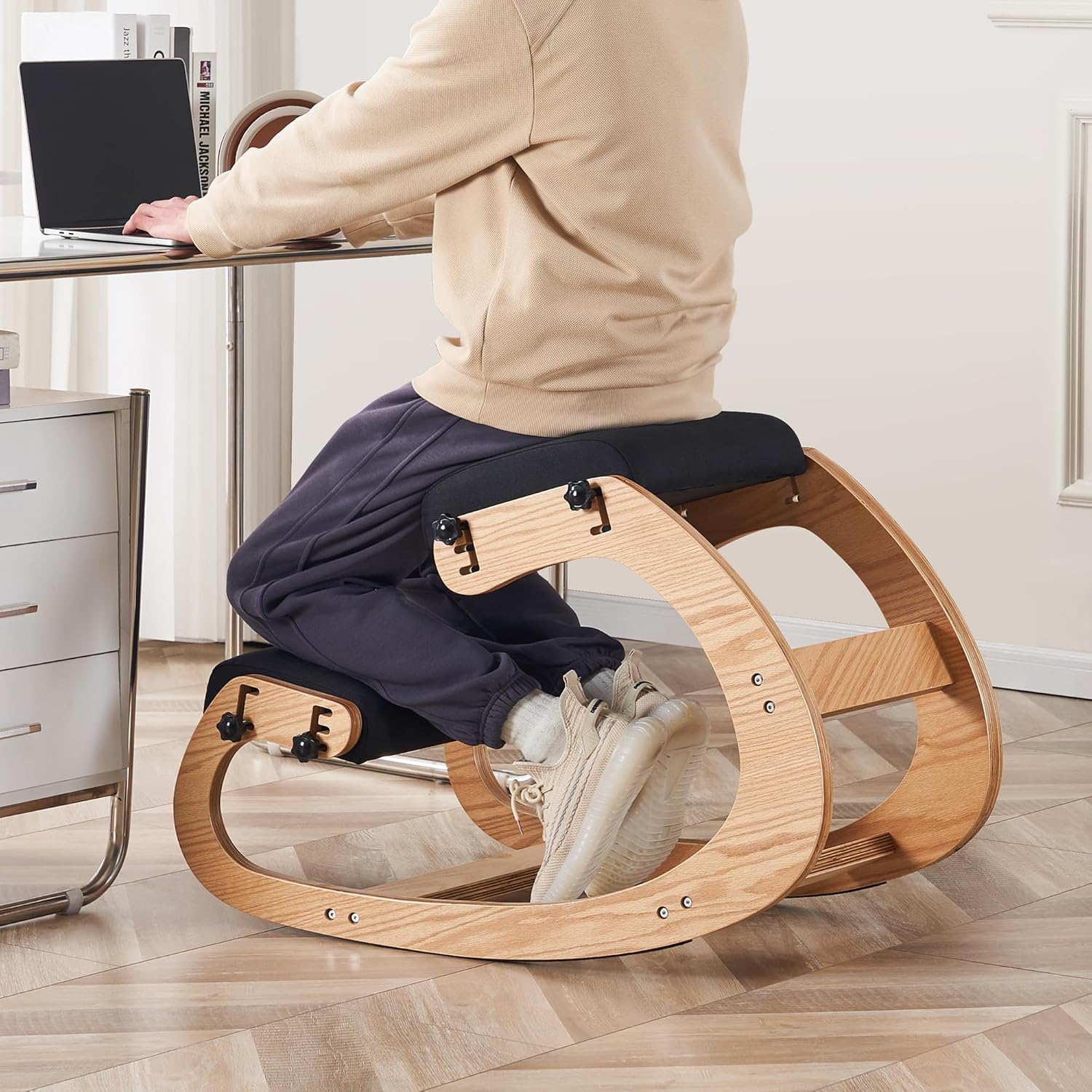
Pros
- Solid wood frame construction rather than a metal frame, a different durability profile some buyers prefer
- 5 year warranty with 2 year free replacement coverage is among the strongest guarantees in this roundup
- Breathable linen fabric runs cooler than PU leather over a full workday
Cons
- No backrest included
- No published weight capacity figure

Pros
- Adjustable seat angle, not just height, is a distinct feature from chairs that only adjust vertically
- Waterproof PVC leather wipes clean easily compared to fabric or linen alternatives
- Lockable wheels combine mobility with stability once positioned
Cons
- 5.5 inch height adjustment range is narrower than some pneumatic competitors in this roundup
- No backrest included
Pros
- Highest customer rating (5.0) among the chairs in this roundup, though from a smaller review base than some competitors
- Straightforward assembly with included tools and instructions
- Versatile enough to use as cross-legged or meditation seating beyond a standard kneeling position
Cons
- Listing does not publish a specific weight capacity figure
- Fewer stated adjustment points than the more configurable chairs in this roundup

Pros
- Folding design is uncommon among kneeling chairs in this roundup, useful for shared spaces or rooms where the chair cannot stay set up permanently
- Comes from an established brand in massage and wellness equipment rather than a generic furniture seller
- Solid wood frame construction with a simple folding hinge, fewer moving parts than a gas-cylinder or multi-adjustment alternative
Cons
- Manufacturer does not publish detailed feature specifications beyond the basic listing title
- No stated weight capacity or cushion thickness figures
What to Know Before Switching to a Kneeling Chair
This Is Not the Right Chair for Everyone
Kneeling chairs put direct pressure on the shins, knees, and tailbone, areas a standard chair barely touches. If you have a history of knee problems, tailbone injury, or certain lumbar conditions, several manufacturers explicitly advise against this style of seating, and that guidance is worth following rather than trying it anyway to see what happens. A kneeling chair also is not designed for continuous all-day use; standing or shifting position roughly every 30 minutes is a common recommendation across multiple listings in this category, not just marketing caution, and several of the chairs in this roundup state that guidance directly in their own product documentation rather than leaving it to a general disclaimer.
Expect an Adjustment Period
Several manufacturers state directly that some initial discomfort is normal while your body adapts to the new posture, particularly if the seat or desk height is not matched correctly at first. This is a genuinely different way of sitting, engaging muscles a standard chair does not, and it is reasonable to expect a short adjustment window rather than instant comfort from day one. Starting with shorter sessions, an hour or two at a time rather than a full workday immediately, is a common recommendation for easing into the posture.
Backrest or Backless Is a Real Choice, Not a Minor Detail
Some kneeling chairs include a curved backrest and even padded armrests, while others are fully backless. A backrest adds a place to rest between kneeling positions, useful for anyone easing into this posture gradually, while a backless design is lighter and more compact. Neither is objectively better; it depends on whether you plan to sit in a strict kneeling posture continuously or alternate positions through the day.
Height Range and Cushion Thickness Both Matter
Kneeling chairs vary more in adjustment range than standard office chairs, since desk height, torso length, and shin length all interact differently in a kneeling posture. Check the published height adjustment range against your specific desk, not just against your own height, and prioritize thicker, higher-density cushioning on the seat and knee pads, since that is where nearly all the pressure concentrates. For a broader comparison of ergonomic seating fundamentals, see our guide to what to look for in an ergonomic office chair.
Wood Versus Metal Frame Construction
Kneeling chairs in this category typically use either a solid wood frame or a metal frame with gas-lift height adjustment. Wood frames tend to feel more stable and are often paired with a fixed or manually set height, while metal-frame chairs more commonly include pneumatic or gas-rod adjustment for quicker height changes. Rolling wheels are common on metal-frame models and less common on wood ones, which is worth considering if you plan to reposition the chair frequently through the day rather than leaving it in one spot. Neither construction is inherently better for back pain specifically; the choice mostly comes down to how often you expect to adjust the height and whether you value the more traditional look of wood over a modern metal frame.
Rocking Motion Versus a Fixed Position
A number of kneeling chairs in this category add a gentle rocking motion, letting the seat pivot slightly forward and back rather than staying rigidly fixed. Supporters of this feature describe it as helping shift pressure points periodically during long sitting stretches, similar in principle to the recline function on a standard office chair. A fixed-position kneeling chair, by contrast, stays perfectly still, which some users find more stable for focused, precise tasks. Try to think about which matters more for your own workday, small periodic movement or a completely stationary base, before choosing between the two.
Final Thoughts
For the most configurable option in this roundup, with a backrest, mesh cushioning, and 4 adjustable seat and leg angles, the Kneeling Chair with Backrest and Lumbar Support also comes with the clearest manufacturer safety guidance in this list, worth reading before buying. If armrests are a priority alongside a curved backrest, the Kneeling Chair with Curved Backrest and 4-Position Adjustment is one of the few in this category to include them. Both are worth comparing against the simpler, backless rocking chairs further down the list.
FAQ
Is a kneeling chair actually good for back pain?
It can help some people by encouraging a more upright pelvic position and reducing slouching, but it is not a universal solution and is not a medical treatment. It shifts pressure to the knees, shins, and tailbone in exchange, which is not a good tradeoff for everyone. If you have existing knee or tailbone issues, talk to a doctor before trying one.
Can I sit in a kneeling chair all day?
Most manufacturers recommend against continuous all-day use, suggesting breaks or position changes roughly every 30 minutes. A kneeling chair is generally better used as part of a rotation with a standard office chair rather than a full-time replacement.
Do I need a backrest on a kneeling chair?
Not necessarily. A backrest gives you somewhere to rest between kneeling positions and can ease the transition if you are new to this posture, but plenty of experienced kneeling chair users prefer a lighter, backless design. Choose based on whether you plan to use it continuously or alternate through the day.
Who should avoid a kneeling chair entirely?
Several manufacturers advise against kneeling chairs for anyone with a history of knee problems, tailbone injury, or certain lumbar spine conditions. If you fall into any of those categories, or if you are unsure, talk to a doctor before switching, and consider a standard chair built for lower back support instead. Our guide on reducing back pain from sitting all day also covers general posture habits that apply regardless of which chair style you choose.




Write Your Review
No reviews yet. Be the first to share your experience!