

Choosing between a mesh vs leather office chair comes down to heat and formality. Mesh is the better pick for most home offices, since it breathes better over long sitting sessions and tends to cost less at a similar build quality. Leather wins in a cooler, shared, or more formal room.
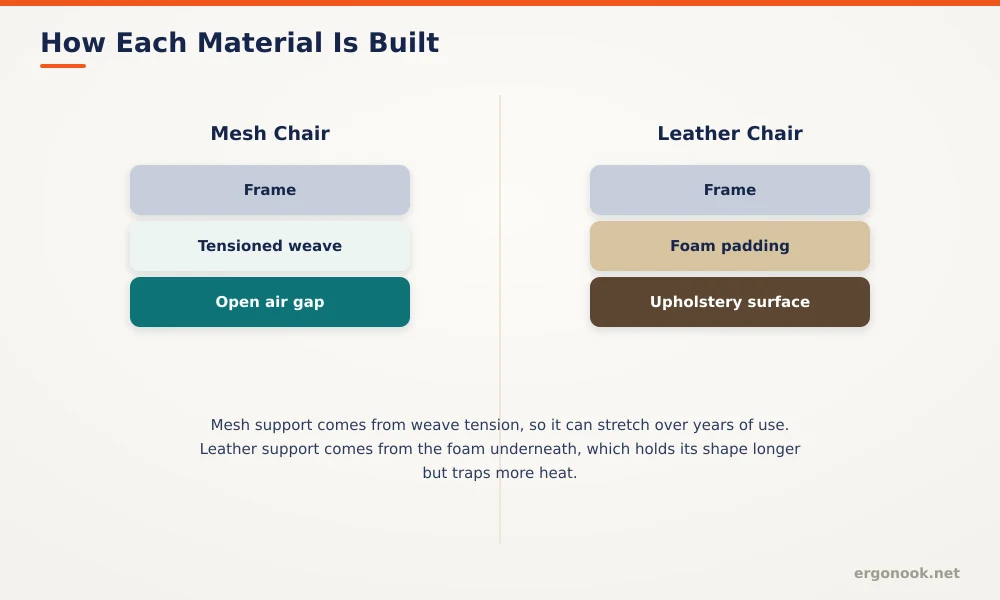
- Mesh flexes with tension from the weave, while leather’s support comes from foam padding underneath, so the two fail differently over time.
- BIFMA X5.1, the industry testing standard for general-purpose office chairs, includes a 225-pound seat impact test and a 300,000-cycle caster test.
- Genuine leather resists cracking better than bonded or PU leather-look upholstery, especially in low-humidity climates or direct sunlight.
- Neither material fixes bad ergonomics on its own. Lumbar adjustability and seat depth matter more than the surface material.
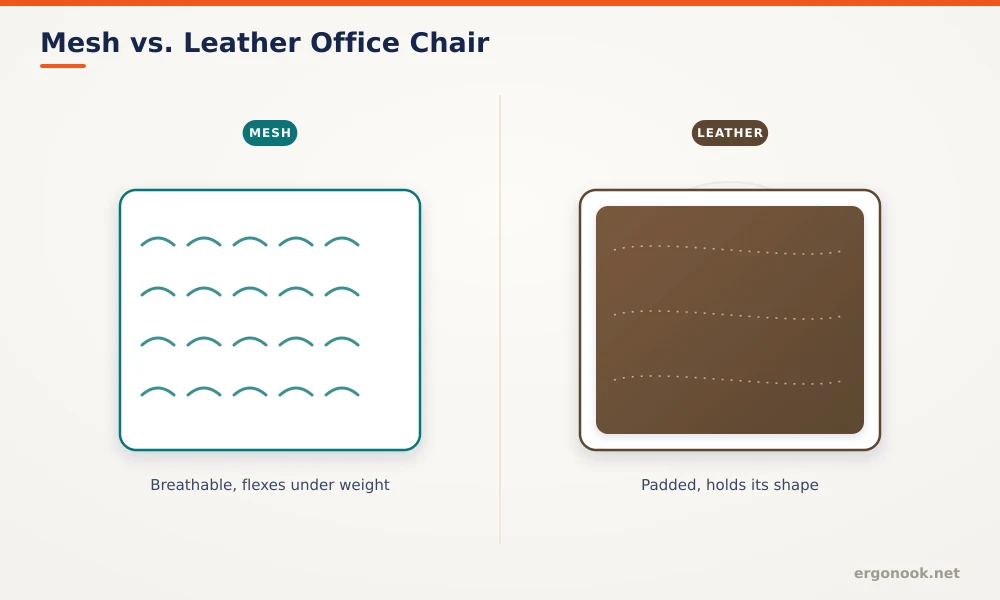
Mesh vs Leather Office Chair: Quick Comparison
| Criteria | Mesh | Leather |
|---|---|---|
| Breathability | Stays cooler in warm rooms | Retains heat, warms up within an hour or two of sitting |
| Cushion feel | Firmer, distributes weight across the weave | Softer at first, can develop pressure points if the foam is low density |
| Durability | Weave can stretch or sag over years, cheaper weaves more so | Holds shape longer, but bonded or PU leather cracks and peels over time |
| Price at similar quality | Generally less expensive | Genuine leather costs more; leather-look is cheaper but wears faster |
| Maintenance | Spot clean, harder to clean spills that seep into the weave | Wipes clean easily, genuine leather needs occasional conditioning |
| Noise over time | Generally quieter, no foam or leather to develop creaks | Can develop creaks at the seams after several years |
| Best for | Warm rooms, dedicated home offices | Shared or formal rooms, cooler climates |
In this article:
- What is a mesh office chair?
- What is a leather office chair?
- Mesh vs leather: comfort and support
- Mesh vs leather: durability
- Mesh vs leather: price
- When mesh is the better choice
- When leather is the better choice
- Can you use both in the same room?
- Frequently asked questions
What Is a Mesh Office Chair?
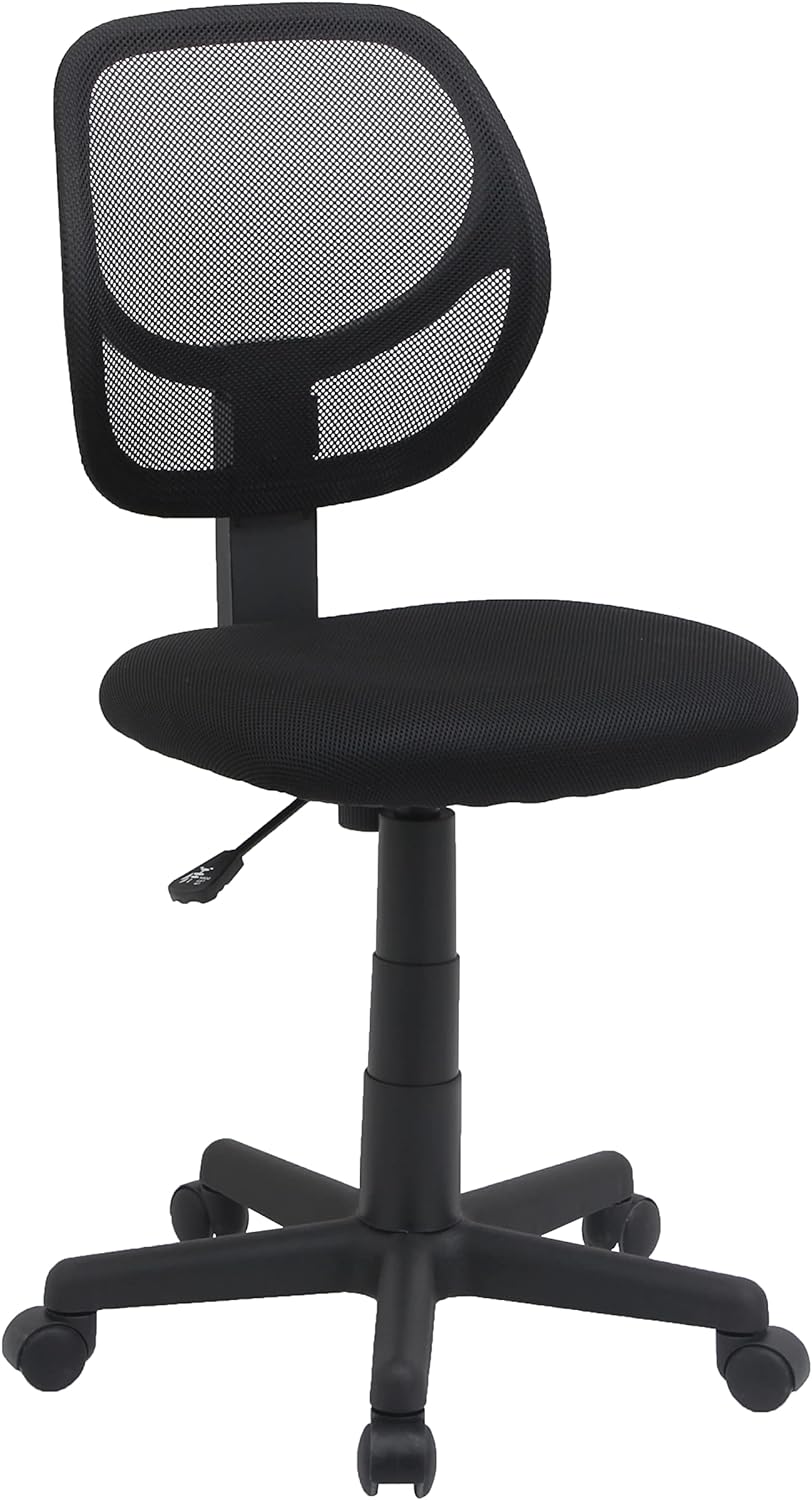
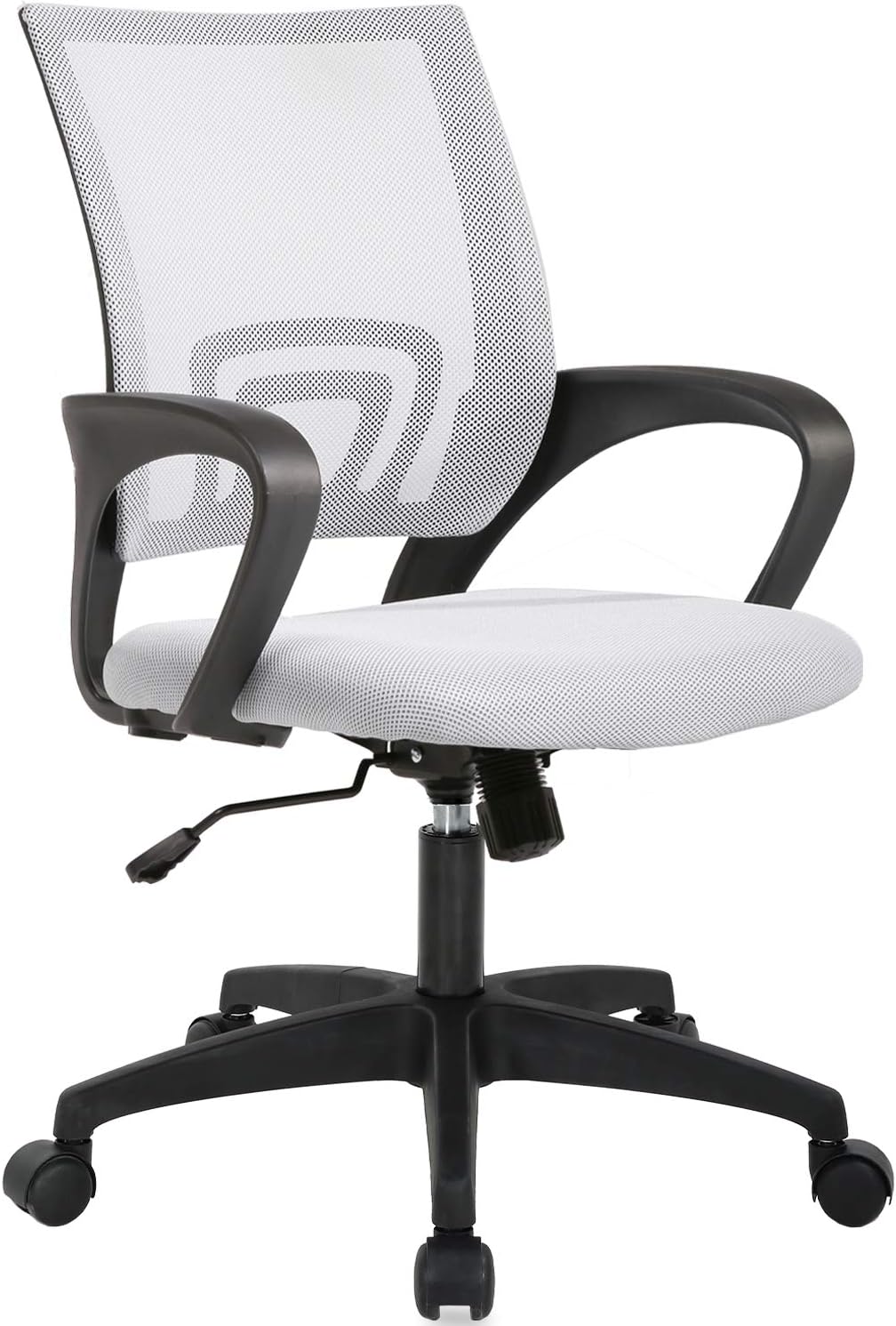
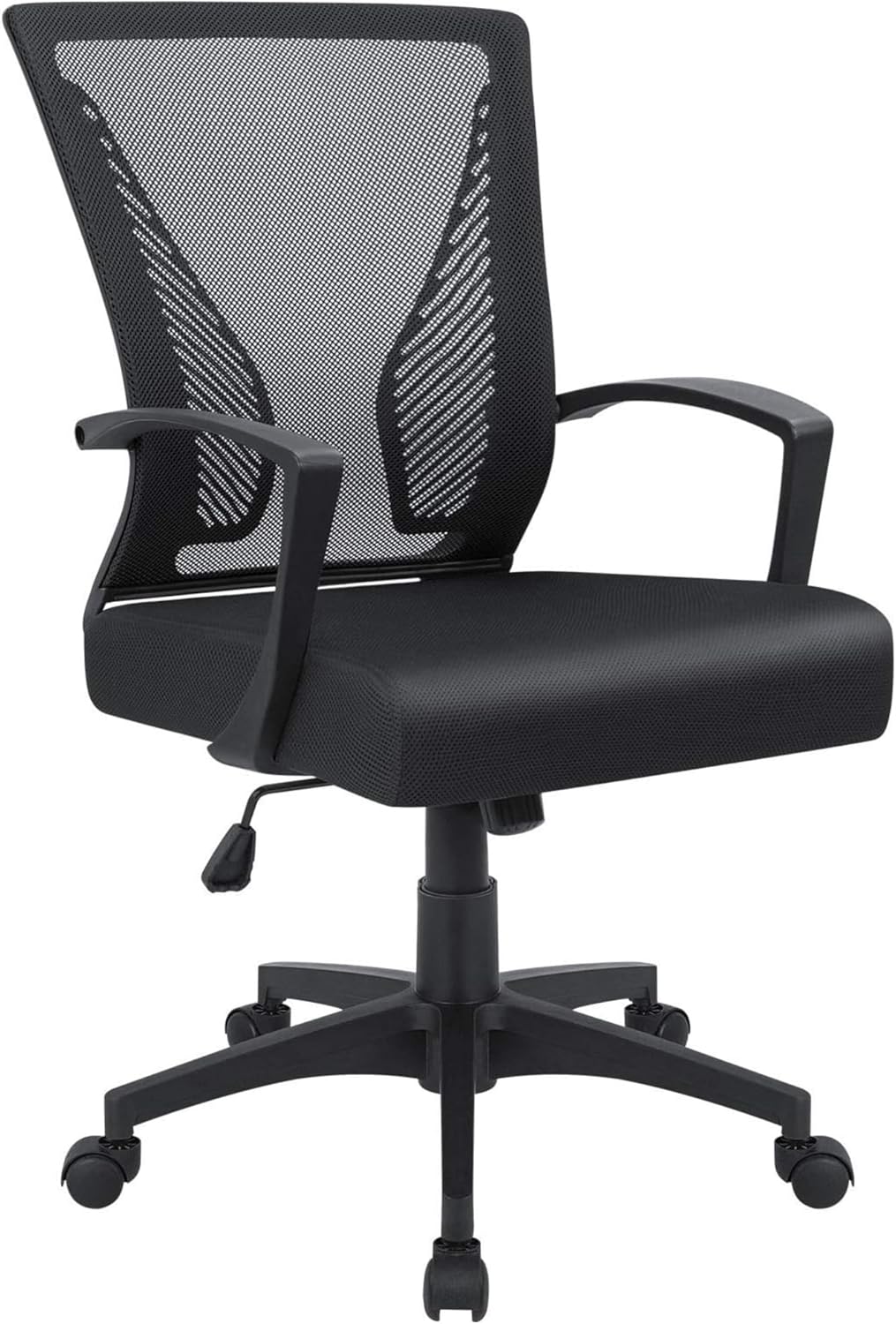
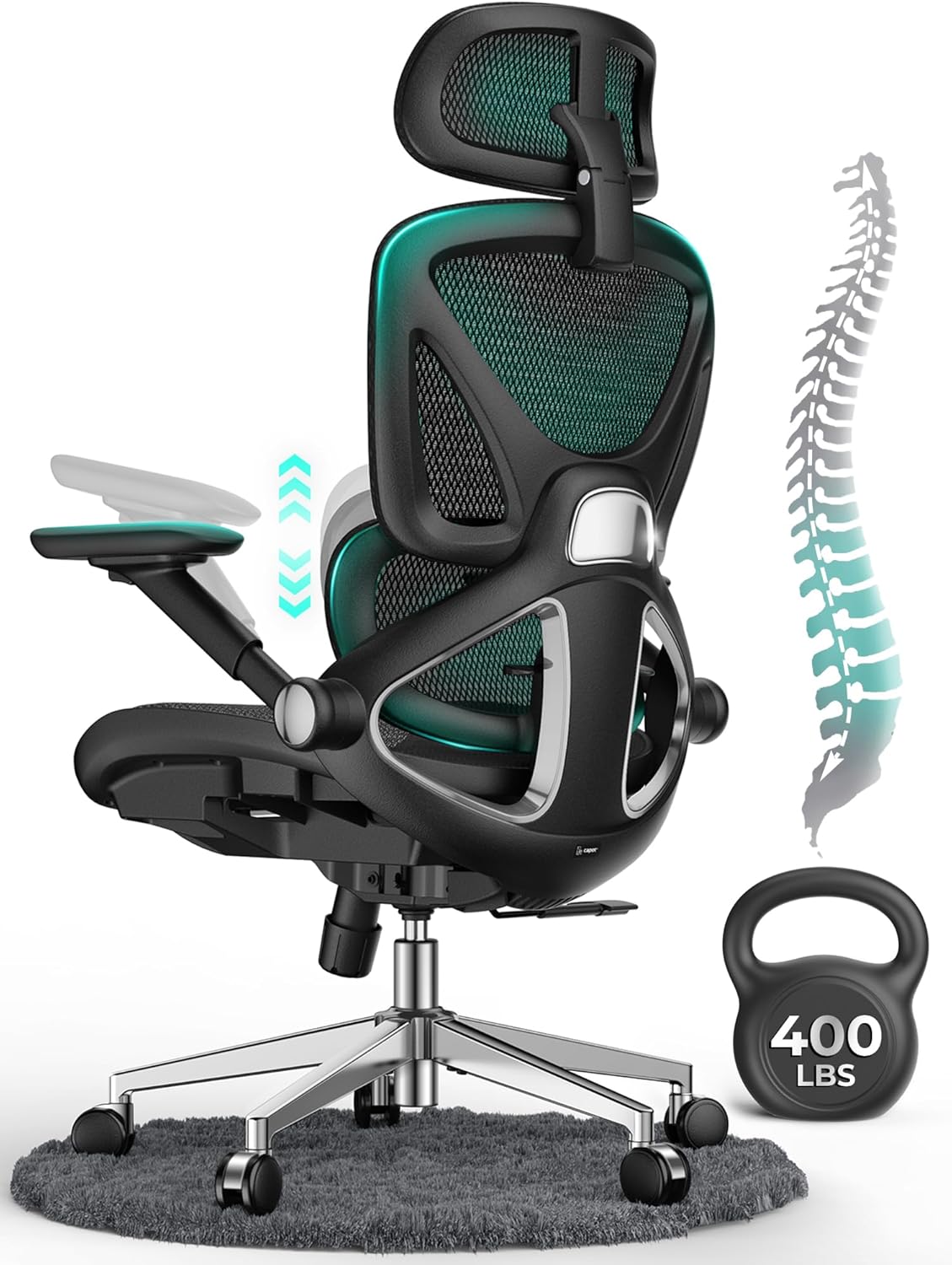
Mesh is a woven, breathable fabric stretched over a frame. It flexes slightly under your weight, which some people find gives better support across the back without pressure points, and it doesn’t trap heat the way solid upholstery does. The tension of the weave can develop a slight give or sag over years of daily use, particularly in the seat where weight concentrates most.
What Is a Leather Office Chair?
Leather and leather-look upholstery is a solid, padded surface over foam. It holds its shape more consistently over years of use than mesh, since the support comes from the foam underneath rather than the tension of a weave that can stretch. It also has a more traditional, formal look that some home offices want, especially in a space used for video calls.
Mesh vs Leather: Comfort and Support
The two materials feel different under sustained pressure. Mesh distributes weight across a wider area and tends to feel firmer overall, since you’re supported by the tension of the fabric rather than sinking into padding. Leather and foam cushioning feels softer at first but can develop pressure points over long sessions if the foam is low density, since your weight concentrates on fewer contact points as you sink in.
Cornell University’s ergonomics program notes that seat depth and adjustable lumbar support matter more to comfort over a full workday than the upholstery on top of them (Cornell University Ergonomics). A mesh chair with no lumbar adjustment is still an uncomfortable chair by the afternoon, and the same is true for leather.
Mesh vs Leather: Durability
Over several years of daily use, the two materials tend to fail in different ways. Mesh can stretch, sag, or in some cases tear at stress points, particularly on cheaper weaves. Leather-look upholstery, especially bonded or PU leather rather than genuine leather, is prone to cracking and peeling after a few years, particularly in low-humidity climates or direct sunlight. Genuine leather holds up better but costs significantly more.
BIFMA X5.1, the industry testing standard for general-purpose office chairs, puts seats through a 225-pound impact test repeated thousands of times and requires casters to survive 300,000 rotation cycles before a chair is rated for standard office use. The standard doesn’t test upholstery material directly, but it’s worth checking that any chair you’re comparing carries it, regardless of surface material.
Mesh vs Leather: Price
Mesh chairs at a given quality level are often somewhat less expensive than a comparable leather chair, largely because the material itself costs less than genuine leather or high-density foam and leather-look upholstery. Price varies more by the chair’s mechanism and adjustability than by upholstery material alone. A well-built mesh chair with limited adjustability can cost less than a poorly built leather chair with more adjustment points.
When Mesh Is the Better Choice
Mesh is the better pick if you sit for long hours in a warm room, run hot generally, or want a chair that stays comfortable through a Texas summer without central air running constantly. If heat and breathability are your main concern, our mesh office chairs for hot weather roundup covers models scored specifically on airflow and long-session comfort.
When Leather Is the Better Choice
Leather makes more sense in a home office that doubles as a guest room or shared living space, since it reads as more finished and less like dedicated office equipment. It’s also a better fit in a consistently cool room or climate, where heat retention isn’t a daily annoyance.
Can You Use Both in the Same Room?
Material doesn’t change how a chair pairs with the rest of your setup. Whether or not you also use a standing desk part of the day, the more relevant factor is making sure the chair height still adjusts low enough to match your desk at its lowest sitting position, regardless of what the seat is covered in.
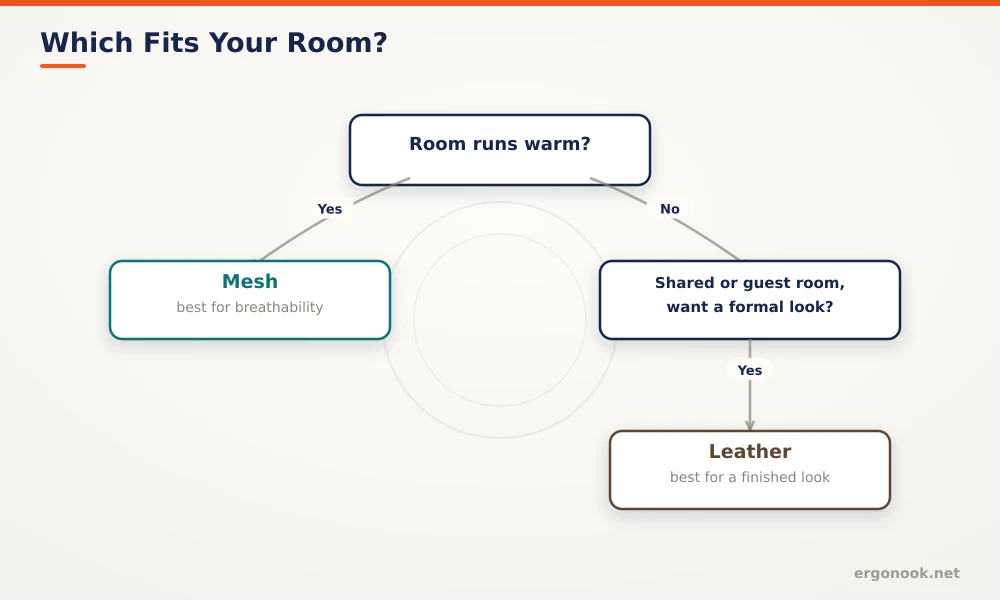
How to decide in three steps:
- Check your room’s temperature. Warm or poorly ventilated: lean mesh.
- Decide how formal the room needs to look, especially if it doubles as a guest room or gets used on video calls.
- Confirm lumbar adjustability and seat depth fit your body first. Material is the last filter, not the first.
Frequently Asked Questions
Are mesh chairs better than leather for long workdays?
For most people, yes. Mesh stays cooler and distributes weight more evenly over an eight-hour day. Leather can still work well if the room stays cool.
Does mesh sag faster than leather?
Cheaper mesh weaves can stretch over a few years of daily use, though quality varies significantly between chairs. Leather-look upholstery often cracks before quality mesh sags.
Do mesh or leather chairs work better with a standing desk setup?
Material doesn’t change here. The more relevant factor is making sure the chair height still adjusts low enough to pair with your desk at its lowest sitting position.
Both mesh and leather can be excellent choices when the underlying chair mechanism, lumbar support, and seat depth are well built. Treat the material as the last decision you make, after confirming the chair actually fits your body, rather than the first filter you apply when comparing options.




Write Your Review
No reviews yet. Be the first to share your experience!