

Big and tall office chairs are usually marketed around weight capacity, but a genuinely tall user needs a different set of numbers: backrest height, seat height range, and overall frame size. A chair rated for 500 pounds does nothing for shoulder coverage if the backrest tops out well below where a tall sitter’s shoulders actually sit, and a seat that only adjusts up to 19 inches leaves knees cramped no matter how wide the cushion is. This list is built around the chairs in our big and tall office chair research that publish real backrest height or seat height range figures, not just a weight rating.
We pulled seven chairs currently sold on Amazon, comparing documented backrest height, seat height range, and headrest availability alongside the standard weight capacity figure. The results include one established furniture brand with a 28.5-inch backrest, several high-back designs with adjustable headrests, and one chair with a fully published 19.7 to 22.9 inch seat height range, a level of detail most listings in this category skip entirely. For the full lineup this list draws from, see our big and tall office chair guide, and if you are also furnishing the rest of a taller home office setup, our standing desk picks cover desk sizing for larger frames.
Disclosure: Ergonook is a participant in the Amazon Associates program. Links below are affiliate links, and we may earn a commission from qualifying purchases. This does not affect which chairs we recommend or how we rank them.

Pros
- Backrest height of 28.5 inches is the tallest documented figure in this roundup, giving real upper-back and shoulder support
- Established furniture brand with a 15-plus year track record in seating
- Semi-plush cushion balances support with comfort for long sessions
Cons
- 350 lb weight rating is the lowest of the picks in this list, so it will not suit every big and tall body type
- Leather upholstery runs warmer than a mesh-backed alternative

Pros
- Adjustable headrest gives real neck support that a standard high-back chair without one cannot offer
- 700 lb capacity leaves margin above the average big and tall rating
- Plush padding is noticeably softer than task-chair style alternatives
Cons
- Higher price than most other picks in this roundup
- The plush cushion may compress faster over time than a firmer foam seat

Pros
- Mesh backrest keeps airflow better than an all-leather high-back chair over long sessions
- Waterfall-edge seat design reduces pressure behind the knees, useful for longer legs
- Headrest is built in rather than a separate accessory
Cons
- Mixed mesh and leather construction costs more than single-material alternatives
- Mesh backrest offers less cushioning than a fully padded high-back design
Pros
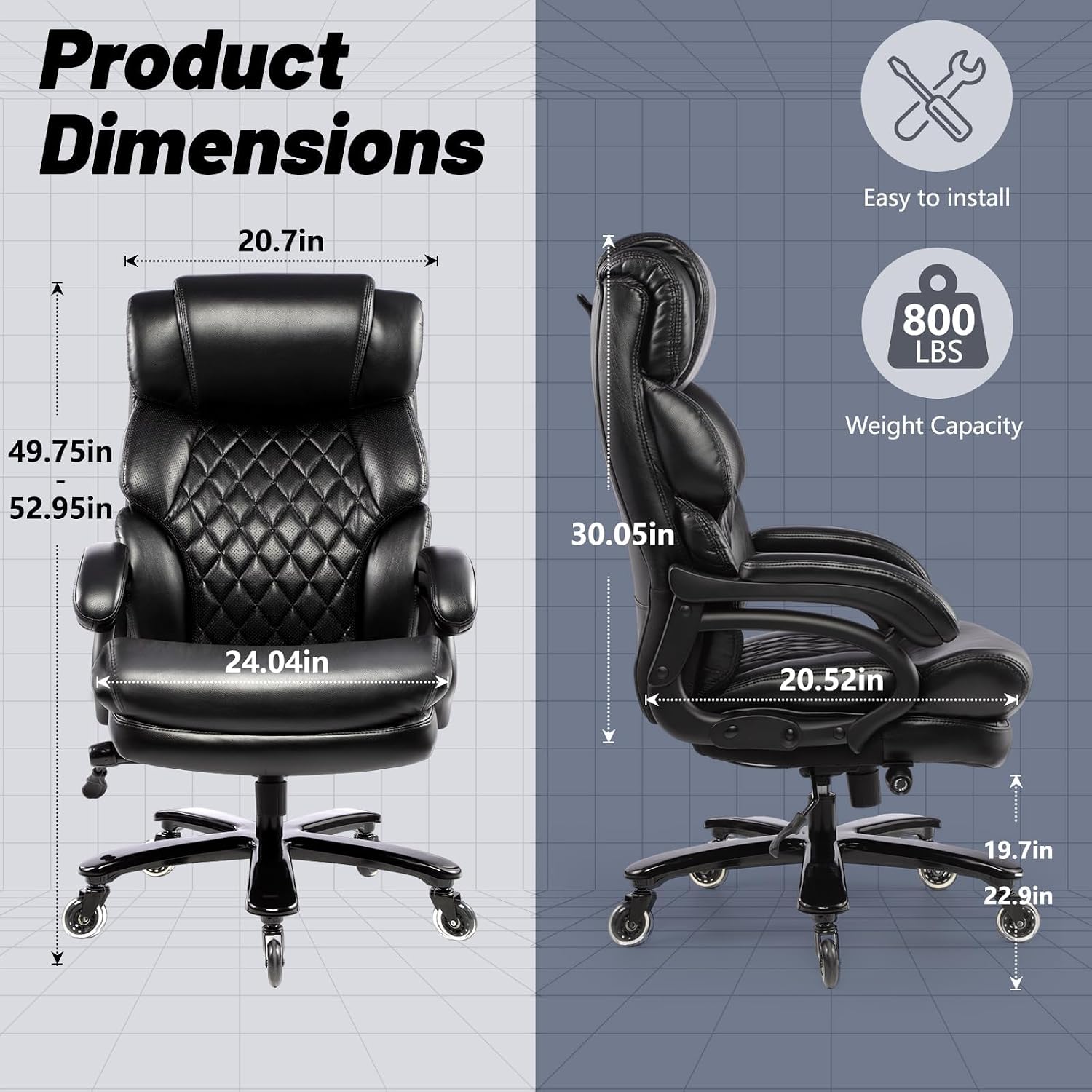
- Published height range (19.7 to 22.9 inches) rather than a single number makes it easy to confirm fit for a taller frame before buying
- 800 lb capacity is among the highest in the entire Big and Tall category on this site
- Large 24 by 30-inch backrest gives substantial shoulder and upper-back coverage
Cons
- Overall chair footprint is large, so measure office space before ordering
- Spring-loaded cushion may feel firmer initially than a foam-only seat

Pros
- Fabric upholstery feels different from the leather and mesh options that dominate this category, a real material choice rather than just color variation
- Seat height around 22.4 inches suits taller users without needing a footrest workaround
- 5D armrests give more adjustment directions than fixed or flip-only designs
Cons
- Fabric shows stains more readily than leather or PU alternatives
- Heavier chair overall due to reinforced frame for the 700 lb rating

Pros
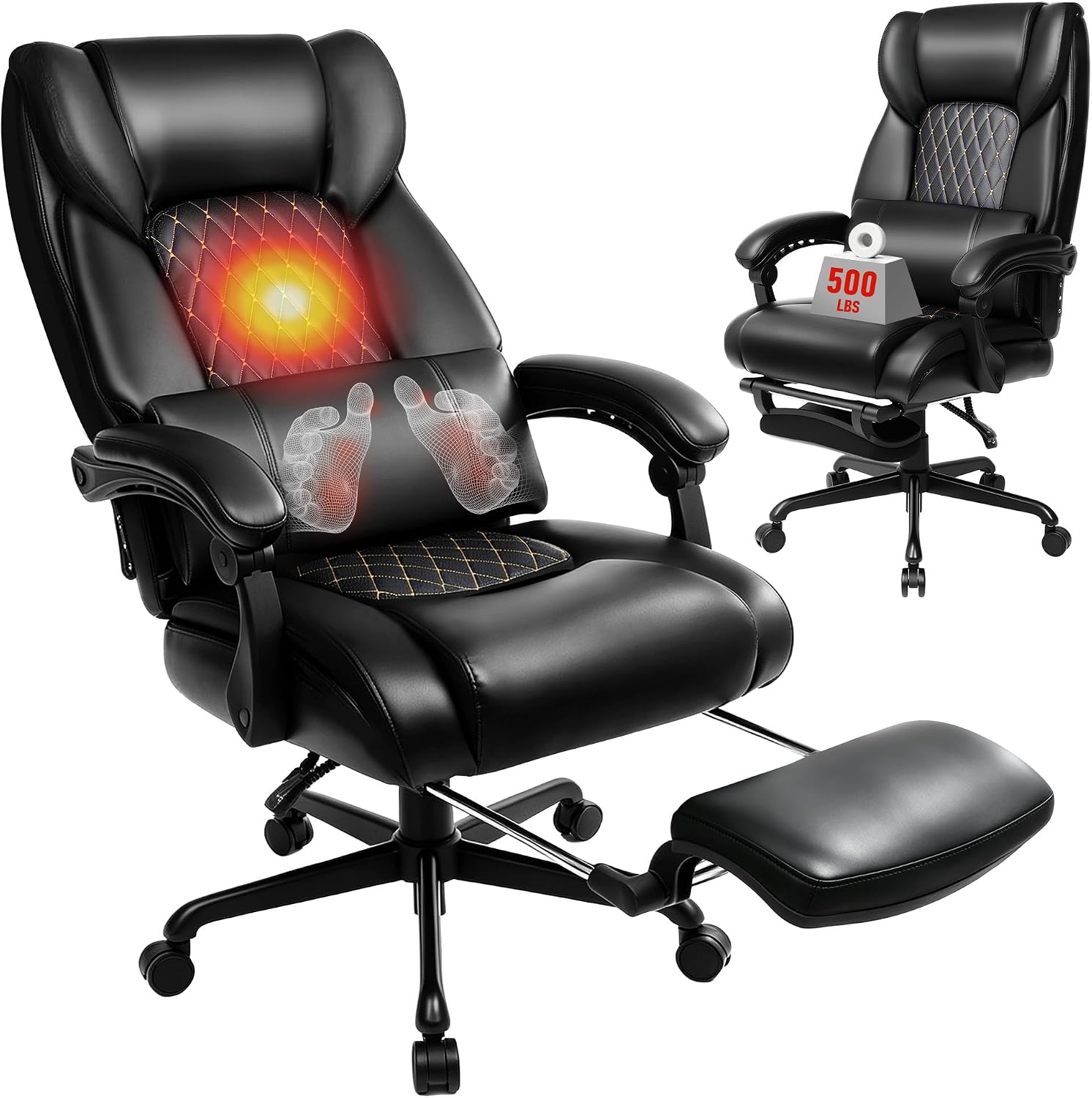
- Pull-out footrest lets a tall user stretch out fully during breaks, something most upright-only big and tall chairs do not offer
- 800 lb rating matches the highest capacity in this roundup
- Spring-pack cushion is designed for support over a full workday rather than compressing flat
Cons
- Reclining mechanism and footrest add mechanical parts that need occasional maintenance
- Larger footprint when reclined, so it needs more floor clearance than an upright-only chair

Pros
- Reinforced steel frame and extra-strong base target durability specifically, useful for a taller, heavier frame that puts more leverage stress on the chair over time
- 5D armrests adjust in more directions than fixed designs
- Highest user rating of any chair scraped for this roundup
Cons
- Styling is plainer than the executive-style leather or fabric options elsewhere in this list
- No headrest included
What Actually Matters for a Tall Frame
Backrest Height, Not Just Weight Capacity
Weight capacity gets top billing in every big and tall listing, but backrest height is the number that determines whether a tall user’s shoulders and upper back are actually supported. A chair with a 22-inch backrest and an 800-pound rating still leaves a 6-foot-plus sitter without shoulder contact. Look for a manufacturer-listed backrest height figure specifically, and treat a published measurement as more trustworthy than marketing language like “high back,” which has no fixed definition across listings.
Seat Height Range, Not a Single Number
Most listings quote a single seat height figure, which usually describes the lowest setting. A tall user needs to know the top of the adjustment range instead, since knees bent past 90 degrees at the highest setting is just as uncomfortable as a chair that is too low. Chairs that publish a full range, low to high, make this far easier to check against your own measurements than one that lists only a single figure.
Headrest: Built In or Skip It
A taller torso puts the neck and head noticeably further from a chair’s base backrest curve than an average-height sitter, which is where a headrest earns its keep. An adjustable, built-in headrest lets you dial in neck support without buying and installing a separate attachment. If a chair does not include one and you find yourself needing it, our mesh chairs with headrests roundup covers dedicated headrest picks outside the big and tall category.
Frame Durability Under Added Leverage
A taller body places more leverage on a chair’s joints, welds, and base than a shorter person at the same overall weight, since more of that weight sits further from the pivot point. Reinforced steel frames and heavy-duty bases matter more here than they would for an average-height user at the same weight rating, so treat frame construction language in the spec sheet as a real durability signal, not filler copy.
Armrest Reach for Longer Arms
Arm length scales with height more consistently than torso length does, so a taller user is more likely to run into armrests that sit too low or too far forward relative to a standard desk. Chairs with multi-directional adjustment, often labeled 3D, 4D, or 5D, let you move the armrest up, out, and forward independently rather than only up and down, which matters more here than in a chair built for an average-height sitter. A flip-up option is also useful if the armrest still cannot clear a desk that was not sized with a taller frame in mind, letting you fold it out of the way entirely rather than working around a fixed obstruction. None of that adjustment range shows up in a star rating, so check the armrest description in the spec sheet directly rather than assuming “adjustable” covers the same range on every listing.
Recliner-style chairs add a separate consideration: a footrest extension needs to actually reach a taller user’s calves rather than stopping short at the shins, so check the footrest’s extended length figure if the listing provides one, the same way you would check backrest height. Combined with a properly sized armrest, this rounds out the fit picture beyond seat height and backrest coverage alone, and it is worth cross-checking against our mesh chairs with adjustable arms roundup if armrest reach turns out to be the deciding factor for your setup.
Final Thoughts
For the clearest fit confirmation before buying, the 800 Lb High Back Chair with a published 19.7 to 22.9 inch seat height range stands out, since it is one of the few listings in this category that gives a full adjustment range rather than a single figure, paired with an 800-pound rating and a large 24 by 30-inch backrest. For users who prioritize backrest height and shoulder coverage from an established brand over maximum weight capacity, the Serta Fairbanks Big and Tall Executive Chair offers the tallest documented backrest in this roundup at 28.5 inches. Both are worth checking against your own measurements before the remaining picks, which trade some of that height data for reclining features, fabric upholstery, or a lower price.
FAQ
What backrest height counts as tall enough?
There is no single industry cutoff, but a backrest at or above roughly 26 to 28 inches will cover the shoulders of most adults over 6 feet. Compare the listed figure against your own seated shoulder height measured from the chair seat, rather than relying on category labels like “high back” alone.
Do I need a headrest if the backrest is already tall?
Not necessarily. A sufficiently tall backrest can support the upper back and shoulders without a separate headrest, though a headrest adds neck-specific support during recline that a backrest alone does not provide. It comes down to how often you lean back rather than a strict requirement.
Should I prioritize seat height range over weight capacity?
Both matter, but for a genuinely tall user who is not also in the heaviest weight bracket, seat height range and backrest height solve a problem that extra weight capacity cannot fix. If you are tall and also need a high weight rating, our office chair picks for heavy users lean further toward capacity as the primary filter.
Will any of these chairs work in a smaller home office?
Yes, but measure clearance first. Taller chairs with reclining functions or larger backrests take up more depth than a standard task chair, particularly when reclined, so check the product dimensions against your available floor space before ordering. A chair with a 30-inch backrest and a reclining footrest can need several additional feet of clearance behind it at full recline, which is easy to overlook when comparing listings on seat width alone. If floor space is genuinely tight, an upright-only design without a reclining mechanism, such as the high-back mesh or fabric picks earlier in this list, is the safer choice.




Write Your Review
No reviews yet. Be the first to share your experience!