

A big and tall office chair is built to solve two problems at once: a higher weight rating and a wider seat. But most of that engineering targets height, not the opposite end of the spectrum. Chairs marketed as big and tall frequently sit high off the floor even at their lowest setting, which leaves a shorter, heavier-set person dangling their feet or perching on the front edge of the cushion, exactly the posture a good office chair is supposed to prevent. This list is built around the one spec that actually matters for that situation: documented seat height, not just weight capacity.
We pulled seven big and tall office chairs currently sold on Amazon with published weight ratings from 400 to 750 pounds, and cross-referenced each one against its manufacturer-listed seat height. The results ranged from about 18.1 inches to nearly 23 inches, a gap wide enough to determine whether your feet rest flat on the floor or hang above it. Chairs are ordered from lowest documented seat height to highest, so you can match the list to your own inseam instead of hunting through spec sheets one listing at a time. For the wider lineup this list draws from, see our full big and tall office chair guide, and if seat height alone does not fully solve the fit, our footrest picks for short people are a practical add-on for any of these chairs.
Disclosure: Ergonook is a participant in the Amazon Associates program. Links below are affiliate links, and we may earn a commission from qualifying purchases. This does not affect which chairs we recommend or how we rank them.
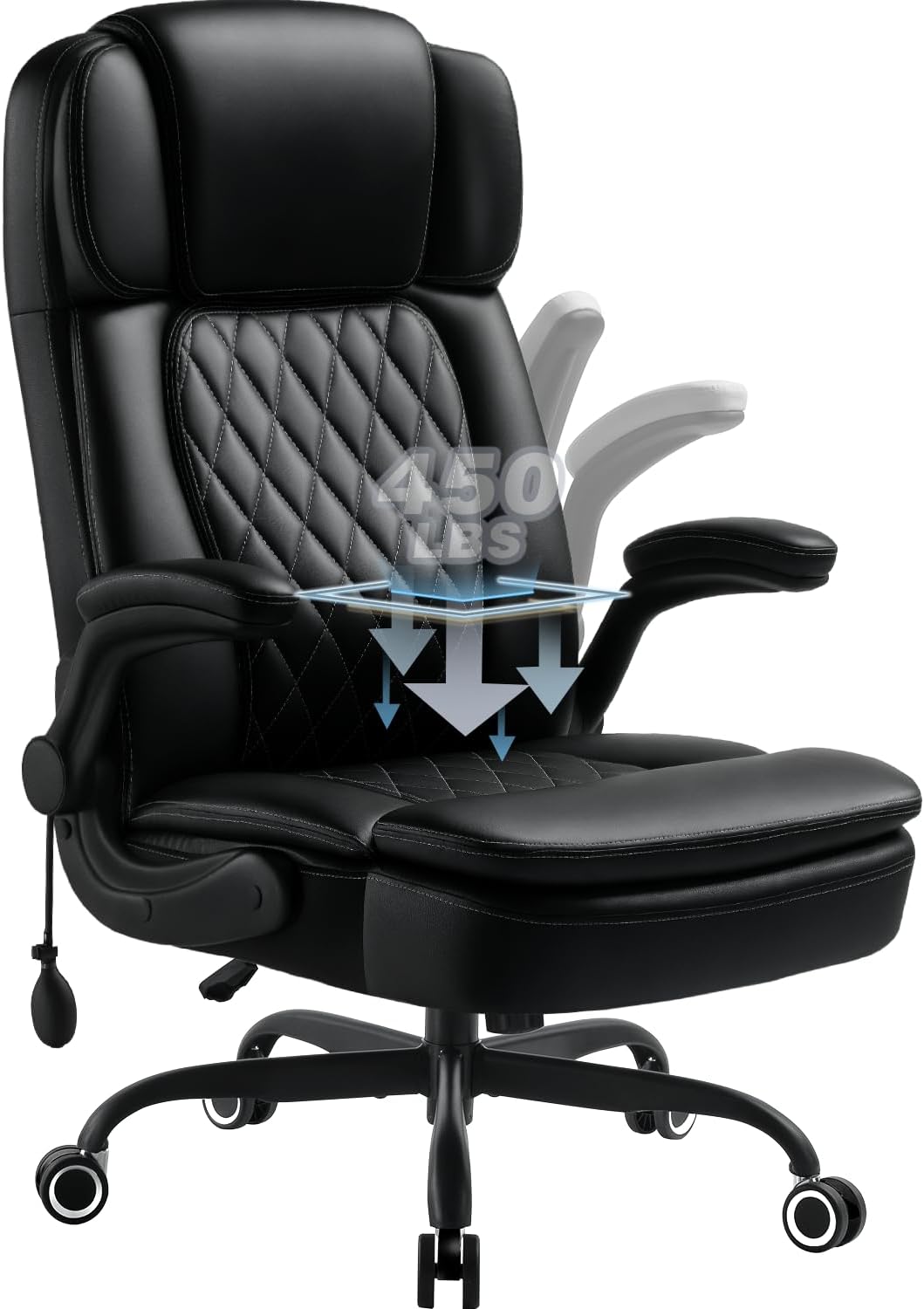
Pros
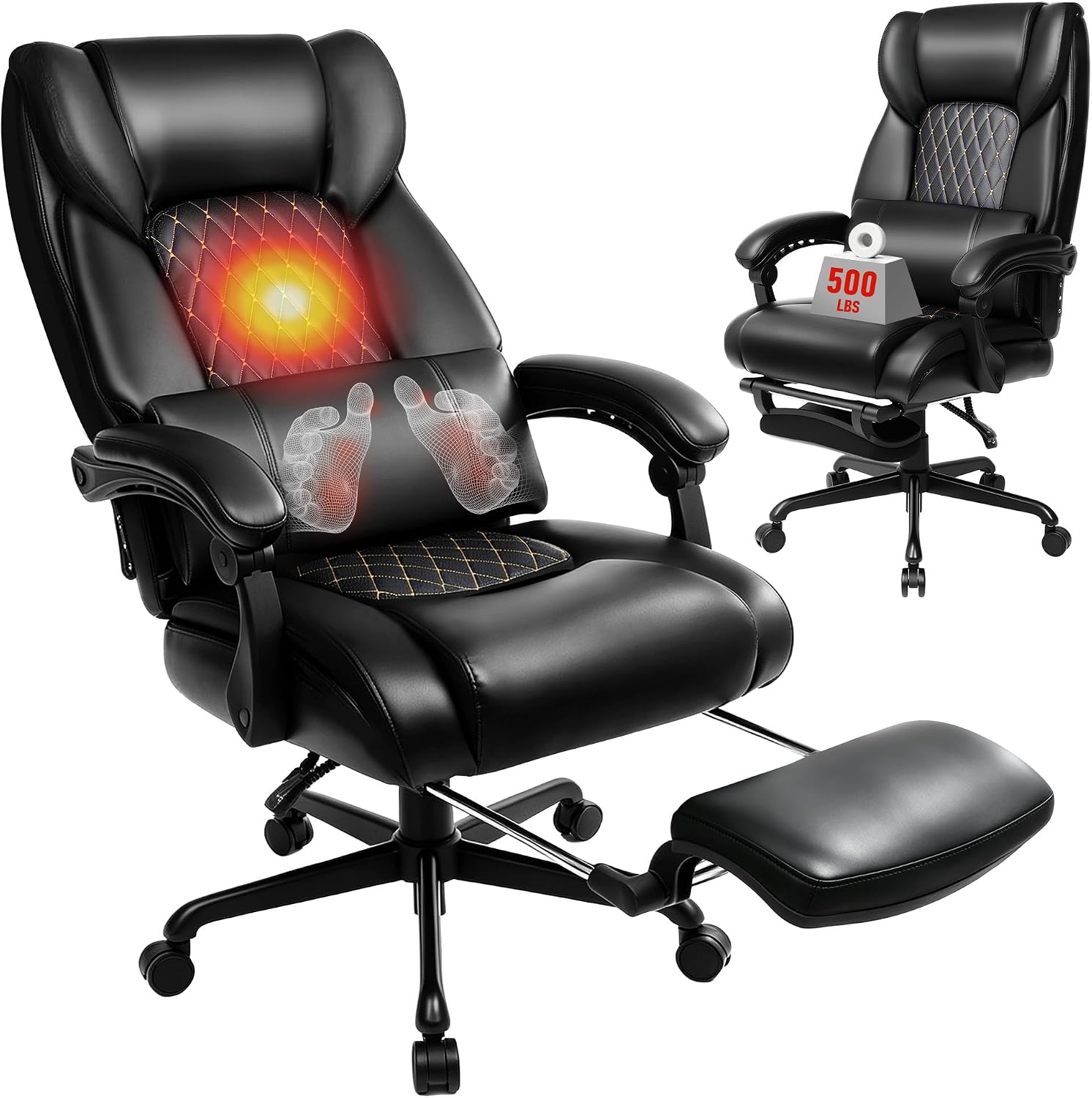
- Lowest listed seat height in this roundup at about 18.1 inches
- 450 lb rating gives extra headroom above typical 300 to 400 lb chairs
- Waterproof leather wipes clean easily
Cons
- High-back executive shape is bulkier than a task-chair profile
- Leather offers less airflow than mesh

Pros
- Seat height listed at 18.5 inches, low enough for shorter frames to plant feet flat
- BIFMA and SGS certification gives a real safety benchmark, not just a marketing claim
- Flip-up arms help when tucking under a lower desk
Cons
- Padding is firmer than premium mesh alternatives
- No headrest included

Pros
- Seat height around 19.1 inches sits lower than most executive-style big and tall chairs
- Wide foam seat gives extra hip room without an oversized overall footprint
- Adjustable armrests add fit flexibility
Cons
- PU leather runs warmer than mesh over long sessions
- Armrest adjustment range is limited compared to 4D designs
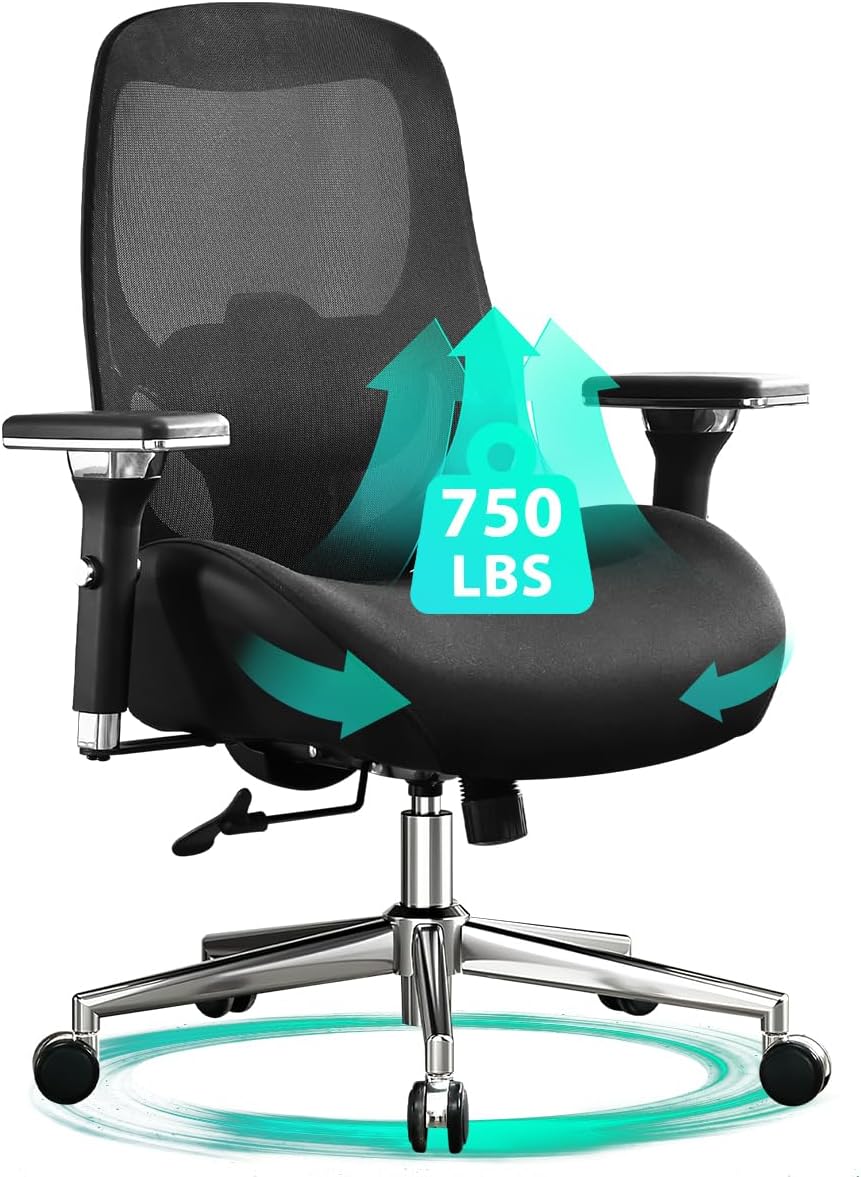
Pros
- 750 lb rating is among the highest in the entire Big and Tall category on this site
- Seat height around 19.3 inches keeps it reachable for most shorter users
- 4D armrests adjust in more directions than fixed or flip-up designs
Cons
- Oversized U-shaped cushion adds bulk to the seat pan
- Heavier overall chair weight makes repositioning it more effort

Pros
- Breathable PU leather resists fading and flaking better than standard bonded leather
- Quiet rubber casters work well on hard flooring
- Adjustable lumbar support
Cons
- Seat height around 22 inches is on the taller end for shorter users without a footrest
- No mesh-back option on this model

Pros
- 500 lb rating covers most big and tall use cases without going to extreme capacity
- Thick cushion adds comfort for extended sitting
- 4D armrest adjusts to fit shorter arm reach
Cons
- Seat height listed around 22.4 inches runs higher than the lowest picks in this roundup
- Thicker cushion adds some bulk to the seat profile

Pros
- Mesh back stays cooler than leather over long sessions
- Widened seat still fits a compact office footprint
- S-curve backrest tracks the spine's natural shape
Cons
- Seat height figures for this model run higher than the WAILOR and Chair Store options above
- Armrests are fixed rather than flip-up or 4D adjustable
What to Look for in a Big and Tall Chair When You Are Not Tall
Seat Height Before Weight Capacity
Weight capacity gets most of the attention in this category, but seat height is what determines whether the chair actually fits a shorter frame. Look for the manufacturer’s listed seat height, usually given as either a single figure or a low-to-high adjustment range, and compare it against your own inseam measured from the floor to the back of your knee while seated in a reference chair. A seat height at or below about 19 inches works for most shorter adults; anything above 21 inches will likely need a footrest to avoid dangling feet, even on a chair with an otherwise generous weight rating.
Weight Rating Still Has to Clear Your Number
A low seat height does not help if the frame is not rated to hold you safely. Confirm the weight capacity against the structured specification field rather than marketing copy in the title, and build in a reasonable margin rather than shopping right at the printed limit, since gas cylinders and welds wear faster the closer daily use sits to the rated maximum. Readers closer to the top of the big and tall range should also compare our office chair picks for heavy users, which prioritize capacity over the low-seat focus of this list.
Cushion Depth and Armrest Adjustability
Seat depth matters almost as much as seat height for a shorter body. A deep cushion designed for a taller frame can press into the back of the knees before the backrest ever makes contact with the lower back, forcing a slouched posture to compensate. Flip-up or 4D armrests help more than fixed ones here, since they let you drop the arms out of the way if the desk itself sits lower than average, a common pairing for anyone who has already chosen shorter furniture elsewhere in the office.
Mesh Versus Leather for All-Day Comfort
Material choice is a comfort tradeoff rather than a fit issue. Mesh backs breathe better over a full workday and tend to run a little lighter, which matters if the chair needs to be repositioned often in a small office. Leather and PU leather wipe clean more easily and hold up well against spills, at the cost of trapping more heat. Either material works at any seat height on this list, so choose based on climate and cleaning habits rather than assuming one is inherently better for a shorter frame.
Base Width and Caster Type Matter More in a Smaller Office
A wider five-star base is standard on every chair in this list, since it is what keeps a heavier-rated frame stable, but the base footprint can crowd a smaller desk setup more than a standard chair would. Measure the clearance under your desk before ordering, particularly if you are already using a lower desk to match a shorter seat height, since the two adjustments compound rather than cancel out. Caster type matters too: rubber-coated wheels roll quietly and protect hardwood or laminate floors, while hard plastic casters are better suited to thick carpet where a softer wheel would drag. If your setup includes a mesh alternative from our big and tall mesh roundup, the same base and caster logic applies there as well.
Final Thoughts
If low seat height combined with a genuinely high weight rating is the priority, the WAILOR 450 Lb Leather Executive Chair is the strongest match in this list, with a documented seat height around 18.1 inches, the lowest of the group, while still carrying a 450-pound rating. For shoppers who want more weight headroom without giving up a reachable seat, the MAHOMICO ATLAS 750 Mesh Chair pairs a 750-pound capacity with a seat height near 19.3 inches, keeping it usable for shorter adults who also need serious capacity. Both are worth a closer look before the higher-seat options further down the list, which are included mainly for their durability and airflow rather than for the lowest possible seat height.
FAQ
What seat height is actually good for a shorter person?
As a general guide, a seat height at or below about 19 inches lets most adults under roughly 5 feet 4 inches sit with both feet flat on the floor and knees near a 90-degree angle. Measure your own inseam rather than relying on a general height cutoff, since leg proportions vary even among people of the same overall height.
Can I just add a footrest to a taller big and tall chair instead?
Yes, and it is a reasonable workaround if none of the low-seat options here fit your other requirements. A footrest raises the effective floor under your feet rather than lowering the chair, which restores the same knee angle. See our footrest picks for short people for options sized to pair with a taller chair.
Does a lower seat height mean a lower weight capacity?
Not necessarily. Seat height and weight rating are determined by different parts of the chair, the cylinder and base versus the frame and cushion structure, and this list intentionally includes chairs with a low seat height paired with weight ratings from 400 to 750 pounds. Always confirm both numbers independently rather than assuming one predicts the other.
Should I pair this with a standing desk instead?
A height-adjustable desk can reduce how much time you spend seated, which helps regardless of chair fit, but it does not replace the need for a properly sized chair for the hours you are sitting. If you are considering that route, our standing desk picks for short people cover the desk side of the same fit problem this list addresses for chairs.



Write Your Review
No reviews yet. Be the first to share your experience!