

A chair that feels fine for the first hour can become genuinely uncomfortable by hour six, and the features that matter for a long session are not always the same ones that stand out in a quick showroom sit.A chair that feels fine for the first hour can become genuinely uncomfortable by hour six, and the features that matter most for a long session are not always the same ones that stand out during a quick showroom sit or a five-minute trial. Endurance comfort depends more on lumbar mechanism quality, recline flexibility, and weight capacity margin than on any single eye-catching feature. See our full mesh office chair lineup for more options.
We compared four mesh chairs specifically marketed or built for extended daily sessions, on dynamic lumbar support, recline range, and warranty coverage. If your main concern is a specific type of pain rather than general endurance, our signs your office chair is bad for your back guide covers related warning signs worth checking.

Pros
- Backed by FLEXISPOT, an established name in ergonomic office furniture
- 3-year warranty covers the extended use this chair is built for
- Combines dynamic lumbar support with a built-in footrest, uncommon together
Cons
- Highest price among the new picks in this comparison
- Smaller review count than more established general-purpose chairs
- Premium positioning may not suit every budget
FLEXISPOT built a reputation on standing desks and ergonomic furniture, and the ErgoX brings that expertise to a mesh chair positioned for extended daily use, with dynamic lumbar support that adjusts as you shift position.
The built-in footrest and adjustable, padded armrests round out a build clearly aimed at long sitting sessions, backed by a 3-year warranty and a 400 lb weight rating.
It carries the highest price among the new picks in this comparison, and the review count is smaller than some general-purpose chairs, reflecting a more specialized positioning.
For anyone who wants an ergonomic furniture specialist's take on a long-hours chair, this is a premium, well-rounded option.
Chair Type: Premium ergonomic mesh office chair with footrest. Frame Material: Reinforced nylon. Seat Material: Mesh. Back Style: Mesh.
Armrests: Adjustable, padded. Lumbar Support: Dynamic. Recline: Tilt function, 3 positions. Footrest: Built-in.
Brand: FLEXISPOT, ErgoX line. Warranty: 3 years. Maximum weight recommendation: 400 pounds.
If you trust FLEXISPOT's broader ergonomic furniture expertise, this chair extends that specialization to extended sitting specifically.
Consider this chair if dynamic lumbar support and a built-in footrest together justify the premium price to you.
Weigh the higher cost against the more affordable picks in this comparison if budget is the deciding factor.
This is best suited to buyers who want a specialist ergonomic brand behind a chair built for long daily sessions.
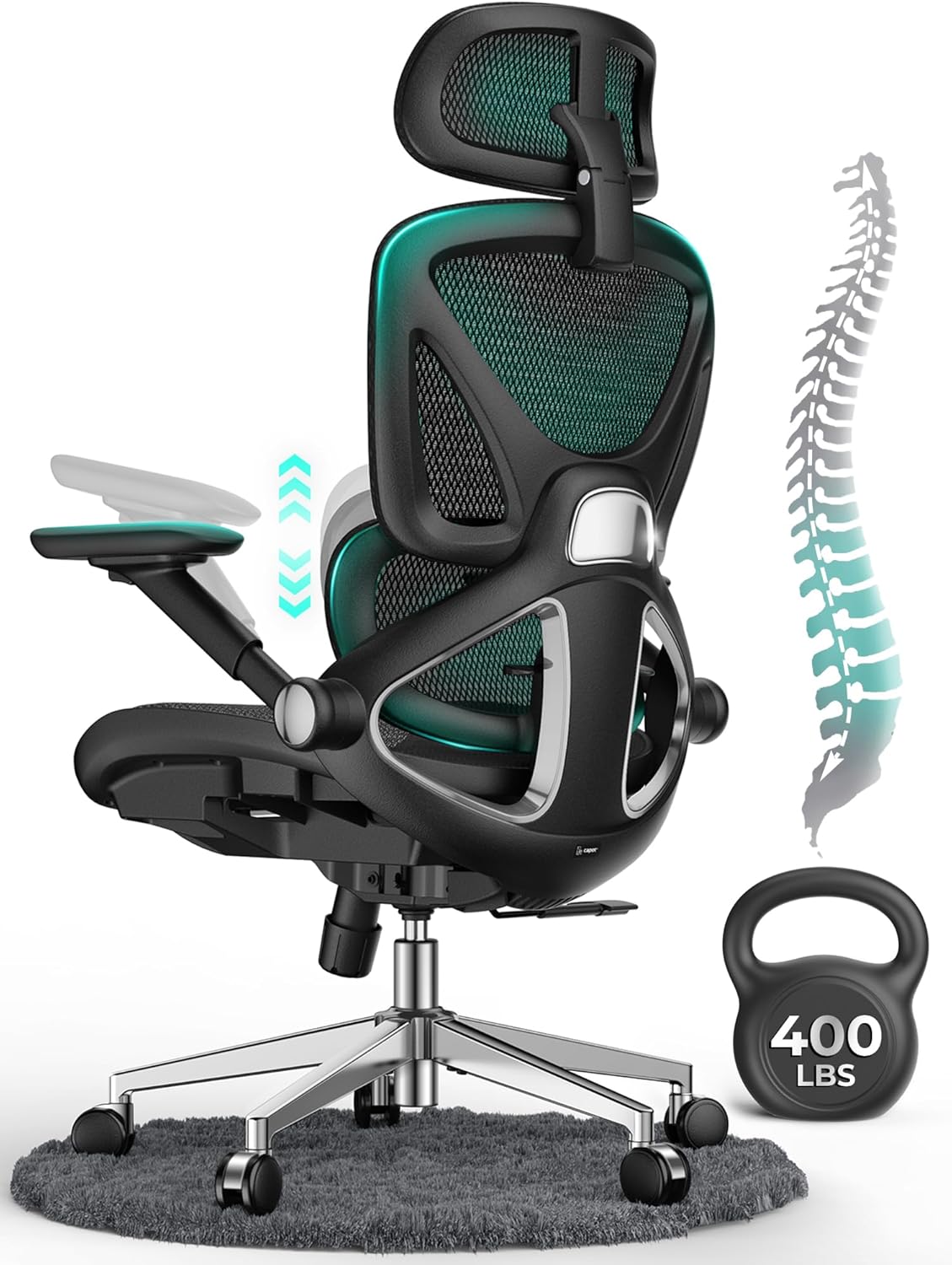
Pros
- Marketed and built specifically for long desk work sessions
- 400 lb weight capacity
- 4D armrests and a 3D headrest together, uncommon at this price
Cons
- Smaller review base than the more established picks in this comparison
- Newer brand without a long track record
- No stated multi-year warranty
CAPOT positions this chair specifically for long desk work sessions, backing that claim with a 400 lb weight rating, 4D flip-up armrests, and a 3D headrest, a feature set usually reserved for pricier executive chairs.
The 3-level tilt backrest and stainless steel frame components add stability and flexibility for extended sitting, and PU wheels round out the build for smooth rolling on hard floors.
The review base is smaller than the more established picks in this comparison, and no multi-year warranty is explicitly stated on the listing.
For anyone who wants a feature-dense chair built around long sitting sessions specifically, this covers the key points at a reasonable price.
Chair Type: High-back ergonomic mesh office chair. Frame Material: Stainless steel and nylon. Seat Material: Mesh. Back Style: High back.
Armrests: 4D flip-up. Headrest: 3D. Recline: 3-level tilt.
Brand: CAPOT. Maximum weight recommendation: 400 pounds.
If you want a feature-dense chair built specifically for long desk sessions, this covers 4D arms, a headrest, and multi-level tilt together.
Consider this chair if the 400 lb capacity matters to you alongside that feature set.
Weigh the smaller review base against the more established picks in this comparison if a longer track record matters more.
This is best suited to buyers who want maximum adjustability for extended sitting at a moderate price.

Pros
- Weight rating clears the 300-pound threshold with room to spare
- 4D lumbar adjustment is more precise than most chairs at this price
- Mesh back stays cool during long sessions compared to foam-backed chairs
- Recline and tilt tension adjust independently for a more personalized fit
Cons
- Seat pan is standard width, not an oversized XL seat, so very broad-framed users should check the dedicated big and tall picks below
- Assembly instructions are adequate but not as detailed as premium competitors
The Duramont sits in an interesting spot for this list. It is not marketed as a big and tall chair, but its manufacturer weight rating of 330 pounds clears the 300-pound threshold this roundup is built around, and it does so while keeping a more standard seat width and profile than the XL-specific chairs further down this page.
The main draw is adjustability. The 4D lumbar system moves in four directions rather than the simple up-down adjustment found on cheaper chairs, so users can dial in support for the exact curve of their lower back. Recline angle and tilt tension are also independently adjustable, which matters for anyone who alternates between focused typing and leaning back to think.
Build quality centers on a reinforced aluminum base and a breathable mesh backrest, with a memory foam seat cushion that holds its shape better than basic polyurethane foam over time. Reviewers consistently point to the lumbar support and mesh breathability as the strongest points of the design.
The tradeoff is proportions. Because this is a general ergonomic chair rather than a purpose-built big and tall model, the seat itself is not as wide as options like the HON Sadie or GABRYLLY below. It suits users near the lower end of this roundup's weight range who want strong adjustability more than extra-wide dimensions.
Weight Rating: 330 lbs per manufacturer specification. Frame: reinforced aluminum base with alloy steel frame. Backrest: 100 percent breathable mesh.
Seat: memory foam cushion with a boxed edge. Seat Height: approximately 20.8 inches. Seat Depth: approximately 20 inches.
Lumbar Support: 4D adjustable (up, down, in, out). Armrests: height-adjustable. Recline: 3 locking positions with adjustable tilt tension.
Item Weight: approximately 44.5 lbs. Warranty: 5 years. Color: black.
Consider the Duramont if your weight is close to the 300-pound mark and you value precise lumbar and recline adjustment over maximum seat width. Its 330-pound rating leaves a real margin, but it is not built with the reinforced, extra-wide frame of a true big and tall chair.
If you are closer to 400 pounds and above, or if you specifically need a wider seat pan for comfort rather than just weight capacity, look at the AnyGod, YFO, or KWKSV picks in this roundup instead, since they are engineered from the ground up for larger frames.
The independent recline and tilt tension controls make this a strong choice for anyone who shifts between upright typing and reclined reading or calls throughout the day.

Pros
- Adaptive lumbar tracks your recline instead of staying fixed, useful for anyone who shifts positions often
- Weight capacity matches the highest-rated chairs in this roundup
- Warranty coverage beats the budget and mid-range picks here
Cons
- Average rating trails the rest of the chairs in this roundup, though it remains solidly positive
- Split-back design looks different from the solid-back chairs on this list, worth checking photos against your preference
- Assembly involves attaching several parts with the included tool
SIHOO's pitch for the B100 centers on lumbar support that moves with you instead of staying locked at a fixed height, useful for anyone who alternates between leaning forward to type and sitting back for a call. The split-back mesh design is a visual departure from the solid mesh backs on the rest of this list, though it serves the same airflow purpose.
The armrests flip up, the headrest is wide and adjustable, and the frame supports multiple recline positions. Warranty coverage runs several years, ahead of the budget option in this roundup.
Its average rating trails the rest of the chairs compared here, though it remains solidly positive overall. Assembly requires attaching a few more parts than the simplest chairs on this list.
For anyone whose main priority is lumbar support that adapts through the day rather than a fixed pad, this is the most purpose-built option here.
Chair Type: Split-back mesh ergonomic office chair. Frame Material: Polypropylene frame. Seat Material: Polypropylene seat base with mesh, polyester, and nylon upholstery.
Headrest: Wide, adjustable headrest. Armrests: Flip-up design. Lumbar Support: Adaptive lumbar support that adjusts with posture. Recline: 3-position tilt, 5 height positions. Base Movement: Swivel on a star base.
Color: Grey. Brand: SIHOO. Model: B100. Warranty: 3-year parts replacement coverage. Suitable for hard floor and carpet surfaces.
If lower back support is your single biggest priority in a new chair, this is the most purpose-built option in this roundup, with lumbar support designed to move as you shift positions rather than staying fixed at one height.
Consider this chair if you spend long stretches alternating between leaning forward to focus and sitting back for calls or breaks. The adaptive lumbar mechanism is designed specifically for that kind of movement throughout the day.
The split-back mesh design is a visual departure from the solid-back chairs elsewhere on this list, so it is worth checking product photos to make sure the look fits your space before buying.
This is best suited to buyers whose main complaint with previous chairs has been inconsistent or fixed lower back support. If a more traditional solid-back look matters more to you, other picks on this list may be a better fit.
What Actually Matters for a Full Workday
Dynamic Lumbar Support Beats a Fixed Pad
A fixed lumbar curve feels fine when you first sit down, but it stays locked in one position regardless of how you shift throughout an eight-hour day. Dynamic lumbar support that moves with your posture addresses the reality that nobody sits perfectly still for hours at a time.
This distinction matters far more for long sessions than for occasional use, since a fixed pad’s limitations only really surface after the third or fourth hour of shifting position.
Recline Range for Genuine Breaks
A wider recline range lets you actually rest during short breaks between tasks rather than sitting upright the entire day. Chairs in this comparison offer 3-position tilt mechanisms, meaningfully more flexible than a single fixed angle for varying your posture across a long shift.
If you plan to combine reclined breaks with a footrest, check that both features are present together rather than assuming a deep recline automatically includes one. A recline range without a footrest still works for a short lean-back stretch, but it will not match the comfort of a chair built with both in mind together.
Weight Capacity Margin Matters More Over Time
A chair used for eight or more hours daily experiences far more cumulative stress than one used occasionally, which makes weight capacity margin more important here than in a casual-use comparison. Every chair in this comparison is rated at 300 pounds or higher, comfortable headroom for most users. A chair rated right at your body weight is a riskier long-term choice than one with real margin above it, especially under the added stress of daily extended use.
None of the four chairs here needed a discount code or sponsored placement to make this list; each one is currently in stock with a verifiable rating and real specifications behind it.
Warranty Length Reflects Expected Daily Wear
Warranty terms in this comparison range up to 3 years, longer coverage than a chair meant for occasional use typically carries. A manufacturer willing to back a chair for multiple years is implicitly signaling confidence in how it holds up under daily, extended use rather than light or intermittent sitting.
Check the specific warranty terms directly, since some listings state coverage prominently while others bury it further down the product description. A short or vague warranty on a chair marketed for long-hours use is worth reading reviews more carefully before committing to. Pairing a supportive chair with regular movement matters too; see our desk stretches for office workers guide for simple breaks you can take without leaving your desk.
Final Thoughts
FLEXISPOT ErgoX Premium Mesh Office Chair is built specifically around extended daily use, pairing dynamic lumbar support with a footrest and a 3-year warranty from an established ergonomic furniture brand, making it the most purpose-built pick in this comparison for long sessions. If you want the largest possible review base backing your choice instead, Duramont Ergonomic Office Chair carries more verified purchases than any other chair we have compared across every roundup in this category.
Frequently Asked Questions
How many hours a day justifies buying a chair specifically for long sessions?
Most people notice the difference starting around six or more hours of daily sitting, when a fixed lumbar pad or a limited recline range begins to feel restrictive rather than merely adequate. For shorter daily use, a general-purpose mesh chair from one of our other comparisons is likely sufficient without the added cost of a long-hours-specific model. Tracking your own actual sitting hours for a week, rather than guessing, is a more reliable way to decide than assuming based on your job title alone.
Should I take breaks even with a chair built for long sessions?
Yes, a better chair reduces strain but does not eliminate the value of standing, stretching, and moving periodically throughout the day. Even the most supportive chair benefits from regular position changes; think of a long-hours chair as reducing the harm of extended sitting rather than making sitting all day risk-free.
Is dynamic lumbar support worth the extra cost over a fixed pad?
For genuine long-session use, generally yes, since the benefit compounds the more hours you actually spend in the chair. For occasional use, the extra cost matters less since you are less likely to notice the limitations of a fixed lumbar pad within a shorter sitting window.
Does a longer warranty actually indicate a better chair?
It is a reasonable, though imperfect, signal. A manufacturer offering multiple years of coverage is taking on real financial risk if the chair fails prematurely, which suggests some confidence in the build. It is not a guarantee, though, so pairing warranty length with review volume and specific material specifications gives a more complete picture than warranty alone.
Is chair choice enough to stay comfortable during long work days, or does it also matter how I sit?
Chair choice helps, but it is not the whole picture. Even a well-adjusted chair cannot fully offset staying in one position for hours without moving. Standing up, stretching, or briefly walking every hour or so meaningfully reduces the stiffness that a chair alone cannot prevent.



Write Your Review
No reviews yet. Be the first to share your experience!