

Do anti fatigue mats really work? Yes, for reducing discomfort during long standing sessions. A University of Michigan study found 3 of the 4 mats tested reduced discomfort after 4 hours of standing compared to a bare floor. They matter less if you stand for under 20 to 30 minutes at a stretch.
- A 2012 University of Michigan study found 3 of 4 anti-fatigue mats tested reduced discomfort after 4 hours of standing, compared with a bare floor.
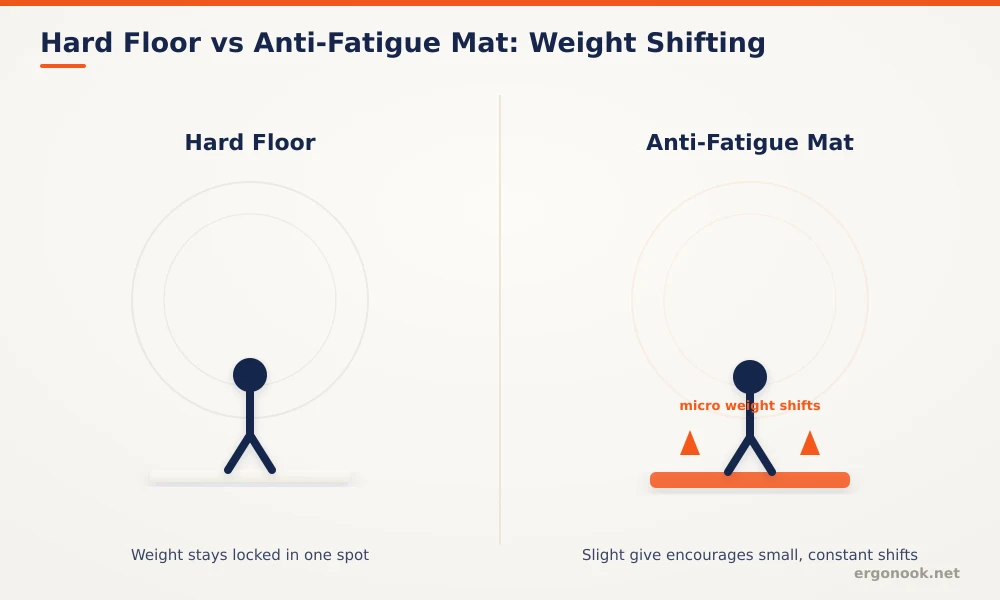
- The same study found how often you shift your weight is positively correlated with discomfort, supporting the idea that mats work by encouraging small movement, not just cushioning.
- CCOHS describes standing on hard concrete as similar to a hammer pounding the heel with every step, one reason mats are recommended for prolonged standing work.
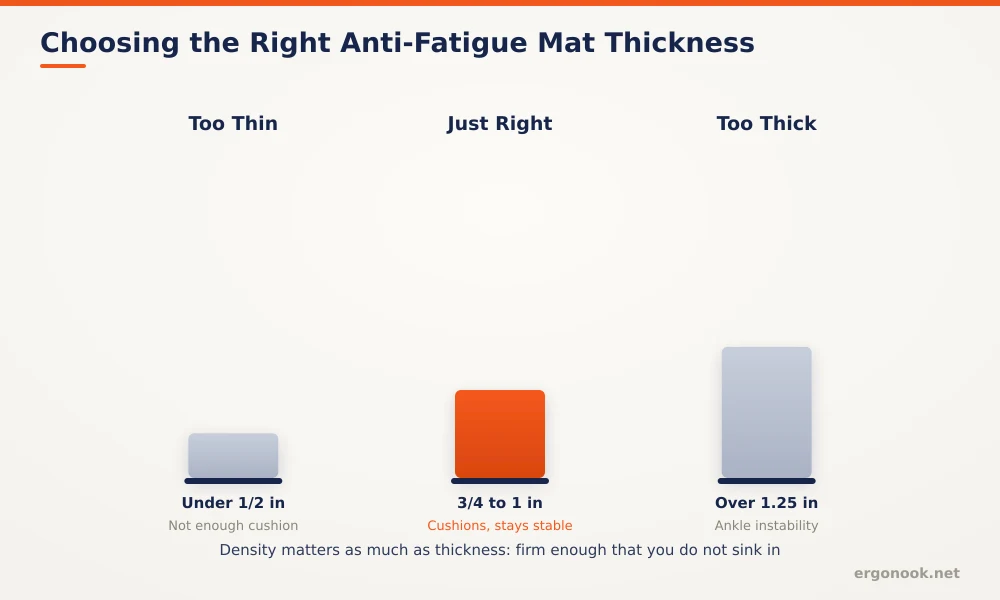
- A good mat runs about 3/4 to 1 inch thick. Thinner doesn’t cushion enough, and much thicker creates ankle instability.
In this article:
- What an anti-fatigue mat actually does
- What the research says about anti-fatigue mats
- Who anti-fatigue mats are worth it for
- Who won’t notice much benefit
- How much does a good anti-fatigue mat cost?
- Anti-fatigue mat vs supportive shoes
- Common mistakes that waste the money
- Frequently asked questions
What an Anti-Fatigue Mat Actually Does
Standing on a hard floor for long stretches puts constant, concentrated pressure on the same points of your feet, mainly the heel and ball of the foot. An anti-fatigue mat is built with a layer of cushioning foam, gel, or rubber that gives slightly under your weight, which encourages small, constant shifts in your stance instead of locking you into one static position for the duration of your standing session. The mat isn’t absorbing fatigue directly. It’s making the natural micro-movements that reduce fatigue easier and less tiring to do.
What the Research Says About Anti-Fatigue Mats
A study by researchers at the University of Michigan had subjects stand for 4 hours at a time on different flooring conditions and rate their discomfort. Three of the four anti-fatigue mats tested significantly reduced discomfort compared to a bare floor, and the study found weight-shifting frequency was positively correlated with reported discomfort levels (Wiggermann & Keyserling, Human Factors, 2012). That’s the mechanism in a nutshell: mats that make small movement easier tend to reduce discomfort, not mats that simply feel soft underfoot.
The Canadian Centre for Occupational Health and Safety describes the problem plainly: walking or standing on a hard, unyielding floor like concrete is similar to the impact of a hammer pounding the heel at every step, and it lists floor mats among the standard interventions for jobs that require prolonged standing (CCOHS).
Who Anti-Fatigue Mats Are Worth It For
A mat earns its keep if you stand at a desk, counter, or workstation for more than 30 to 60 minutes at a stretch, especially on concrete, tile, or hardwood over concrete. It matters more on harder, less forgiving flooring, and less on flooring that already has some give, like carpet over padding. If you’ve switched to a standing desk and alternate through the day, a mat is one of the cheapest changes you can make to keep those standing stretches comfortable enough that you actually stick with the habit. Our picks for the best anti-fatigue mat for a standing desk cover options built for that kind of daily use.
Who Won’t Notice Much Benefit
If you’re only standing for 20 to 30 minutes at a time, the benefit is small, since foot and lower back fatigue mostly builds up over longer stretches, and the natural movement a mat encourages doesn’t have time to matter over such a short session. The benefit scales with how long you’re actually standing continuously, not with how expensive the mat is. Mats also won’t fix pain coming from unsupportive shoes or a standing desk set at the wrong height. Those need their own fix regardless of what’s under your feet.
How Much Does a Good Anti-Fatigue Mat Cost?
Price mostly tracks material and durability rather than any single dramatic difference in comfort.
| Tier | Price | What You Get |
|---|---|---|
| Basic foam | About $15 to $35 | Lighter, less expensive, compresses and loses cushioning faster |
| Mid-range foam or gel | About $40 to $70 | Better durability, gel layer for pressure distribution |
| Premium gel or rubber | About $70 to $130 | Longest lifespan, larger sizes, best for daily all-day use |
Foam mats tend to be lighter and less expensive but can compress and lose their cushioning over a few years of daily use. Gel mats add a layer of pressure-distributing material on top of a firmer base, which some people find more comfortable for standing in one place, though gel mats are often heavier and pricier. Rubber mats are the most durable option and hold up well to rolling chairs or dropped tools, but offer less cushioning than foam or gel.
Anti-Fatigue Mat vs Supportive Shoes
A mat and supportive footwear address the same problem from different angles, and they work best together rather than as substitutes for each other. A mat changes the surface you’re standing on, encouraging small shifts and reducing direct impact through the floor. Supportive shoes or insoles change how your foot itself is cushioned and aligned regardless of what surface you’re standing on. Someone standing on a mat in unsupportive, flat shoes still carries the impact and alignment problems that only proper footwear addresses, while someone in excellent shoes standing directly on concrete still faces the fatigue that comes from a completely rigid surface underneath. If you’ve paired a mat with a standing desk, our guide on standing desk vs sitting desk covers how long to actually stand before switching back.
Common Mistakes That Waste the Money
- Buying a mat that’s too small. A mat that forces you to stand at its edge or step off it while reaching for things defeats the purpose. Measure the actual area where you stand and move, not just the spot directly in front of your monitor.
- Choosing thickness over density. A thick but soft mat can be worse than a thinner, firmer one, since sinking in forces your ankles to work harder to stay stable.
- Placing it in the wrong spot. The mat should sit where your feet naturally fall while working, which isn’t always centered on the desk, especially with an off-center keyboard tray.
- Not replacing it when it wears out. Foam and gel both lose cushioning effectiveness over time, often before the surface looks visibly worn.
Frequently Asked Questions
How thick should an anti-fatigue mat be?
Generally 3/4 inch or more provides noticeable cushioning without sacrificing too much stability. Above about 1.25 inches, softer mats can start to feel unstable underfoot.
Do anti-fatigue mats work on carpet?
They’re designed primarily for hard flooring. Carpet already provides some cushioning, so the added benefit of a mat is smaller.
Can an anti-fatigue mat replace proper footwear?
No. Supportive shoes still matter. The mat reduces floor impact but doesn’t substitute for adequate arch and heel support in what you’re wearing.
Do anti-fatigue mats help with knee or hip discomfort from standing?
They can, indirectly, since the same postural shifts that reduce foot fatigue also reduce sustained load on the knees and hips, though a mat addresses the standing surface rather than any structural issue in the joints themselves.
An anti-fatigue mat is a small, inexpensive change relative to the discomfort it can prevent over months of regular standing, backed by measured reductions in discomfort after long standing sessions. It works best as one part of a broader standing setup that also includes supportive footwear and a desk height that doesn’t force you to hunch or reach.


Write Your Review
No reviews yet. Be the first to share your experience!