

Are standing desks worth it? Yes, if you’ll actually use them. Alternating every 30 to 60 minutes cuts workday sitting by roughly 84 to 116 minutes, per a Cochrane review of 34 studies. A basic converter runs $100 to $200; skip it if you already move around often.
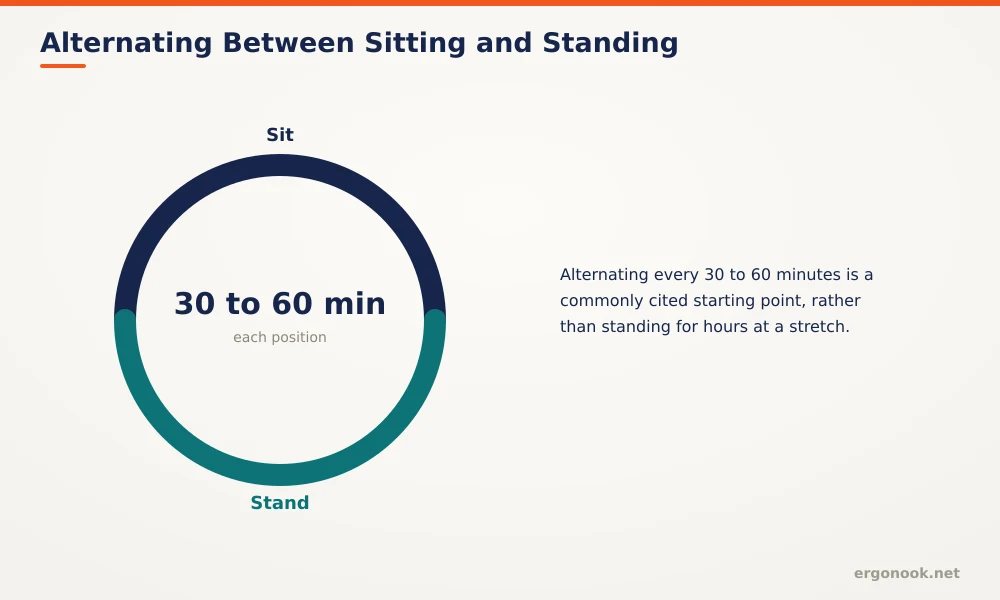
- A Cochrane review of 34 studies and 3,397 participants found sit-stand desks reduce workplace sitting by roughly 84 to 116 minutes a day, though broader health benefits remain unproven.
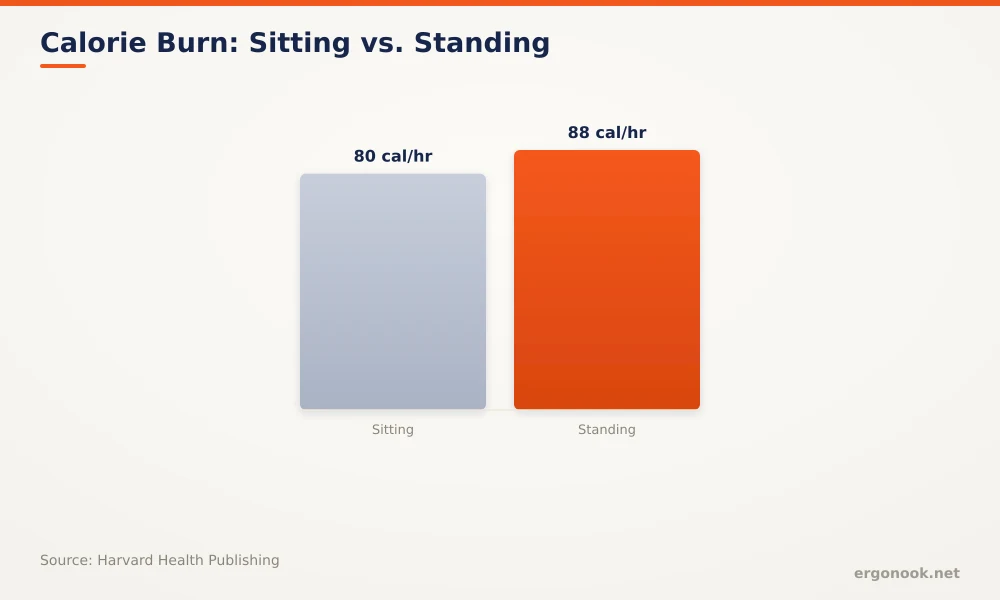
- Standing burns about 88 calories an hour versus 80 for sitting, an extra 24 calories over a three-hour stretch, according to Harvard Health Publishing.
- A University of Iowa study found sit-stand desk users stood 60 more minutes and walked 6 more minutes a day, burning up to 87 more calories daily.
- Desk converters run about $100 to $200; full electric standing desks typically run $250 to $600 depending on size and motor type.
In this article:
- What a standing desk actually does
- What the research says about standing desks
- Who standing desks are worth it for
- Who should skip a standing desk
- How much does a good standing desk cost?
- Standing desk vs a desk converter
- Common mistakes that waste the money
- Frequently asked questions
What a Standing Desk Actually Does
A standing desk does not fix bad posture by itself, and it isn’t a substitute for exercise. What it does is remove the one thing a regular desk can’t offer: the option to change position during the day. Sitting in the same posture for eight hours puts sustained load on the same muscles and discs, regardless of how good the chair is. Alternating between sitting and standing spreads that load around instead of concentrating it in one place for an entire workday.
What the Research Says About Standing Desks
A Cochrane review examined 34 studies covering 3,397 participants and found that sit-stand desks reduce workplace sitting by an average of 84 to 116 minutes a day. The same review found that broader health effects, like reduced back pain or better long-term health outcomes, are still unproven at a rigorous evidence level (Cochrane).
On calories, Harvard Health Publishing cites research showing people burn about 80 calories an hour sitting versus 88 calories an hour standing, an extra 24 calories over three hours, roughly the same as one carrot. That’s not enough for weight loss on its own (Harvard Health Publishing).
A University of Iowa study found that employees with sit-stand desks stood 60 more minutes a day at work than colleagues with fixed desks, and walked an additional 6 minutes a day, burning up to 87 more calories daily as a result (University of Iowa).
Standing Desks Worth It: Who Benefits Most
The honest framing is: it’s worth it if you’ll actually use it. A desk that gets raised once a week isn’t doing much, and the cost doesn’t pay for itself at that usage rate. People who tend to see the most benefit are those with jobs built around long, uninterrupted computer sessions, back-to-back video calls, or anyone who’s already noticed stiffness creeping in by mid-afternoon.
Who Should Skip a Standing Desk
If your main complaint is chair discomfort or monitor height, a standing desk won’t solve that on its own. Fixing those first is usually cheaper and more effective, and a lot of people who buy a standing desk to fix back pain end up needing a better chair anyway once they’re back to sitting for part of the day. If your day already includes regular walking, standing meetings, or errands away from your desk, the marginal benefit is smaller too, since you’re already breaking up sedentary time on your own.
How Much Does a Good Standing Desk Cost?
Before buying, it helps to know what you’re paying for at each price tier.
| Tier | Price | What You Get |
|---|---|---|
| Desk converter | $100 to $200 | Sits on an existing desk, the lowest-cost way to test the habit before committing |
| Budget electric desk | $250 to $400 | Full-size desktop, dual motor, modest weight capacity |
| Mid-range to premium electric | $450 to $600+ | Wider height range, higher weight capacity, quieter and faster motors |
Our best budget electric standing desks roundup breaks down real options at different price points, scored on height range, weight capacity, and motor noise rather than brand reputation.
Standing Desk vs a Desk Converter
| Desk Converter | Full Standing Desk | |
|---|---|---|
| Cost | $100 to $200 | $250 to $600+ |
| Setup | Sits on your existing desk, no desk replacement | Replaces your desk, more setup involved |
| Desk surface | Smaller, can feel cluttered | Full-size surface at both heights |
| Best for | Testing the habit before committing | Long-term daily use, cleaner desk setup |
Common Mistakes That Waste the Money
These four mistakes are the most common reasons a standing desk ends up as an expensive shelf.
- Treating standing as all-or-nothing. Standing for hours straight because the desk is up just trades one static posture for another.
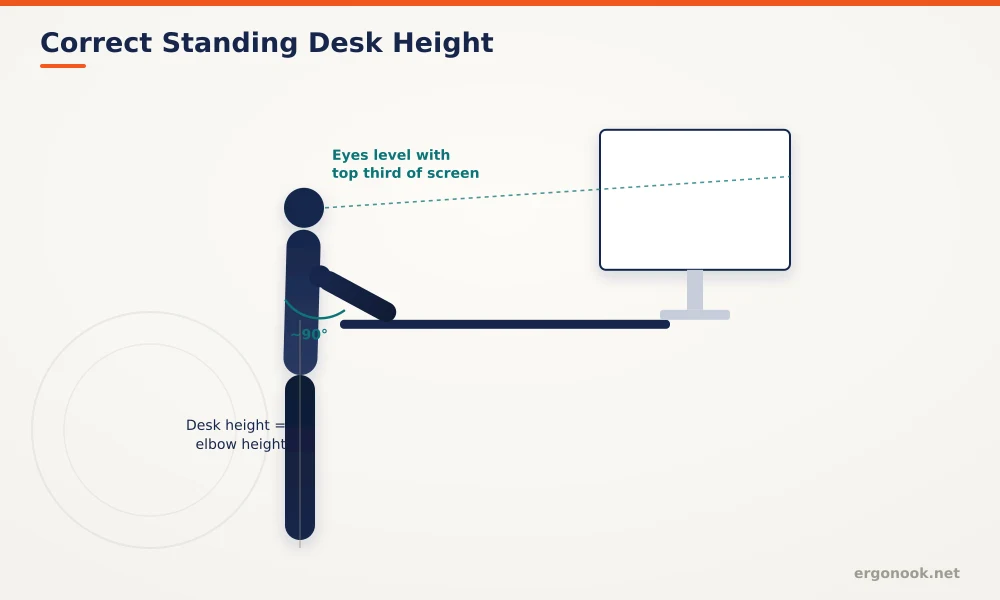
- Setting the standing height wrong, usually too low, which causes hunching, or too high, which raises the shoulders. Elbows should sit near a 90 degree angle at both sitting and standing height.
- Skipping an anti-fatigue mat. Standing on a hard floor for long stretches is more tiring on the feet and lower back than most people expect going in.
- Ignoring cable management. A desk that’s annoying to raise and lower because cables catch on drawers gets adjusted less often simply because it’s a hassle.
Frequently Asked Questions
How long should I stand at a standing desk each day?
There’s no single number that applies to everyone, but alternating every 30 to 60 minutes between sitting and standing is a commonly cited starting point rather than standing for hours at a stretch.
Do I need an anti-fatigue mat with a standing desk?
Not strictly, but most people find standing on a hard floor for more than 20 to 30 minutes at a time noticeably more tiring without one.
Are standing desks actually good for you?
They help by reducing sitting time and are linked to modest benefits like reduced shoulder and back pain, but the evidence for bigger health outcomes is still limited. Treat them as one part of a broader movement habit, not a fix on their own.
Is a desk converter as good as a full standing desk?
For testing whether the habit sticks, yes. For long-term daily use, a full desk usually offers a wider height range and a cleaner desk surface.
A standing desk is worth it if it actually changes your sitting habits, not because standing itself is dramatically healthier than sitting. Test the habit with a converter first if you’re unsure, then upgrade to a full desk once you know you’ll use it.




Write Your Review
No reviews yet. Be the first to share your experience!