

A standing desk only helps if standing itself is comfortable. Without cushioning underfoot, standing on a hard floor for hours can leave your feet, knees, and lower back sore by the end of the day. An anti-fatigue mat closes that gap.
We compared six anti-fatigue mats, from flat memory foam designs to a contoured mat built to encourage subtle movement. If a footrest is also part of your setup, see our best under desk footrest for office roundup, or browse the full anti-fatigue mats category.

Pros
- Strong, well-established review history
- Durable PU leather surface resists wear
- Beveled edges help prevent tripping
Cons
- Single fixed thickness, no customization for firmer or softer feel
- Hand wash only, no machine washing for the surface
The FEATOL mat uses a 0.9 inch high density memory foam core, wrapped in a PU leather top designed to resist punctures and tears over time.
Its non-slip bottom and beveled, low-angle edges are meant to keep the mat in place and reduce the risk of tripping on the edge.
It's built for standing desks as well as kitchens and workbenches, and carries a strong, well-established review history.
The surface is hand wash only, so it needs a damp cloth wipe-down rather than machine washing.
It suits anyone who wants a durable, versatile anti-fatigue mat backed by a large number of reviews.
Dimensions: 32 inches long by 20 inches wide by 0.9 inches thick.
Material: High density memory foam with a PU leather top.
Weight: 4.2 pounds.
Care: Wipe clean with a damp cloth.
Who should buy this mat? Anyone who wants a durable, well-reviewed anti-fatigue mat for a standing desk or kitchen.
Who might want to look elsewhere? Anyone who wants a textured or contoured surface rather than a flat one should consider the Topo or Ergohead mats instead.
Setup tip: Let the mat lie flat for a day before use if it arrived rolled, so it settles evenly on the floor.
Pros
- Distinctive contoured surface not shared by the other mats in this comparison
- Long 7 year manufacturer warranty
- PVC-free, non-toxic materials
Cons
- No recorded reviews in our data at the time of writing
- Higher profile at 2.7 inches thick may feel less stable underfoot for some users than a flatter mat
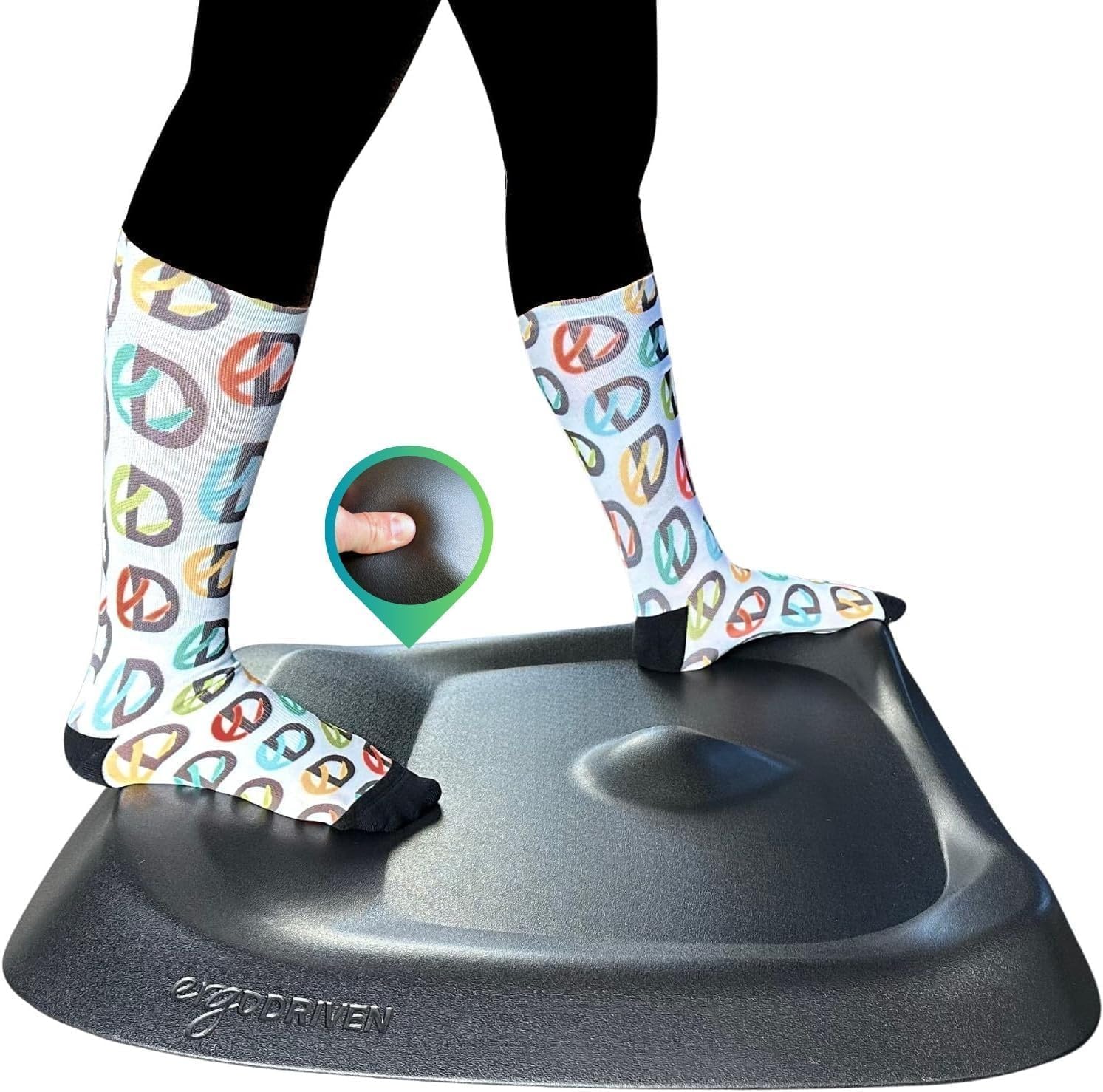
Topo takes a different approach from the other mats in this comparison, using a contoured, textured surface rather than a flat one, intended to encourage your feet to shift position naturally while you stand.
It's built from thick, non-toxic, PVC-free polyurethane foam, and a heel or toe indentation makes it easy to reposition with one foot rather than bending down.
Ergodriven markets Topo citing recognition from outlets that cover standing desk gear, and backs it with a 7 year manufacturer warranty.
Our scraped data shows no recorded customer reviews yet, so weigh that against the brand's own claims before buying.
It suits anyone who specifically wants a contoured, movement-encouraging mat rather than a flat cushioned one.
Dimensions: 29 inches long by 26.25 inches wide by 2.7 inches thick.
Material: Non-toxic polyurethane foam, PVC-free.
Weight: 8 pounds.
Warranty: 7 years.
Who should buy this mat? Anyone who wants a contoured, textured mat designed to encourage movement rather than a flat cushioned surface.
Who might want to look elsewhere? Anyone who prefers a flatter, more stable feel underfoot, or wants a mat with an established review history, should consider the ComfiLife or FEATOL mats instead.
Setup tip: Use the heel or toe indentation to slide the mat out and back rather than lifting it, which is the intended way to reposition it.
Pros
- Highest average rating and largest review base in this comparison
- Non-slip, stain-resistant surface
- Holds up well across kitchen, office, and workbench use
Cons
- Slightly thinner than some of the other mats in this comparison at 0.75 inches
- Flat design without the contoured texture of the Topo or Ergohead mats
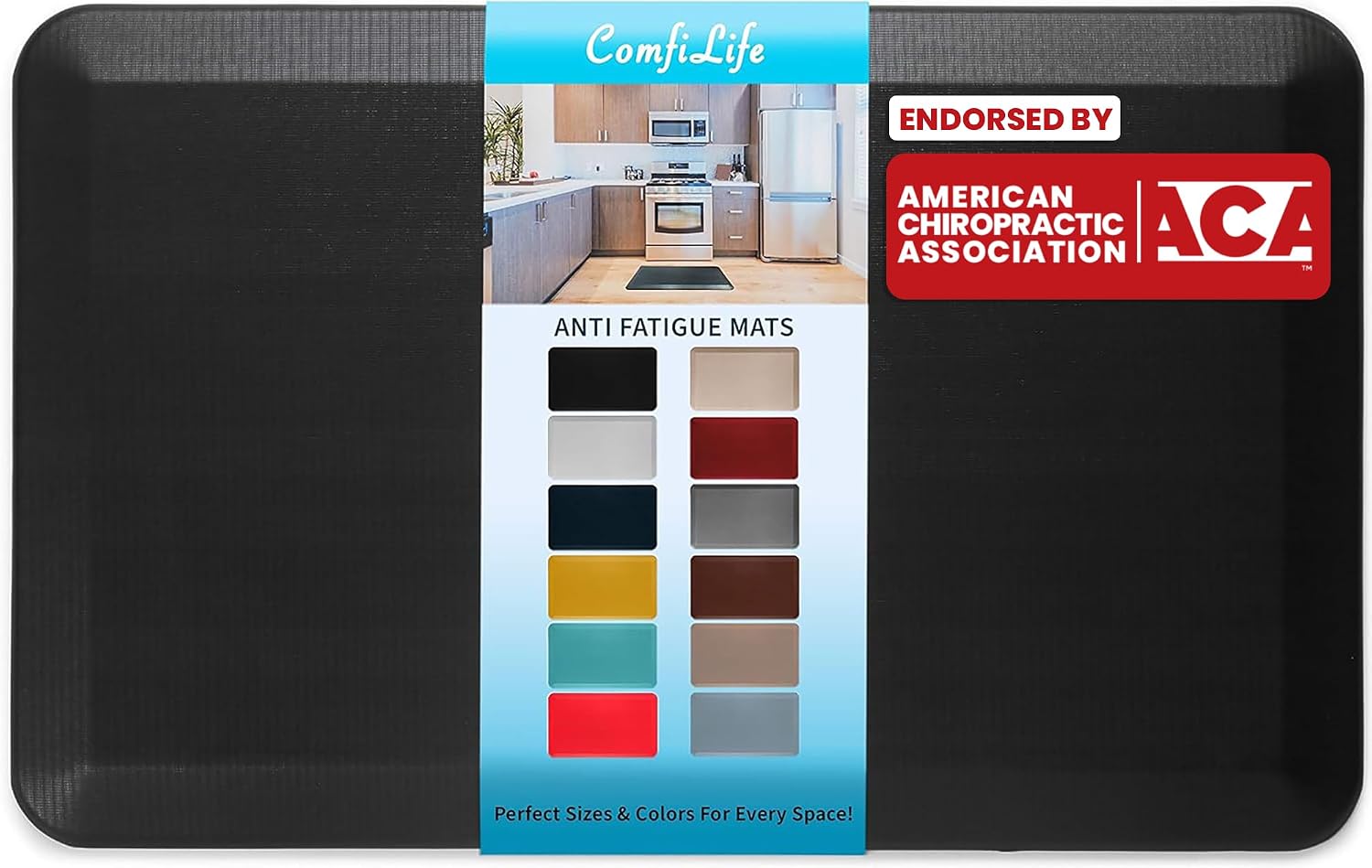
The ComfiLife mat combines memory foam and rubber in a 0.75 inch core, engineered to resist losing its support and cushioning with long-term use.
Its non-slip backing and stain-resistant surface make it practical for a kitchen or workbench as well as a standing desk, and it wipes clean with a damp cloth.
It has both the highest average rating and the largest review base of any mat in this comparison, a strong signal of consistent satisfaction.
It's slightly thinner than the FEATOL and Tyrot mats, and uses a flat design rather than the textured surface of the Topo or Ergohead mats.
It suits anyone who wants a proven, versatile anti-fatigue mat with the strongest track record in this comparison.
Dimensions: 32 inches long by 20 inches wide by 0.75 inches thick.
Material: Memory foam and rubber.
Additional features: Moisture resistant, slip resistant, stain resistant.
Who should buy this mat? Anyone who wants the most proven, widely reviewed anti-fatigue mat in this comparison.
Who might want to look elsewhere? Anyone who wants a thicker cushion or a textured, contoured surface should consider the Tyrot or Topo mats instead.
Setup tip: Wipe the surface down periodically even though it's stain resistant, since buildup over time can make it feel less grippy.

Pros
- Waterproof, oil-proof surface handles spills well
- Thicker cushion than the ComfiLife mat in this comparison
- Non-slip base
Cons
- Smaller review history than the ComfiLife or FEATOL mats
- May develop creases from shipping that need time to flatten out
The Tyrot mat uses a 0.9 inch PU memory foam core with a waterproof, oil-proof surface, aimed at spaces where spills are a real concern alongside standing comfort.
Its non-slip bottom is designed to prevent slipping, and the high-density recycled foam construction is meant to resist compressing under a dropped cup or object.
The manufacturer notes the mat may arrive with creases from shipping that flatten out after laying it in a well-ventilated area for a while.
It has a smaller review history than the ComfiLife or FEATOL mats in this comparison.
It suits anyone who specifically wants a waterproof, spill-resistant mat for a kitchen-adjacent standing setup.
Dimensions: 32 inches long by 20 inches wide by 0.9 inches thick.
Material: High density PU memory foam.
Additional features: Waterproof, oil-proof, non-slip.
Who should buy this mat? Anyone who wants a waterproof, spill-resistant mat, particularly for a kitchen-adjacent standing area.
Who might want to look elsewhere? Anyone who wants the most established review history should consider the ComfiLife mat instead.
Setup tip: Lay the mat flat in a ventilated area for a day or two after unboxing if it arrived with shipping creases.

Pros
- Most portable option in this comparison with a built-in handle
- Textured surface adds a different feel from flat foam mats
- Compact size suits smaller spaces
Cons
- Smaller footprint than the other mats here, which may not suit everyone's stance
- Smaller review history than the ComfiLife or FEATOL mats
The Ergohead mat stands out for its portability, with a built-in handle designed to make it easy to carry between rooms or hang up when not in use.
Its surface includes raised massage points intended to promote circulation and movement while you stand, a different feel from the flat foam mats in this comparison.
It's also the most compact mat here at 17 by 22 inches, which suits smaller spaces but offers less room to shift your stance than the larger mats.
It has a smaller review history than the ComfiLife or FEATOL mats in this comparison.
It suits anyone who wants a portable, textured mat they can move between a standing desk and other parts of the home.
Dimensions: 17 inches by 22 inches.
Material: Polyurethane.
Additional features: Massage points, carrying handle, non-slip bottom.
Who should buy this mat? Anyone who wants a portable, textured mat they can carry between spaces.
Who might want to look elsewhere? Anyone who wants maximum surface area to shift their stance should consider the larger ComfiLife or FEATOL mats instead.
Setup tip: Hang it by the handle near your desk when not in use so it's easy to grab and set back down.
What to Look for in a Standing Desk Mat
Flat vs. Contoured Surface
Most of the mats here use a flat cushioned surface, including the ComfiLife, FEATOL, and Tyrot mats. The Topo mat takes a different approach with a contoured, textured surface designed to encourage your feet to shift position naturally, while the Ergohead mat adds raised massage points to a flat base.
Thickness and Cushioning
Thickness ranges from 0.75 inches on the ComfiLife mat up to 2.7 inches on the Topo mat. A thicker mat generally feels softer underfoot, but personal preference matters here too, since some people prefer a firmer surface for stability.
Size and Portability
The ComfiLife, FEATOL, and Tyrot mats share a similar 32 by 20 inch footprint, giving room to shift your stance. The Ergohead mat is more compact at 17 by 22 inches and includes a carry handle, which trades some surface area for portability.
Water and Stain Resistance
If your standing desk is anywhere near a kitchen or sink, the Tyrot mat’s waterproof, oil-proof surface is worth prioritizing. The ComfiLife and FEATOL mats are also stain resistant, wiping clean with a damp cloth.
Final Thoughts
For most people, the ComfiLife Anti-Fatigue Mat is the safest starting point given its strong track record, while the Ergodriven Topo mat is worth considering if you specifically want a contoured surface that encourages movement.
Frequently Asked Questions
Do anti-fatigue mats actually reduce standing fatigue?
Many people find that cushioning underfoot reduces discomfort compared with standing directly on a hard floor. Individual results vary, and a mat works best alongside good posture and taking breaks to sit periodically.
How thick should a standing desk mat be?
Most mats in this comparison range from about 0.75 to 0.9 inches thick, which balances cushioning with stability. Thicker mats like the 2.7 inch Topo trade some stability for a softer, more contoured feel.
Can I use a standing desk mat in the kitchen too?
Yes, most of the mats in this comparison are marketed for both uses. If spills are a concern, prioritize a waterproof, stain-resistant option like the Tyrot or ComfiLife mats.
What’s new in standing desk mats for 2026?
Textured and contoured surfaces, like the ones on the Topo and Ergohead mats in this comparison, are a newer direction beyond simple flat foam, aimed at encouraging small foot movements rather than just cushioning a static stance.


Write Your Review
No reviews yet. Be the first to share your experience!